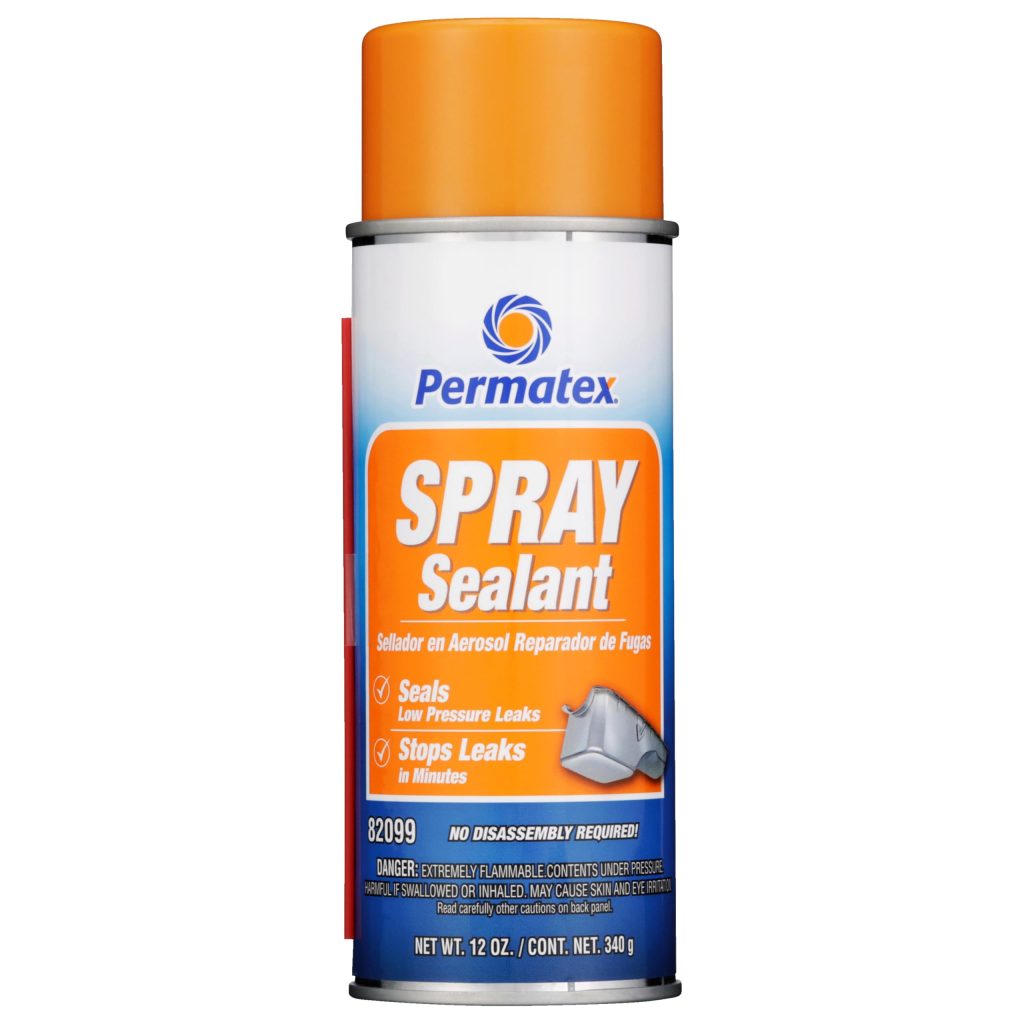
Permatex 82099 Spray Sealant is a 9-ounce aerosol can of clear, natural-finish sealant intended for quick, small-scale repairs and protective coatings. It sits in a crowded field of automotive and household sealants, and its appeal depends heavily on what you expect it to do. This is not a structural adhesive or a heavy-duty waterproofing membrane. It is a sprayable rubberized coating that works best on seams, edges, and small problem areas where brushing on a liquid sealant would be awkward or slow.
The most common real-world use is automotive. People reach for a can like this to seal minor leaks around windshields, trunk seams, or body panel gaps, and to protect exposed metal after a repair. It also shows up in household contexts: sealing a small roof flashing gap, coating the rim of a planter, or protecting a cut edge on outdoor equipment. The aerosol format makes it convenient for reaching overhead or into tight spots where a caulk gun or brush would be impractical. That convenience is the main reason to choose it over a tube of silicone or a can of brush-on sealer.
Functionally, the product lays down a flexible, rubber-like film that adheres to metal, glass, and many plastics. The natural finish means it dries clear or slightly translucent rather than black or colored, which matters when you do not want a visible patch on a painted surface. It is paintable once cured, though in practice the clear finish often blends well enough that painting is optional. The 9-ounce can is a reasonable size for occasional use, and the spray nozzle allows reasonably controlled application if you work in short bursts. Coverage is modest, as with most aerosol sealants, so a large area will eat through a can quickly.
Where the product shows its limits is in durability and precision. Aerosol sealants generally lay down a thinner film than brush-on or trowel-applied products, so they are less suited to filling gaps or bridging irregular surfaces. If a seam is actively leaking or has a visible gap, this spray is likely to be a temporary fix at best. It also demands masking and careful aim, because overspray on adjacent surfaces can be difficult to remove once cured. The clear finish can look slightly glossy or uneven on some surfaces, and building up enough thickness to matter often requires multiple passes with drying time in between.
Compared with a standard silicone caulk or a polyurethane sealant, the Permatex spray trades thickness and gap-filling ability for speed and reach. A tube of silicone is cheaper per ounce and far better for filling a joint, but it is clumsy for coating a broad, shallow area or getting into a narrow crevice. Compared with a dedicated rubberized undercoating spray, this product is lighter and less textured, which makes it better for visible surfaces but less protective against abrasion. It is essentially a middle-ground product: more convenient than a caulk tube, less robust than a brush-on membrane.
Who is this for? It suits someone doing light automotive touch-ups, sealing a small seam that is not under pressure, or protecting a repaired edge where a clear finish is preferable. It is also reasonable for hobbyists and homeowners who want a single can for occasional small jobs and do not want to buy a caulk gun and a tube of sealant. Who is it not for? Anyone with a structural repair, an active leak, a large surface to cover, or a joint that needs to flex and fill a gap should look elsewhere. Professionals who seal for a living will likely find the film too thin and the can too small for regular use.
Expectations should be calibrated accordingly. This is a convenience product for minor sealing and protection, not a permanent solution to a serious water intrusion problem. Used within those bounds, it does what it claims with reasonable results. Pushed beyond them, it will disappoint. The natural finish is a genuine advantage for visible repairs, and the aerosol format saves time on awkward jobs, but the thin film and modest coverage are real trade-offs that buyers should weigh before relying on it.