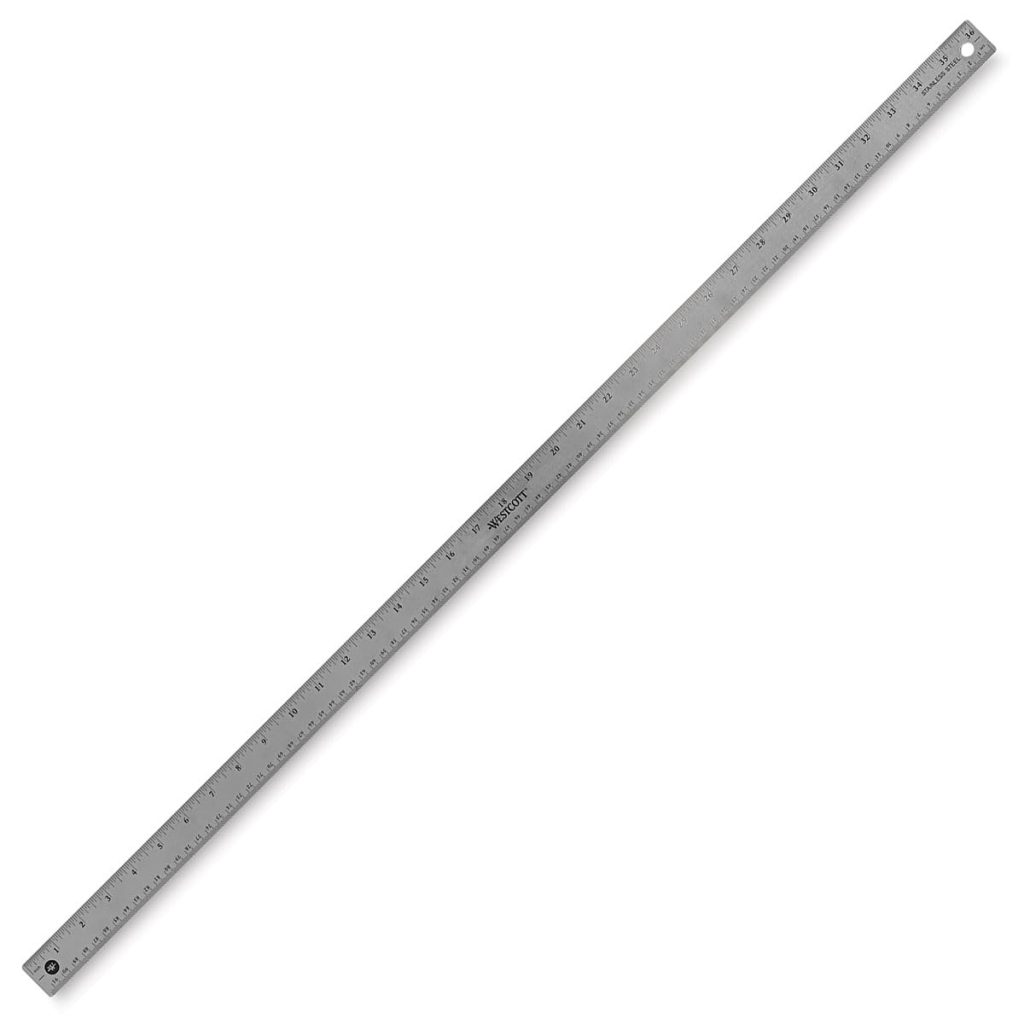
The Westcott 10414 is a six-inch stainless steel ruler with a cork backing, a combination that shows up in drafting kits, sewing boxes, and desk drawers more often than you might expect. It’s a small, inexpensive tool, and the review here is less about whether it works—it does—and more about where the cork base helps, where it gets in the way, and whether it earns a spot over the plain steel ruler most people already own.
The core construction is straightforward. The blade is stainless steel with etched markings, and the cork is bonded to the underside. The ruler carries both inch and metric scales, which matters for anyone working across measurement systems—quilters reading patterns in centimeters, hobbyists cutting styrene, or students switching between units in a lab notebook. The six-inch length keeps it portable and makes it easy to stash in a pencil case or project bag. Etched markings on steel are generally more durable than printed ones, which tend to wear off with handling; that’s a meaningful difference for a tool that lives loose in a drawer.
The cork backing is the feature that separates this from a bare metal ruler, and it’s worth being precise about what it actually does. Cork creates friction against paper, fabric, and most work surfaces, so the ruler is less likely to slide mid-cut or mid-line. That’s useful when you’re marking fabric for a seam allowance, drawing a straight line on paper without clamping, or trimming a photo print on a smooth table. It also lifts the metal edge slightly off the surface, which reduces the chance of scratching a finished desk or a cutting mat. In practical terms, the cork is a modest convenience rather than a transformation—it doesn’t grip like a clamp, and a determined sideways push will still move the ruler.
There are trade-offs, and they’re worth stating plainly. The cork layer adds thickness, so the ruler doesn’t sit perfectly flush against a workpiece the way a bare steel edge does. If you’re using it as a straightedge for a craft knife, the slight elevation changes the blade angle and can make it harder to keep the cut tight against the edge. The cork also has a finite life: repeated exposure to moisture, or just years of handling, can cause it to lift or crumble at the corners. And because the backing is glued on, the ruler can’t be tossed in a dishwasher or soaked—wipe it clean and keep it dry. For heavy shop use, a thicker machinist’s rule or a steel square is a more appropriate tool; this is a light-duty instrument.
Comparing it to alternatives helps frame the decision. A plain stainless ruler without cork costs less and is thinner, which some users prefer for cutting against. A clear plastic ruler with a beveled edge is lighter and lets you see through to the work underneath, but plastic scratches, yellows, and its printed markings fade. An aluminum yardstick or a longer steel rule covers bigger jobs but is awkward for small, precise work. The Westcott sits in a middle niche: small, metal, and slightly grippier than the bare-steel default. It’s not the most precise measuring tool you can buy—the markings are fine for general use, but this isn’t a calibrated instrument for machining tolerances—and it isn’t the cheapest option either.
In real-world use, the six-inch size is the defining characteristic. It’s the ruler you reach for when you need a quick straight line in a notebook, a seam allowance marked on a small fabric piece, or a photo trimmed to fit a frame. The cork makes those tasks a little less fiddly on smooth surfaces. It’s less suited to large-format work, where a longer rule is simply the right tool, and to anyone who needs a ruler that can be sterilized or heavily cleaned. Students, crafters, and home-office users are the natural audience; professional machinists and full-time woodworkers will likely want something more substantial.
Build quality is consistent with the price point. The steel is thin but rigid enough for straight-line work, the edges are reasonably clean, and the markings are legible. The cork is the variable—inspect the bond when it arrives, since a poorly glued corner is the most common failure point on backed rulers. Treated with a little care, it should last through years of ordinary desk and craft use. It’s a sensible small purchase rather than a standout one: the cork base is a genuine if modest improvement, and the limitations are predictable rather than surprising.
- Strengths: Cork backing reduces sliding on paper and fabric; dual inch and metric scales; etched markings resist wear; compact six-inch size suits small tasks.
- Weaknesses: Cork adds thickness that can interfere with tight knife cuts; backing can lift or crumble over time; not suitable for soaking or heavy cleaning; markings aren’t precision-grade.
- Suitable for: Students, crafters, sewists, home-office users, and anyone who wants a small metal ruler that stays put on smooth surfaces.
- Not suitable for: Machinists, professional woodworkers needing a thick rigid rule, large-format measuring, or anyone who needs a washable/sterilizable tool.