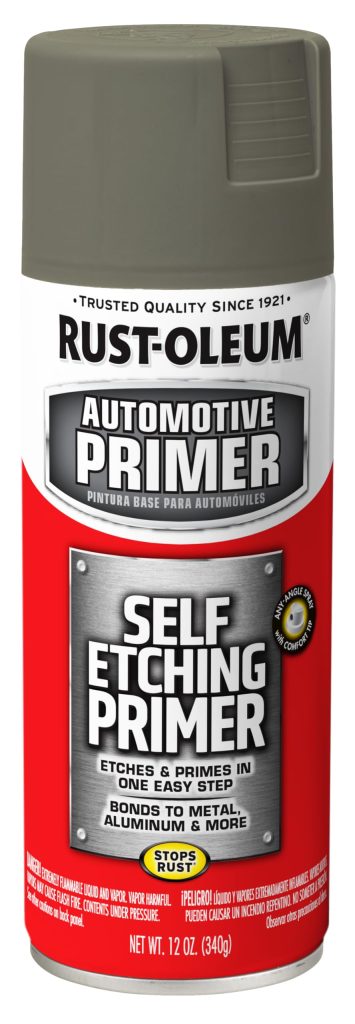
Rust-Oleum’s Self Etching Primer Spray in Dark Green is a specialized aerosol primer designed for bare metal surfaces. It’s not a general-purpose primer, and that’s the point. The product contains an acid that etches into metal, creating a mechanical bond that improves paint adhesion. This review examines its real-world performance, limitations, and where it fits in a DIYer’s or professional’s arsenal.
In practice, this primer is used on automotive panels, trailers, tools, and other metal projects before topcoating. The dark green color is unusual—most self-etching primers are green or gray—and it can influence the final color if not fully covered. The spray can is convenient for small jobs, but it requires proper surface preparation: clean, bare metal free of rust, oil, and old paint. The etching process is chemical, so you don’t need to sand to bare metal if it’s already clean, but any loose material must be removed.
Key functional features include a fast-drying formula (dry to touch in about 10-20 minutes, depending on conditions), a high solids content that builds a thin film, and a nozzle that delivers a relatively fine mist. The can covers approximately 10-12 square feet per can, which is modest but typical for aerosol primers. It’s important to note that self-etching primers are not fillers; they won’t hide scratches or imperfections. For that, a high-build primer or body filler is needed.
One limitation is the dark green color. While it etches well, it can be difficult to cover with lighter topcoats, requiring more paint. Also, the primer is not a rust preventive on its own; it must be topcoated. If left exposed, it can absorb moisture and lead to rust. Another trade-off is the strong solvent smell and the need for good ventilation. The spray pattern can be inconsistent if the can isn’t shaken thoroughly or if it’s cold.
Compared to a standard primer like Rust-Oleum’s Automotive Primer, which is designed for sanded surfaces and offers better filling properties, the self-etching version is more specialized. It’s also different from epoxy primers, which are two-part and offer superior adhesion and corrosion resistance but require mixing and a spray gun. For small spot repairs, the aerosol self-etching primer is convenient, but for larger areas, a gun-applied epoxy primer is more economical and effective.
Who is this for? It’s suitable for DIYers working on small metal projects, spot repairs on cars, or restoring tools. It’s also useful for professionals who need a quick primer for bare metal before painting. However, it’s not for those looking for a primer to cover rust (use a rust converter first), or for filling dents. It’s also not ideal for large-scale projects due to cost and coverage limitations. If you’re painting over existing paint or plastic, a different primer is needed.
In use, the primer sprays on wet and dries to a matte finish. It can be sanded after curing, but it’s not necessary for adhesion. For best results, apply a light coat and then a second coat after a few minutes. Avoid heavy coats, which can cause runs. The etching action is mild, so it won’t damage the metal. However, it’s not a substitute for proper surface prep; any oil or dirt will prevent adhesion.
Performance-wise, when applied correctly, it provides a solid base for topcoats. It’s not a miracle product; it won’t fix poor preparation. The dark green color is a minor annoyance, but it’s manageable with a good primer sealer or multiple topcoats. The can may clog if not cleaned after use, so invert and spray to clear the nozzle.
Overall, Rust-Oleum Self Etching Primer Spray is a reliable option for bare metal priming in small applications. It’s not the cheapest per ounce, but the convenience of an aerosol makes it worthwhile for spot work. Just be aware of its limitations and use it within its intended scope.


