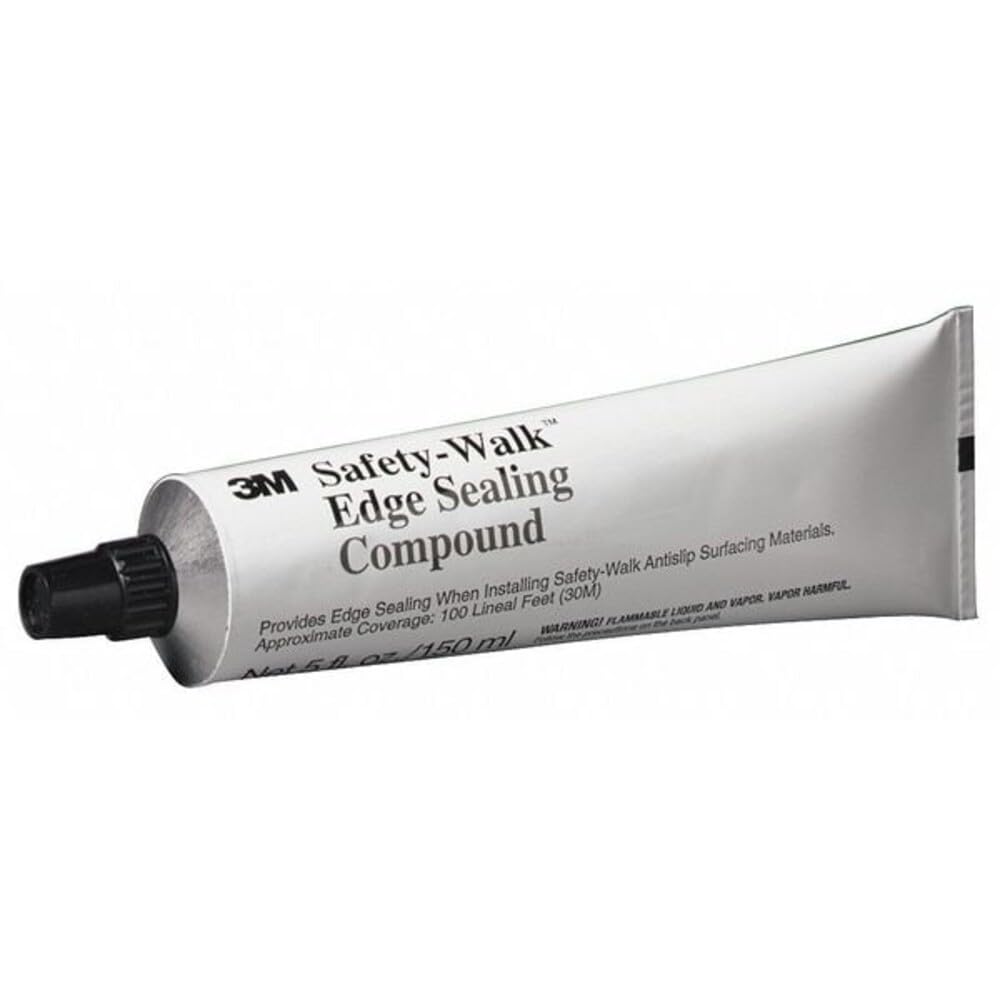
If you’ve ever applied anti-slip tape to a set of stairs or a walkway, you know the weak point is often the edges. That’s where 3M Safety Walk Edge Sealing Compound 902 comes in. This isn’t a product you’ll find on a typical hardware store shelf, and it’s not something most people will ever need. But for those who do—facility maintenance crews, contractors, or anyone responsible for keeping anti-slip surfaces secure—it addresses a specific problem: edge lifting.
Anti-slip tape, especially the adhesive-backed kind, tends to peel at the edges over time. Foot traffic, cleaning, and moisture all take their toll. The 902 compound is designed to seal those edges, creating a barrier that helps prevent lifting and prolongs the tape’s life. It’s a niche product, but in the right context, it’s a practical solution.
So what exactly is it? The compound is a thick, paste-like material that comes in a tube or cartridge. It’s applied along the edges of anti-slip tape after the tape is laid down. Once cured, it forms a flexible, durable seal that bonds to both the tape and the substrate. It’s not an adhesive itself; rather, it’s a sealant that works in tandem with the tape’s adhesive. Think of it as a caulk for anti-slip installations.
In real-world use, the 902 compound is typically specified for commercial and industrial settings—stair nosings, loading docks, ramps, and other high-traffic areas where safety tape is common. It’s also used in marine and transportation applications where edges are exposed to harsh conditions. The application process is straightforward: clean the surface, apply the tape, then run a bead of compound along the edges and smooth it out. It cures to a semi-flexible state, allowing for some movement without cracking.
Key functional features include its resistance to water, chemicals, and UV exposure, which makes it suitable for outdoor and wet environments. It’s also designed to adhere to a variety of substrates, including concrete, metal, and wood. The compound remains slightly flexible after curing, which helps it accommodate minor substrate movement and temperature fluctuations. It’s available in tubes and cartridges, with the latter requiring a standard caulking gun.
But there are limitations. First, it’s not a standalone product—you need anti-slip tape to use it. Second, application takes time. You’re essentially adding a step to the tape installation process, and that extra step requires care to avoid a messy finish. The compound can be tricky to work with if you’re not experienced; it has a consistency that takes some getting used to, and smoothing it out evenly requires a steady hand. Third, it’s not inexpensive. For small jobs, the cost per tube might be hard to justify, especially if you’re only sealing a few edges. And while it’s durable, it’s not indestructible—in extremely high-traffic areas, it may still wear down over time and need reapplication.
Compared to general-purpose sealants like silicone or polyurethane caulk, the 902 compound is formulated specifically for anti-slip tape edges. That specificity is both its strength and its weakness. A generic sealant might work in a pinch, but it may not bond as well to the tape’s surface or provide the same level of flexibility. On the other hand, a generic sealant is likely cheaper and more readily available. For critical applications where tape failure could lead to slips and falls, the specialized formula is probably worth the extra cost. For low-risk, temporary installations, a generic alternative might suffice.
Who is this for? It’s clearly aimed at professionals and maintenance staff who install anti-slip tape regularly and need a reliable way to extend its lifespan. It’s also suitable for DIYers tackling a serious project—say, outfitting a workshop floor or a boat deck—where they want a professional-grade result. However, it’s not for someone looking for a quick fix or a one-step solution. If you’re not already using anti-slip tape, this product won’t help you. And if you’re working on a tight budget or a small area, the cost and effort may outweigh the benefits.
In terms of performance, expectations should be realistic. The compound will help prevent edge lifting and extend the life of your anti-slip tape, but it won’t make the tape last forever. It’s a maintenance product, not a permanent solution. In environments with heavy foot traffic or frequent cleaning, you’ll still need to inspect and replace tape periodically. The compound buys you time, but it doesn’t eliminate the need for regular upkeep.
Overall, the 3M Safety Walk Edge Sealing Compound 902 is a specialized product that does what it’s designed to do. It’s not glamorous, and it’s not for everyone, but for those who need it, it’s a reliable option. The trade-offs—cost, application time, and the need for careful workmanship—are worth considering, but in the right application, it’s a practical investment in safety and longevity.