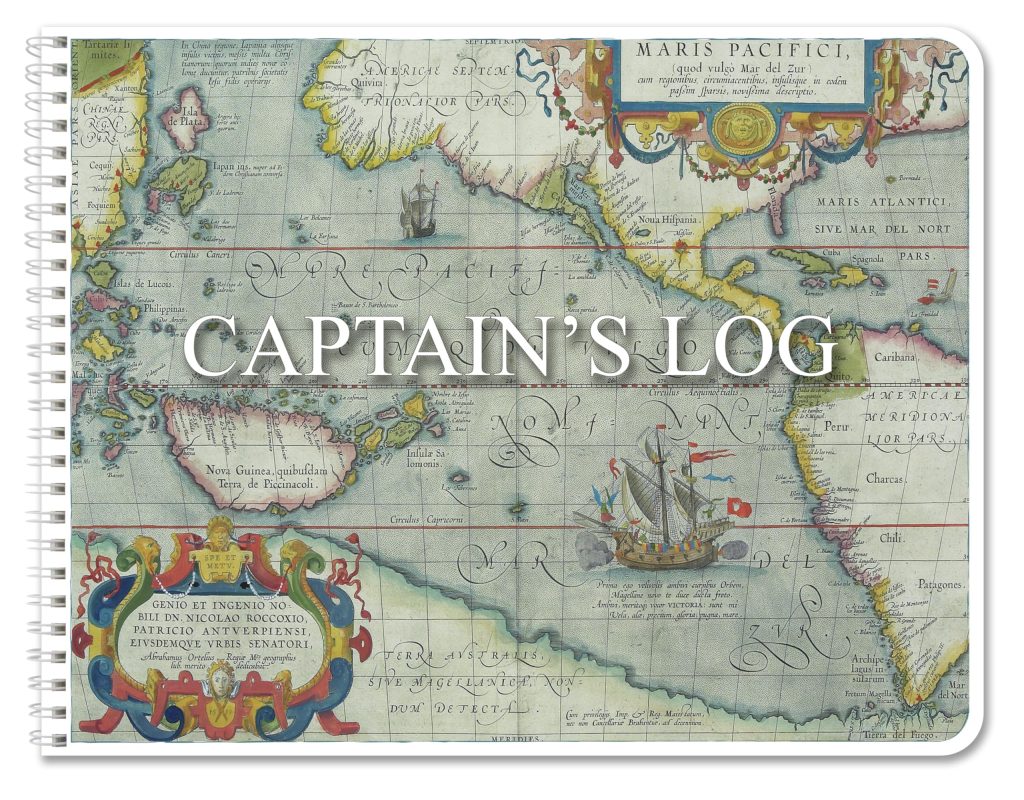
The BookFactory Captain’s Log Book is one of those products that exists because a specific group of people kept asking for it. Boaters, sailing instructors, and anyone who keeps a formal record of time on the water have long relied on bound logbooks, and this 11″ x 8.5″ wire-bound version is aimed at people who want a large writing surface and a book that lies flat. It is a niche product with a clear purpose, and whether it makes sense depends almost entirely on how you plan to use it.
The format is the first thing to note. At 11 by 8.5 inches, this is a landscape-oriented book, wider than it is tall. That orientation matters because log entries tend to be tabular: date, time, position, heading, speed, weather, crew, and remarks. A landscape page gives you more horizontal room for columns, and the wire-O binding means the book opens flat on a chart table or a lap without fighting you. The 100 pages are presumably printed with a log template, though the exact field layout is the sort of thing worth checking against your own record-keeping habits before buying.
In real use, a captain’s log serves two purposes that don’t always overlap. One is legal and administrative: a dated record of departures, arrivals, crew, and incidents, which can matter for insurance, charter documentation, or Coast Guard inquiries. The other is personal: a running narrative of trips, conditions, and lessons learned. A pre-printed logbook like this leans toward the first purpose. If you want free-form journaling with sketches and long paragraphs, the fixed template will feel constraining. If you want consistent fields so that entries are comparable trip to trip, that same structure is the point.
Functionally, the wire-O binding is the standout feature. Bound logbooks with sewn spines are durable and look traditional, but they don’t lie flat, which is annoying when you’re holding a pencil in one hand and a tiller in the other. Wire-O solves that, and it also lets the book fold back on itself, taking up less space on a small boat. The trade-off is that exposed wire coils can bend or snag on gear, and they don’t age as gracefully as a hardbound spine. A logbook that lives in a damp chart table for years will show wear at the binding before it shows wear on the pages.
Paper quality is another practical consideration. Marine environments are wet, and no standard paper logbook is waterproof. This one should be treated as a fair-weather and interior-cabin tool. If you routinely log in spray or rain, a waterproof notebook or a rugged field book is a better fit. That’s not a flaw unique to this product, but it’s a limitation worth stating plainly, because the marketing around marine logbooks sometimes implies more durability than the paper actually delivers.
Compared with a generic composition notebook or a waterproof field notebook, the BookFactory log has the advantage of structure and size. A composition book is cheap and portable but has no log fields and a smaller page. A waterproof field notebook survives weather but is typically pocket-sized with limited room for detailed entries. This book sits in the middle: large, structured, and comfortable to write in, but not rugged. Compared with a traditional hardbound ship’s log, it sacrifices some durability and formality for usability.
Who is it for? Day sailors, sailing school students, charter captains, and boat owners who want a consistent record and write at a table or in the cockpit on calm days. It also works for non-marine uses where a large flat-laying record book is handy, such as field research or shift logs. Who is it not for? Anyone who needs waterproof pages, anyone who prefers free-form journaling, and anyone with limited storage space, since the 11-inch width is substantial. It’s also overkill for casual boaters who take a few trips a year and would be fine with a notebook.
The realistic expectation is a well-made, purpose-built logbook that does its job in dry conditions and shows normal wear over time. It isn’t indestructible, and it isn’t flexible in format, but for the specific task of keeping a structured captain’s log, those are reasonable trade-offs rather than defects.