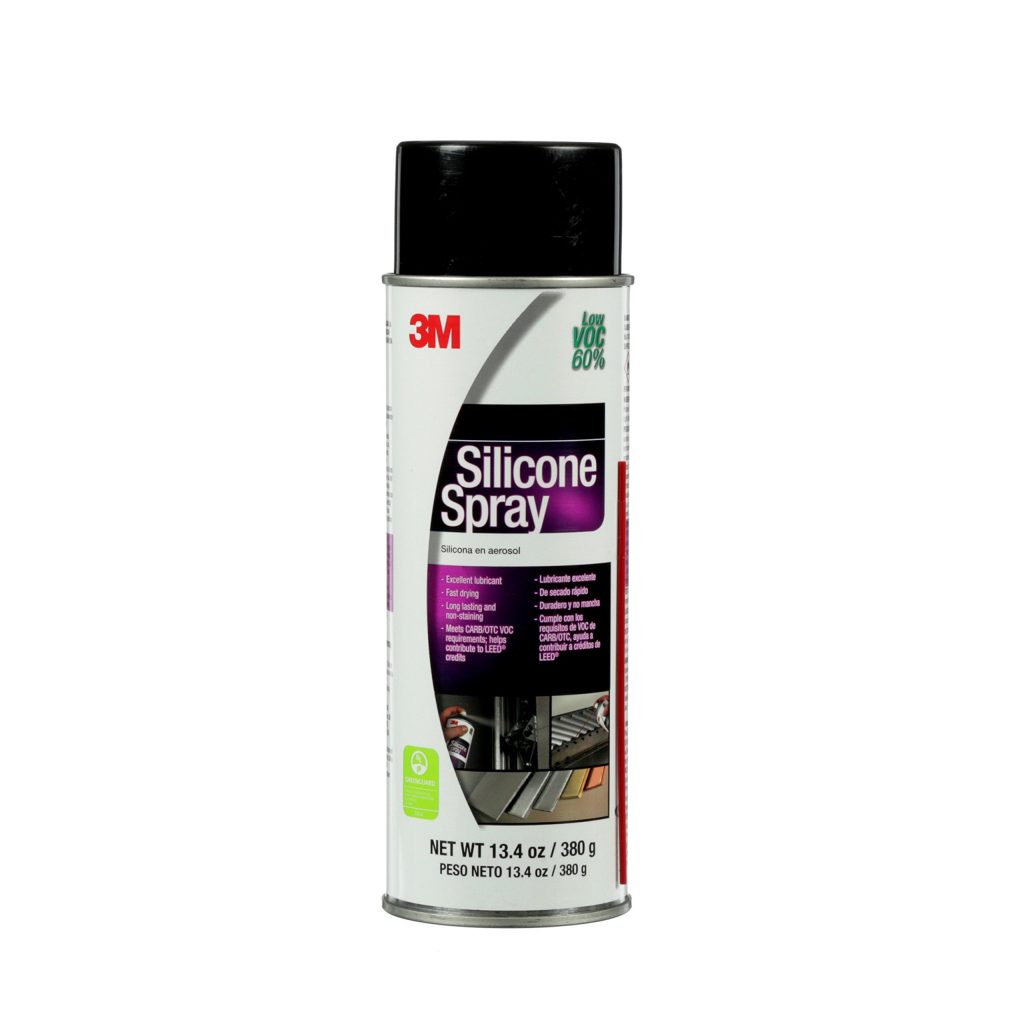
3M’s Silicone Spray Low VOC is one of those maintenance aerosols that tends to sit on a shelf until something starts squeaking, sticking, or rusting. It is a general-purpose silicone lubricant formulated with a reduced volatile organic compound content—the label claims 60% lower VOC than a standard silicone spray—which makes it a reasonable pick for people who care about solvent smell and indoor air quality but still want the convenience of an aerosol can. The 13.4 oz net weight is a fairly standard size for a workshop or garage can, and it is intended for light-duty lubrication, release, and protection rather than heavy mechanical work.
In practice, this spray shows up in a lot of small jobs. It is commonly used on sliding door tracks, window channels, hinges, drawer glides, and the rubber weatherstripping around car doors, where a dry silicone film reduces friction without attracting as much dust as a wet oil would. People also use it as a release agent for molds and forms, to keep rubber and plastic parts from sticking, and as a light moisture barrier on metal surfaces that are not exposed to constant water. It is not a penetrating oil, so it will not free a rusted bolt, and it is not a substitute for grease on bearings or high-load pivot points.
The functional story is fairly simple. The active ingredient is silicone, which leaves a thin, relatively dry film that lubricates and repels water. The low-VOC formulation is the main differentiator: fewer strong solvents means less of the sharp chemical smell that older silicone sprays produce, and it is easier to use in a garage or basement with limited ventilation. The can delivers a controllable spray pattern, though like most aerosols it can be messy if you are not careful—overspray on floors or painted surfaces can create a slippery film that needs to be cleaned up. The 13.4 oz size is enough for occasional household and light shop use, but frequent users will go through it quickly.
Performance expectations should be kept realistic. On squeaky hinges, sticky window tracks, and rubber seals, it works well and lasts a reasonable amount of time, though it is not permanent and will need reapplication after a few weeks or months depending on exposure. On anything under real load—a bicycle chain, a garage door spring, a power tool gearbox—it is the wrong product, and it may actually be too light to stay in place. The low-VOC claim is genuine but does not mean odorless; there is still a noticeable solvent smell during application, just less aggressive than conventional silicone sprays. Drying time is quick, and the residue is not greasy to the touch once it sets, which is a plus for surfaces you might handle.
Compared with a standard petroleum-based lubricant like WD-40, this spray is better for rubber and plastic because silicone is generally compatible with those materials, whereas solvent-heavy oils can degrade some rubbers over time. Compared with a dry PTFE spray, silicone tends to feel slightly slicker and is better at water repellency, but PTFE often performs better in dusty environments because it leaves a drier, less tacky film. Compared with a dedicated white lithium grease, this product is far lighter and not suited to high-pressure or high-temperature joints. In other words, it occupies the light-duty, multi-surface niche rather than replacing specialized lubricants.
Who is it for? It suits homeowners, hobbyists, and light-duty shop users who want one can for squeaks, sticking slides, rubber seals, and basic moisture protection, especially where solvent smell is a concern. It is also a sensible choice for people working with plastics and rubber who want to avoid harsher petroleum distillates. Who is it not for? Anyone dealing with seized fasteners, heavy machinery, bearings under load, or long-term outdoor metal protection should look elsewhere. Professional mechanics will likely find the can small and the formulation too light for daily use, and anyone expecting a long-lasting lubricant on high-friction surfaces will be disappointed. It is a useful, modest product that does a narrow set of jobs well—provided you use it for those jobs and not for everything.