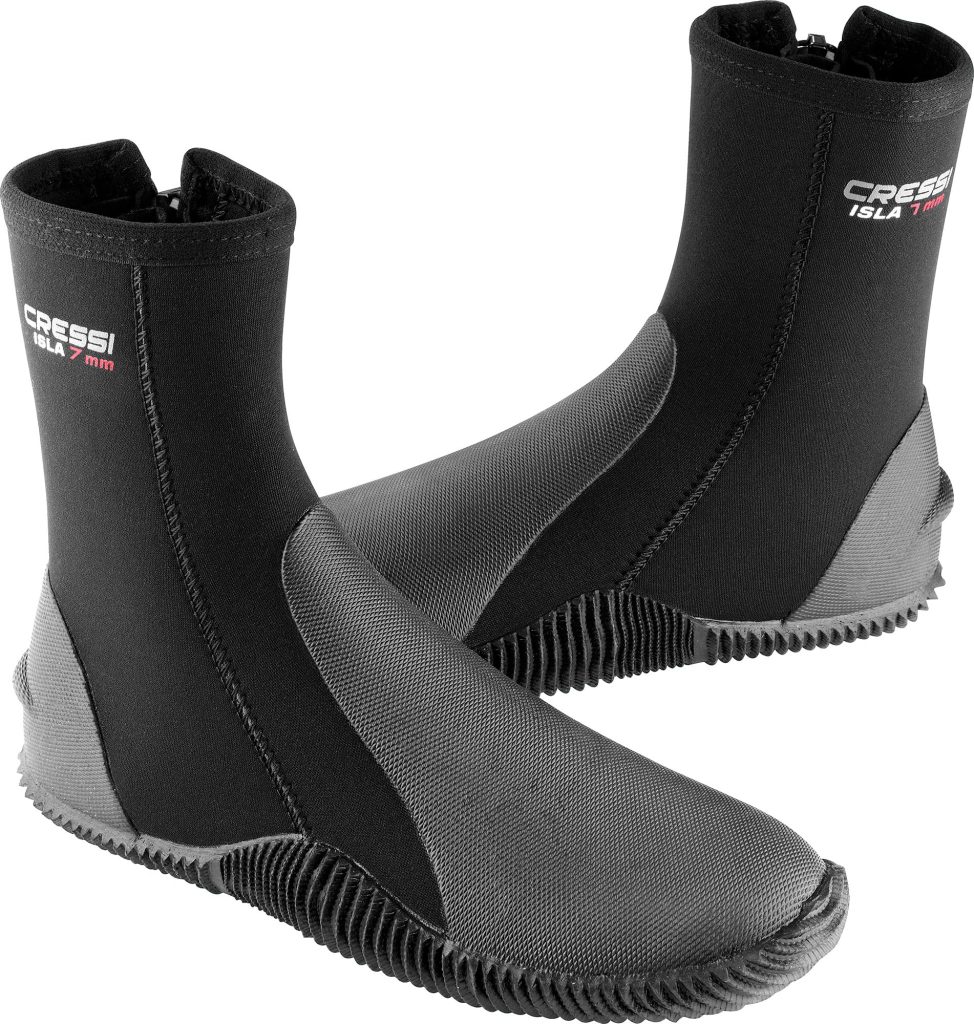
The Cressi Isla 7 mm Crew Diving Boots are a straightforward piece of dive gear aimed at divers who spend time in colder water. These boots are built around a simple premise: keep your feet warm and protected when the temperature drops. In practice, they do that job reasonably well, but they come with some trade-offs that are worth considering before you buy.
Real-world usage context
These boots are designed for use with open-heel fins, which is the standard configuration for most cold-water diving. The 7 mm neoprene thickness provides substantial insulation, making them a logical choice for water temperatures in the 50s Fahrenheit (around 10-15°C) or lower. Divers using them for shore entries will appreciate the thick sole, which offers decent protection against rocks, shells, and other sharp objects. The boots are also commonly used for wreck diving or any scenario where you might be walking on uneven surfaces before or after a dive. That said, the thickness can make them feel bulky, especially when walking on a boat deck or ladder.
Key functional features
The boots feature a 7 mm neoprene upper with a glued and blind-stitched seam construction, which helps reduce water entry compared to cheaper stitching methods. The sole is made from a rugged rubber compound that provides good traction on wet surfaces. A YKK zipper on the back makes them easier to put on and take off, though the zipper is not replaceable, which is a potential longevity concern. The heel area is reinforced to help keep the boot in place inside your fin foot pocket. The boots also have a contoured ankle design that aims to reduce bunching, but in practice, this works better for some foot shapes than others.
Strengths
For cold-water diving, the insulation is effective. The 7 mm neoprene does a solid job of retaining heat, and the boots feel warm even after extended dives in chilly conditions. The rubber sole is durable and provides reliable grip on slick rocks and boat decks. The zipper is smooth and easy to operate, even with cold or gloved hands. The boots also hold up well to repeated use; after several months of regular diving, they show minimal signs of wear beyond normal compression of the neoprene.
Limitations and trade-offs
The most noticeable downside is the fit. The boots run slightly narrow, particularly in the toe box. Divers with wider feet may find them uncomfortable, especially when wearing thick neoprene socks underneath. The 7 mm thickness also adds significant buoyancy, which can be an issue for divers who are already struggling with weighting. You may need to add extra weight to compensate, particularly if you are diving in a drysuit or with a thick wetsuit. Another limitation is the lack of a removable insole, which means you cannot easily replace the footbed if it wears out or if you want to customize the fit. The zipper, while convenient, is a potential failure point; if it breaks, the boots become difficult to use, and they are not easy to repair.
Comparison to alternative options
Compared to thinner boots, such as a 5 mm or 3 mm model, the Cressi Isla boots offer more warmth but less flexibility and dexterity. If you are diving in water temperatures above 70°F (21°C), these boots will likely be too warm and cumbersome. A thinner boot would be more comfortable and easier to move in. For divers who need maximum warmth in extreme cold, a drysuit with integrated boots or a thicker 8 mm or 9 mm boot might be a better choice, though those options are heavier and more expensive. The Cressi Isla sits in a middle ground: warm enough for most cold-water diving, but not the warmest or most feature-rich option available.
Who it is and is not suitable for
These boots are best suited for divers who regularly dive in cold water (below 60°F/15°C) and prefer a simple, no-frills design. They are a good fit for divers with narrow to average-width feet who do not mind the extra buoyancy. They are not ideal for divers with wide feet, those who dive primarily in warm water, or anyone looking for a boot with advanced features like a replaceable sole or integrated ankle support. Recreational divers who do shore entries on rocky terrain will appreciate the sole durability, but boat divers might find the bulkiness more of a nuisance than a benefit.
Final thoughts
The Cressi Isla 7 mm Diving Boots are a functional, workmanlike product. They keep your feet warm and protected in cold water, and they are built to last through regular use. But they are not without flaws: the narrow fit and added buoyancy mean they are not a one-size-fits-all solution. If your foot shape and diving conditions align with what these boots offer, they are a solid choice. If not, you might be better served by a different thickness or a brand with a wider fit. As with most dive gear, trying them on with your fins before buying is strongly recommended.