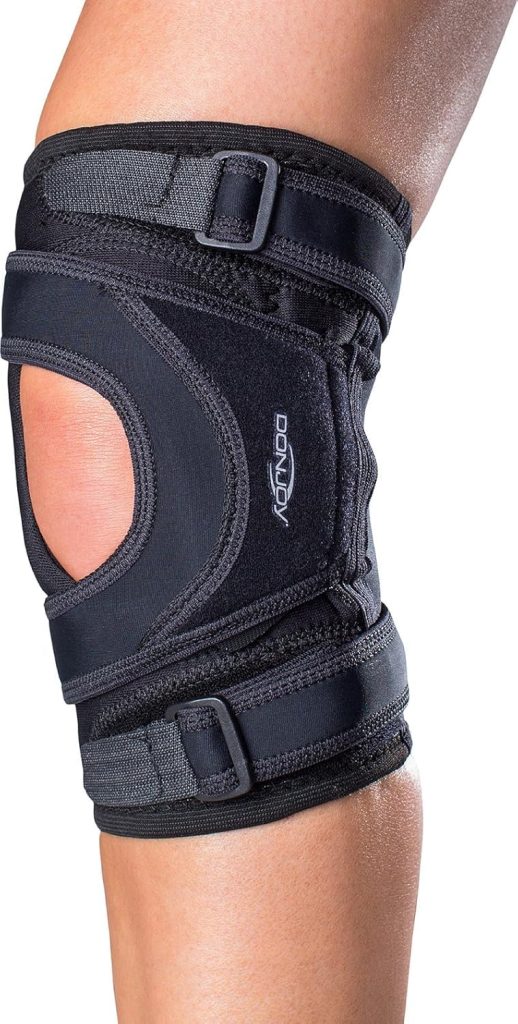
The DonJoy Tru-Pull Lite Knee Brace is a specialized support designed for people dealing with patellar instability or dislocations. Unlike bulkier braces that can feel like a full leg cast, this one aims to provide targeted pressure on the kneecap without restricting overall movement. It’s a niche product, and whether it works for you depends a lot on your specific anatomy and injury history.
At its core, the Tru-Pull Lite uses a dual-durometer buttress—a firm pad that sits on the outside of the kneecap and pushes it inward. This is meant to guide the patella back into its proper track during movement. The brace also has a bifurcated strap, which is a fancy way of saying the strap splits into two parts that wrap around the knee, creating a pull that’s more dynamic than a single strap. The idea is to keep the buttress in place while you bend and straighten your leg, which is a common failure point in simpler sleeves.
In real-world use, this brace is often recommended for athletes or active individuals who have had a patellar dislocation or who have chronic instability. It’s also used post-surgery, once the initial healing phase is over and you’re ready for more functional support. The Tru-Pull Lite is not a rigid immobilizer; it’s meant to allow range of motion while providing a reminder to the kneecap to stay put. That makes it suitable for sports like running, basketball, or skiing, where you need to move freely but also want some protection against a repeat injury.
The brace is lightweight, which is a plus for those who find traditional hinged braces too heavy or restrictive. The material is breathable, so it doesn’t get as sweaty as neoprene alternatives. The bifurcated strap is easy to adjust, and the buttress can be repositioned slightly to target the right spot. However, getting the fit right takes some trial and error. If the buttress isn’t placed correctly, it can cause discomfort or fail to provide the needed support. Also, because it’s a soft brace, it won’t provide the same level of stability as a rigid brace for severe instability or high-impact activities.
One limitation is that the Tru-Pull Lite is not designed for everyday wear over long periods. It’s meant for activity, and wearing it constantly might lead to skin irritation or dependence. Additionally, it’s not a substitute for proper rehabilitation. Strengthening the surrounding muscles is still crucial for long-term stability. The brace is also not ideal for those with very large thighs, as the straps may not be long enough for a secure fit. DonJoy offers other models like the Tru-Pull Advanced, which has a more robust hinge system, but that comes with added bulk and cost. The Lite version is a compromise between support and freedom.
Who is it for? It’s best for someone with mild to moderate patellar instability who wants to stay active and needs a low-profile brace that won’t interfere with movement. It’s also a good option for those who have graduated from a post-operative brace and need something for return-to-sport. Who is it not for? If you have severe instability, a recent dislocation that’s still healing, or you’re looking for a brace to wear all day, this probably isn’t the right choice. It’s also not for someone who needs maximum protection for contact sports; a more rigid brace would be safer.
In comparison to similar products, the Tru-Pull Lite sits in a middle ground. It’s more supportive than a simple knee sleeve with a patella pad, but less supportive than a hinged brace with a patella buttress. The price reflects that—it’s not cheap, but it’s not the most expensive option either. If you’re looking for a brace that you can wear during sports without feeling like you’re wearing a robot leg, this is worth considering. Just be prepared to spend some time getting the fit just right, and don’t expect it to work miracles. It’s a tool, not a cure.
Overall, the DonJoy Tru-Pull Lite is a well-designed brace for a specific purpose. It has its strengths—lightweight, adjustable, and effective for mild instability—and its weaknesses—fit issues, limited support for severe cases, and the need for proper rehabilitation. As with any brace, consult with a healthcare professional to see if it’s appropriate for your situation.