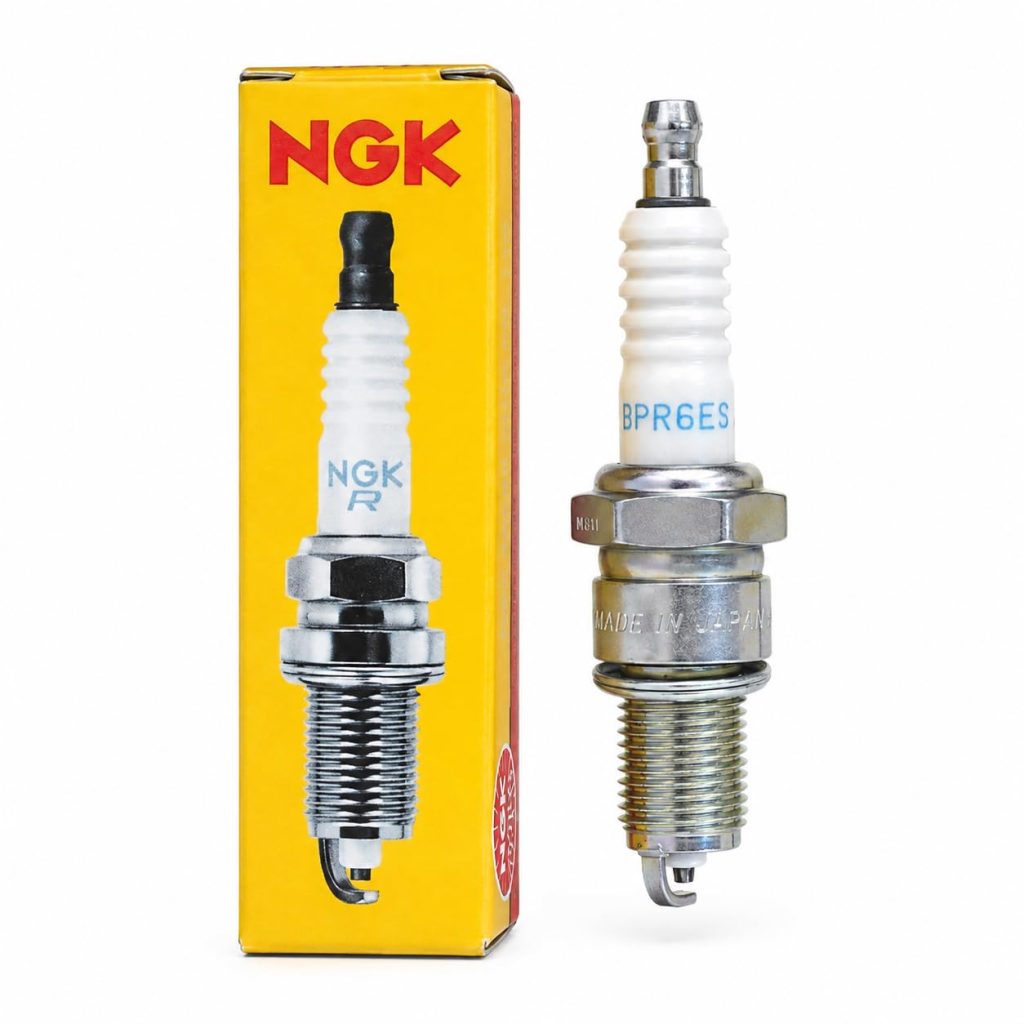
If you own a Honda engine—whether it’s a lawnmower, generator, or pressure washer—you’ve probably encountered the NGK BPR6ES spark plug. It’s one of those parts that doesn’t get much attention until it fails, and then you realize how essential it is. This single spark plug is a staple in many small engine applications, and for good reason. But is it the right choice for your specific equipment? Let’s take a closer look.
First, a quick primer on what this spark plug actually does. The BPR6ES is a nickel-alloy spark plug with a projected insulator nose and a 14mm thread diameter. The ‘6’ in the part number indicates its heat range, which is considered a medium heat range—suitable for a wide variety of small engines. The ‘P’ denotes a projected tip, which can improve combustion efficiency by placing the spark closer to the air-fuel mixture. The ‘R’ means it has a built-in resistor, which helps suppress electromagnetic interference that could disrupt sensitive electronics like radios or ignition systems. The ‘ES’ refers to the thread reach and hex size—in this case, a 19mm reach and a 13/16″ hex, making it compatible with many standard spark plug sockets.
In real-world use, the BPR6ES is commonly found in Honda GX series engines, which power everything from water pumps to go-karts. It’s also a popular choice for other small engines like those from Briggs & Stratton, Kohler, and Kawasaki. The plug’s design helps it perform well in engines that run at relatively constant speeds, such as generators, and in those that see variable loads, like lawnmowers. Its resistor construction is particularly useful for equipment with electronic ignition systems, as it reduces the chance of interference that could cause misfires or radio noise.
One of the key functional features of this plug is its copper core, which helps dissipate heat and maintain the correct operating temperature. The nickel alloy electrodes are durable and resist erosion, though they won’t last as long as more expensive iridium or platinum plugs. The projected tip design can also help reduce fouling in engines that run rich or idle for long periods, but it’s not a cure-all for underlying fuel or ignition issues. The BPR6ES is designed to be a direct replacement for many OEM applications, so if your engine calls for this part number, it should drop right in without any modifications.
Now, let’s talk about limitations. The BPR6ES is a standard nickel plug, which means its service life is typically shorter than that of precious metal plugs. Under normal conditions, you might get 10,000 to 20,000 miles in a car, but in small engines, the interval is often measured in hours—usually around 100 hours of operation before replacement is recommended. If you’re running your equipment in dusty or dirty conditions, that interval can be even shorter. Also, while the resistor helps with interference, it can slightly reduce spark energy compared to a non-resistor plug, though this is rarely noticeable in small engine applications. Another trade-off is that the BPR6ES may not be the best choice for highly modified or high-performance engines that require a different heat range or a non-projected tip to avoid pre-ignition.
Compared to other spark plugs in the same category, such as the Champion RJ19LM or the Denso W20EPR-U, the NGK BPR6ES holds its own. NGK has a strong reputation for consistency and quality control, and many mechanics prefer them for that reason. The Champion RJ19LM is another common plug for small engines, often found in Briggs & Stratton engines, but it has a slightly different heat range and may not cross-reference perfectly in all applications. The Denso is also a solid alternative, but NGK’s widespread availability and consistent performance make it a go-to for many. That said, if your engine manufacturer specifies a different plug, it’s best to stick with that recommendation unless you have a good reason to switch.
So, who is this spark plug for? It’s ideal for DIYers and professionals who maintain Honda small engines and other compatible equipment. If you’re doing routine maintenance on a lawnmower, generator, or tiller, having a spare BPR6ES on hand is a smart move. It’s also a good choice for older engines that originally came with this plug. On the other hand, if you’re looking for a long-life plug that you can forget about for years, you might want to consider an iridium option, though those cost significantly more. Also, if your engine is modified or runs on alternative fuels, you may need a different heat range or plug design.
In terms of performance expectations, don’t expect miracles. The BPR6ES is a reliable, workhorse plug that does its job without fuss. It won’t add horsepower or improve fuel economy beyond what a fresh plug of the correct type would do. But it will provide consistent ignition, easy starting, and smooth operation when used in the right application. If you’re experiencing issues like rough idling or misfires, a new BPR6ES might help—but only if the old plug was worn or fouled. It’s not a fix for carburetor problems or bad ignition coils.
One thing to note is that this is a single plug, not a set. If you have a multi-cylinder engine, you’ll need to buy multiple. That’s fine for most small engines, which are typically single-cylinder, but it’s something to be aware of. Also, while the plug comes pre-gapped, it’s always a good idea to check the gap before installation, as it can be altered in shipping. The recommended gap for the BPR6ES is typically 0.028-0.031 inches (0.7-0.8mm), but consult your engine’s manual for the exact specification.
Overall, the NGK BPR6ES is a solid, dependable spark plug that fits a wide range of small engines. It’s not flashy, and it won’t last forever, but it does its job well at a reasonable price. If you’re due for a tune-up, this is a safe bet—just make sure it’s the right plug for your engine.


