Eye injuries and irritations are among the most common workplace and household accidents, yet dedicated eye wash stations are often bulky and expensive. The First Aid Only 4-Piece Eye Wash Kit offers a compact, low-cost alternative for immediate response to minor eye exposures. This review examines what the kit includes, how it performs in realistic scenarios, and where it falls short.
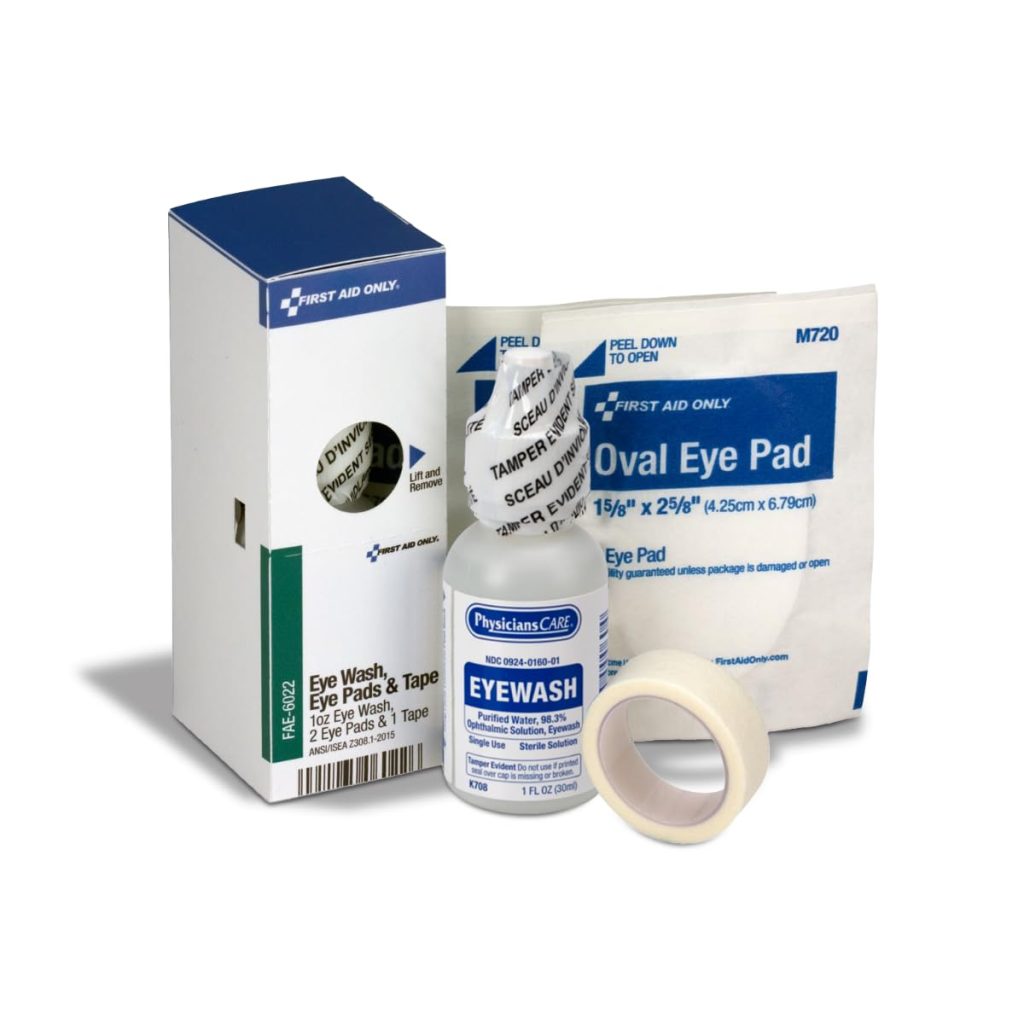
The kit contains four components: a 4-ounce bottle of emergency eye rinse, two oval eye pads, and a roll of first aid tape. The eye rinse is a sterile saline solution intended to flush out debris, chemicals, or other irritants. The oval pads are made of absorbent material and are sized to cover the eye area, while the tape is used to secure them in place. All items come in a small, clear plastic pouch that can be stored in a desk drawer, glove compartment, or first aid cabinet.
In real-world use, this kit is designed for immediate, short-term response. For example, if dust or a small foreign object gets into your eye, you can use the rinse to flush it out. The oval pads can then be used to cover the eye after flushing, providing protection from light and further irritation while you seek medical attention. The tape holds the pad securely, though it may pull on skin if not applied carefully. The 4-ounce rinse bottle is a single-use size, which is appropriate for one-time flushing but not for prolonged irrigation.
Key functional features include the fact that the rinse is sterile and pre-mixed, so no measuring is required. The oval pads are individually wrapped, keeping them clean until needed. The tape is latex-free, which is a thoughtful inclusion for those with allergies. However, the kit does not include a eye cup or a directionally controlled nozzle; the bottle requires you to tilt your head and squeeze, which can be awkward and may not deliver a steady stream. Also, the 4-ounce volume is relatively small—typical emergency eye wash guidelines recommend at least 15 minutes of flushing, which would require much more solution. This kit is therefore not a substitute for a proper eyewash station in high-risk environments.
One notable limitation is the lack of a sterile eye cup or an irrigating lens. Without these, it’s difficult to ensure the solution reaches all parts of the eye, and there’s a risk of contamination if the bottle tip touches the eye. Additionally, the pads are not individually sealed in sterile packaging—they are wrapped but not sterile, which may be a concern for open wounds. The tape, while latex-free, is not medical-grade in terms of adhesion longevity; it may loosen if the area gets wet.
Compared to a dedicated eyewash station, such as a wall-mounted unit with a plumbed water supply, this kit is far more portable and affordable but offers limited flushing volume and no hands-free operation. It is also less comprehensive than a full first aid kit that includes eye wash, as it lacks other supplies like gloves or antiseptic wipes. On the other hand, it is more focused and easier to store than a general-purpose kit.
Who is this kit suitable for? It’s appropriate for office workers, drivers, or homeowners who want a basic eye wash option for minor irritations like dust or pollen. It’s also a reasonable addition to a larger first aid kit for low-risk environments. However, it is not suitable for industrial settings where chemical splashes are a hazard, nor for anyone who needs to comply with ANSI Z358.1 standards for emergency eyewash facilities. Those situations require a plumbed or gravity-fed station with a minimum 15-minute flow.
In terms of performance expectations, the rinse provides temporary relief but should not be relied upon for serious exposures. The pads are adequate for covering the eye but are not designed for prolonged wear. The tape holds up for short periods but may need replacement if the area becomes moist. Overall, the kit is a modest, utilitarian product that fills a niche between doing nothing and having a full eyewash station. It’s not a high-end solution, but for the price, it offers a reasonable level of preparedness for minor eye emergencies.
One might also consider a simple bottle of saline solution and a roll of medical tape as a DIY alternative, which could be more cost-effective and allow for a larger volume of rinse. However, the convenience of a pre-assembled kit with a pouch may be worth the slight premium for some users. The First Aid Only kit is not remarkable in any way, but it does what it claims: provides a basic set of supplies for immediate eye flushing and protection. Just don’t expect it to replace proper safety equipment in hazardous environments.