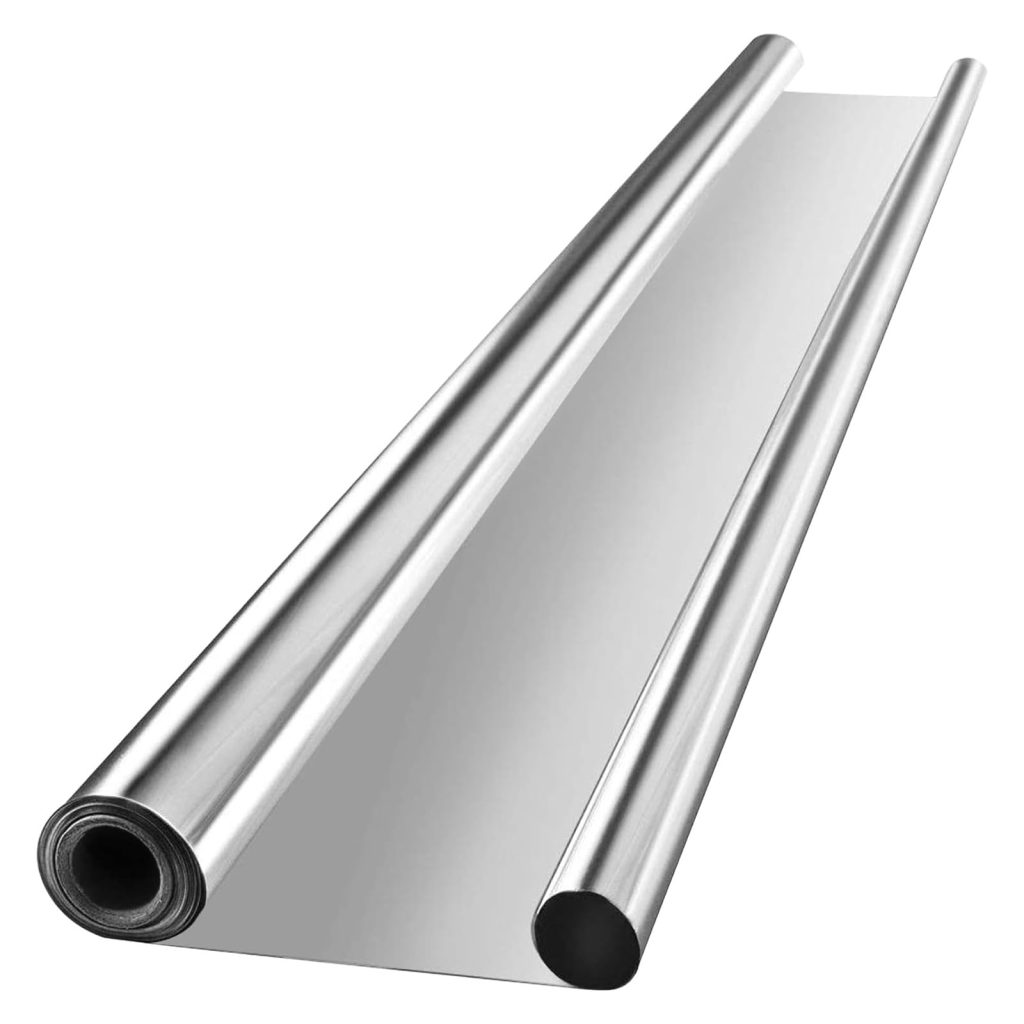
When setting up an indoor grow space, the question of how to maximize light efficiency inevitably comes up. While many turn to flat white paint or specialized reflective panels, the classic roll of Mylar film remains a budget-friendly favorite. The VIVOSUN Highly Reflective Mylar Film Roll (4FT x 100FT) is a straightforward option in this category, and after using it to line a small tent and a DIY closet setup, I have a clear picture of its strengths and its limitations.
The film itself is quite thin—think of a heavy-duty balloon rather than a rigid sheet. It arrives tightly rolled, and you’ll immediately notice the crinkling. That’s not a defect; it’s part of the nature of Mylar. The reflective surface is noticeably bright, and when I hung it loosely along the walls of a 2×4 tent, it did seem to bounce light around more effectively than the bare reflective interior of the tent itself. In a side-by-side test with a separate tent using flat white paint, the Mylar-lined space showed a marginal increase in PAR readings at the corners—nothing dramatic, but enough to justify its use if you’re chasing every lumen.
Installation is where things get a bit finicky. The film is not self-adhesive, so you’ll need to use tape, clips, or staples. I found that using binder clips along the top edge of the tent poles worked well, but for a permanent room lining, you’ll want to use a strong double-sided tape or a staple gun (if the surface allows). The thin material tears easily if pulled too tight, so you have to handle it gently. It also has a tendency to wrinkle, and while wrinkles do create some light scatter, they can also create tiny hotspots if you’re using high-intensity lighting. In practice, this wasn’t a major issue with LED panels, but it’s something to be aware of if you’re using HID lamps.
One of the more practical aspects is the size. The 4-foot by 100-foot roll covers a lot of surface area—enough for a decent-sized grow room or multiple tents. I used about a third of the roll to line a 3×3 tent entirely, with some leftover for a propagation shelf. The material is also easy to cut with scissors, so you can trim it to fit odd corners or around ventilation ports. Just be sure to wear gloves when handling it, because the edges can be sharp after cutting, and the film tends to develop micro-tears at the corners if you’re not careful.
However, there are trade-offs. The most obvious is durability. This is not a permanent solution. Over the course of a few months, I noticed that the film began to lose its tautness where it was clipped, and in high-humidity areas (like near a humidifier), it developed a slight sag. It’s also not resistant to punctures—a stray elbow or a sharp tool can easily leave a hole. If you’re planning a long-term setup, a more rigid reflective panel or a washable white paint might be a better investment. But for a temporary fix or for someone who moves their grow operation frequently, the portability and low cost of this film make it an attractive option.
Comparatively, I’ve also used the Panda Film (black-and-white plastic) which serves a similar purpose. That material is thicker, more durable, and offers the added benefit of being opaque, which is useful for light-proofing a room. But it is also more expensive per square foot and less reflective than Mylar. If your primary goal is maximum light reflection and you don’t mind the fragility, the VIVOSUN Mylar is the better choice. If you need something that can withstand more handling or need to block light from the outside, a white/black film would be more practical.
Another point to consider is cleanability. Mylar is not washable in the traditional sense. If you get dust or dirt on it, wiping it with a damp cloth can leave streaks that reduce reflectivity. In a grow room where dust accumulates quickly, this means you’ll need to periodically replace the film or accept a gradual drop in performance. I found that after about two months of use, the reflective efficiency had decreased by maybe 10-15% due to dust buildup and creases. For a short cycle (like a single grow), this isn’t a problem, but for continuous use, it’s a hidden maintenance cost.
So, who is this product for? It’s ideal for the hobbyist who wants an inexpensive way to boost light levels in a tent or a small room without committing to a permanent structural change. It’s also great for someone who is building a temporary propagation station or a seedling shelf. On the other hand, it’s not suitable for commercial operations or growers who need a durable, long-term reflective surface that can resist humidity, physical contact, and cleaning. If you’re the type who likes to set things up and forget about them, this film will likely frustrate you.
In the end, the VIVOSUN Mylar film does what it claims to do—it reflects light. It’s not a magic solution, and it requires a bit of patience during installation. But for the price, it’s a practical, if somewhat disposable, tool. Just don’t expect it to last forever, and be prepared to replace it after a few cycles. If you’re on a tight budget and can handle the quirks, it’s worth a try.