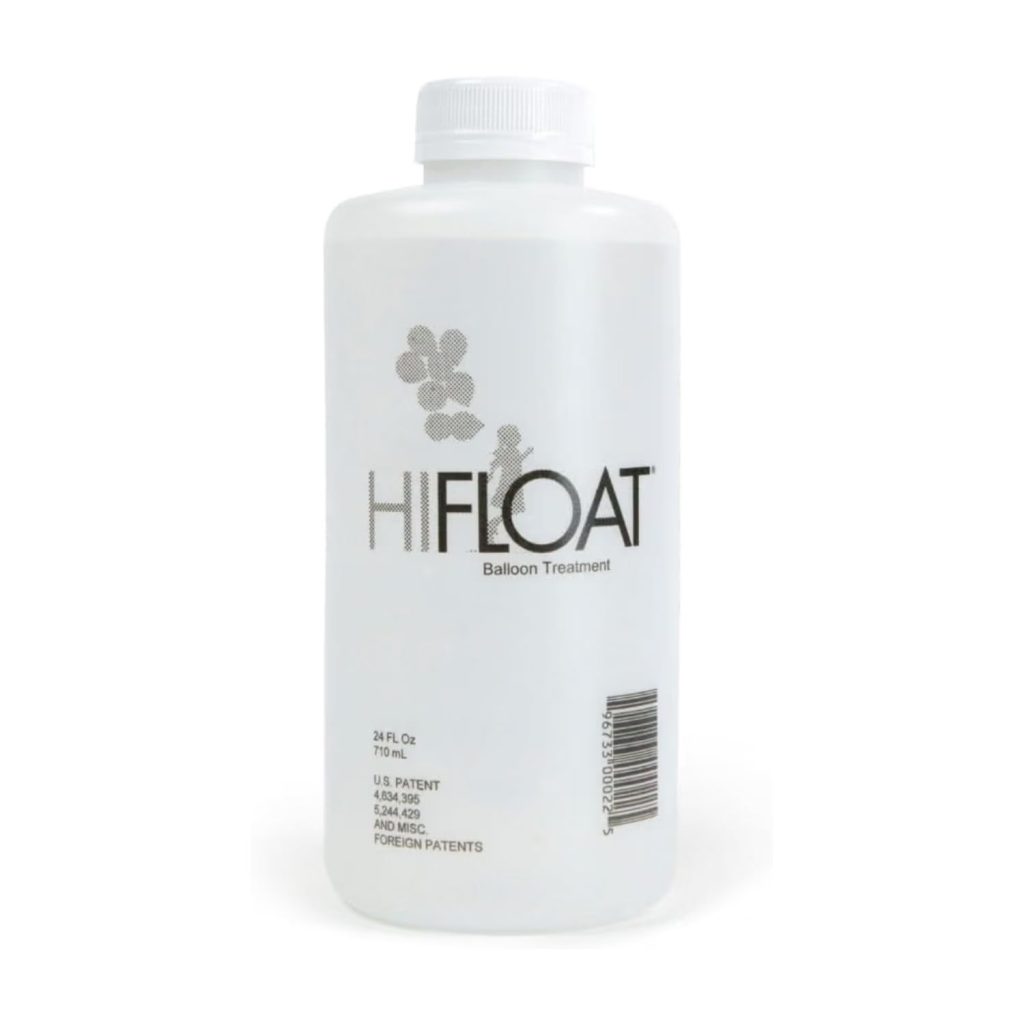
HI-FLOAT is one of those products that people tend to discover only after a balloon disappointment. A birthday party where the helium balloons were drooping by dessert, a wedding where the ceiling installation sagged before the first dance, or a store display that had to be re-inflated every morning. The 24 oz bottle is the larger consumer size of the treatment, and it is designed to be coated on the inside of latex balloons before inflation to slow the helium leak rate. Whether it earns its place in the party-supply cupboard depends a lot on what kind of balloons you are using and how much labor you are willing to put in.
The basic mechanism is straightforward. Latex is porous at a microscopic level, and helium molecules are small enough to escape through the wall of an untreated balloon in a matter of hours to a day, depending on size and conditions. HI-FLOAT is a liquid polymer solution that dries into a thin film on the interior surface, creating an additional barrier. The manufacturer’s guidance suggests it can extend float time from roughly 8–12 hours untreated to several days, with results varying by balloon size, helium purity, temperature, and humidity. That last point matters: in hot, humid rooms, even treated balloons will lose lift noticeably faster.
Using it is more involved than most people expect. The bottle comes with a pump and nozzle setup, and the standard method is to insert the nozzle into the balloon neck, dispense a measured amount (the label provides a chart by balloon size), then massage the balloon to spread the coating evenly around the interior before inflating. The balloon then needs to be inflated and, ideally, left to dry for a period before helium goes in, though many users inflate with helium directly after coating. For a handful of balloons this is manageable. For a hundred balloons, it becomes a small assembly line, and the gel is sticky enough that a workspace with paper towels or a drop cloth is worth setting up in advance.
What the 24 oz size offers is volume. It is intended for larger jobs, and the label indicates it treats a substantial number of balloons depending on size, with smaller balloons (9–11 inch) consuming very little per unit and larger 16-inch or foil-adjacent latex balloons using more. For occasional home use, the smaller bottle may actually be the more sensible purchase, since the solution has a shelf life and does not improve with age. Buying the large bottle for a single birthday party often means throwing away most of it later.
Realistic performance expectations are worth spelling out. HI-FLOAT does not make a balloon float indefinitely, and it does not rescue a balloon that was under-inflated or filled with impure helium. Treated 11-inch balloons in a typical indoor environment can reasonably be expected to hold lift for a couple of days, sometimes longer in cool, dry conditions. Outdoors, in sun or wind, the gains shrink considerably. It also does nothing for foil balloons, which are already effectively non-porous and do not need interior coating. And the coating can leave a residue inside the balloon, which is harmless but means the balloon will not look as clean if it pops or is deflated for reuse.
A fair comparison is to the alternative approaches people use for longer-lasting displays. One option is simply buying larger balloons, since lift duration scales with size. Another is switching to foil balloons where the design allows, or using balloon sticks and frames that do not depend on helium at all. HI-FLOAT sits in a middle category: it is cheaper than upgrading an entire order to foil, but it adds prep time that some event planners will find harder to justify than the cost of the product itself. Professional decorators often treat it as routine, while casual users sometimes find the process fussier than expected.
There is also the question of consistency. Because results depend on coating coverage, balloons treated hastily or unevenly will show mixed float times within the same batch. Reviewers and users frequently report that some balloons in a set last noticeably longer than others, which is usually a technique issue rather than a product defect. Following the measurement chart and taking the time to coat evenly makes a real difference, but it also underlines that this is a product requiring some patience.
Who it suits:
- People planning multi-day events or displays where latex balloons need to stay aloft past the first evening
- Small event businesses and decorators who treat balloons regularly and can use up a larger bottle
- Anyone willing to follow a coating procedure carefully for consistent results
Who should skip it:
- Casual buyers doing one small party who will not use most of a 24 oz bottle before it expires
- Users working mainly with foil balloons, which do not benefit
- Outdoor setups in heat or wind, where gains are limited regardless of treatment
- Anyone wanting a zero-prep solution, since the coating step adds meaningful time per balloon
Overall, HI-FLOAT is a functional product that does what it claims within reasonable limits, but it is a workflow tool more than a magic fix. The 24 oz size makes sense for repeat users and larger jobs; for everyone else, the smaller format or simply adjusting expectations about float time may be the more practical route.