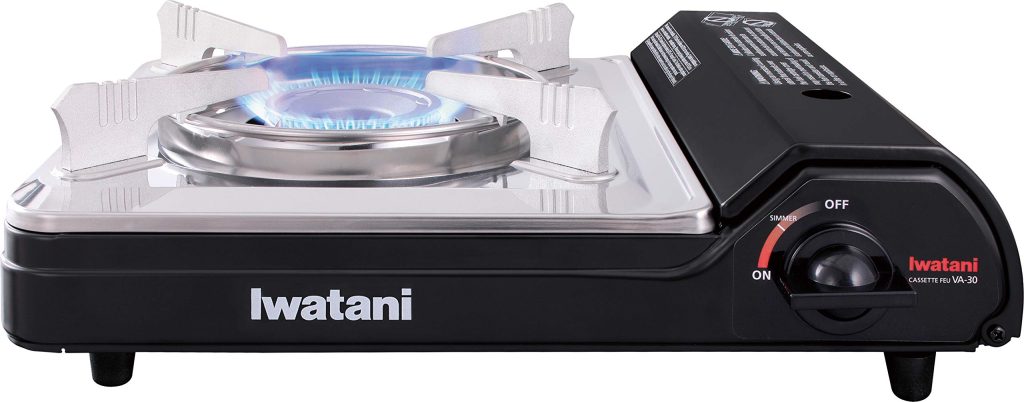
The Iwatani Cassette Feu VA-30 is a single-burner butane stove that occupies a specific niche: portable cooking where a full camp stove setup is impractical. It is the kind of appliance that shows up at tailgates, on fishing trips, in small apartments during a kitchen renovation, and increasingly in emergency kits. Understanding what it is and what it is not goes a long way toward deciding whether it belongs in your gear.
The VA-30 runs on standard 8-ounce butane canisters that snap into a compartment on the side of the unit. There is no hose, no external fuel bottle, and no priming. A lever locks the canister in place, and a knob controls the flame. Iwatani rates the burner at roughly 10,000 BTU, which is respectable for a stove of this size and enough to boil a quart of water in a few minutes under decent conditions. The body is steel with a painted finish, and the unit weighs a bit over three pounds empty, so it is portable without being ultralight.
In practice, the stove is used for simple, fast meals: boiling water for coffee or instant noodles, reheating soup, frying eggs, or running a small skillet or saucepan. The burner head is wide enough to support a 10-inch pan reasonably well, though very large pots or heavy cast iron can feel unstable on the folding arms. The built-in wind screen helps in breezy conditions, but it is not a substitute for a proper windscreen in exposed locations. The piezo ignition is convenient and generally works on the first or second click, though it can be finicky in cold or damp weather.
One of the more practical features is the magnetic canister lock, which is designed to prevent the stove from operating if the canister is not seated correctly. There is also an overpressure shutoff that releases the canister if internal pressure rises too high, typically when the canister gets hot. These are safety features worth noting, but they also mean the stove is not meant for use with large pots that overhang the burner and radiate heat back toward the canister compartment. Users should keep cookware roughly matched to the burner size.
The most significant trade-off is fuel. Butane canisters are inexpensive and widely available in Asian grocery stores and outdoor retailers, but they do not perform well in cold weather. Below roughly 40°F, butane pressure drops and the flame weakens or sputters. This is not a winter camping stove. For three-season use and indoor or sheltered cooking, it is fine. For cold-weather trips, a propane or white gas stove is the more reliable choice. The canisters are also single-use, which means ongoing cost and waste compared to a refillable fuel bottle.
Compared with a typical two-burner propane camp stove, the VA-30 is smaller, lighter, and better suited to solo or small-group cooking, but it cannot match the heat output or the ability to run two pots at once. Compared with a backpacking canister stove that uses isobutane blends, the VA-30 is bulkier and heavier, but it offers a wider burner and a more stable base for real cookware. It sits in a middle ground: more capable than a pocket stove, more portable than a car-camping stove.
Build quality is generally good for the price point, but this is not a premium piece of equipment. The painted steel body can scratch, the folding legs have a bit of play, and the plastic knob and lever feel functional rather than robust. The stove is not designed to be repaired; it is a consumable appliance in the same way a rice cooker is. That is acceptable for the cost, but buyers should not expect a lifetime purchase.
Who is it for? It suits car campers who want a quick morning coffee setup, apartment dwellers who need a temporary burner, tailgaters, and households building a basic emergency cooking kit. It is also common in Asian home kitchens for tabletop hot pot and frying, which is closer to its original design intent. Who is it not for? Backpackers counting ounces, winter campers, and anyone who wants a single stove to handle large family meals or heavy cookware. It is also a poor fit for anyone unwilling to stock disposable canisters.
The VA-30 is a modest, purpose-built appliance. It does a narrow job well, with reasonable safety features and a low entry price, but it comes with real fuel limitations and a build quality that reflects its cost. For the right user, it is a sensible convenience. For the wrong one, it will feel limited quickly.