Losing the key to an office file cabinet is a small problem that can turn into a surprisingly annoying one. Herman Miller cabinets, particularly older Meridian and related storage lines, use a numbered lock system, and the key that came with the unit is often the only one in existence. Keys22 sells pre-cut replacement keys mapped to those lock numbers, and this review looks at the version cut to code UM348, which falls within the company’s UM227–UM350 range.
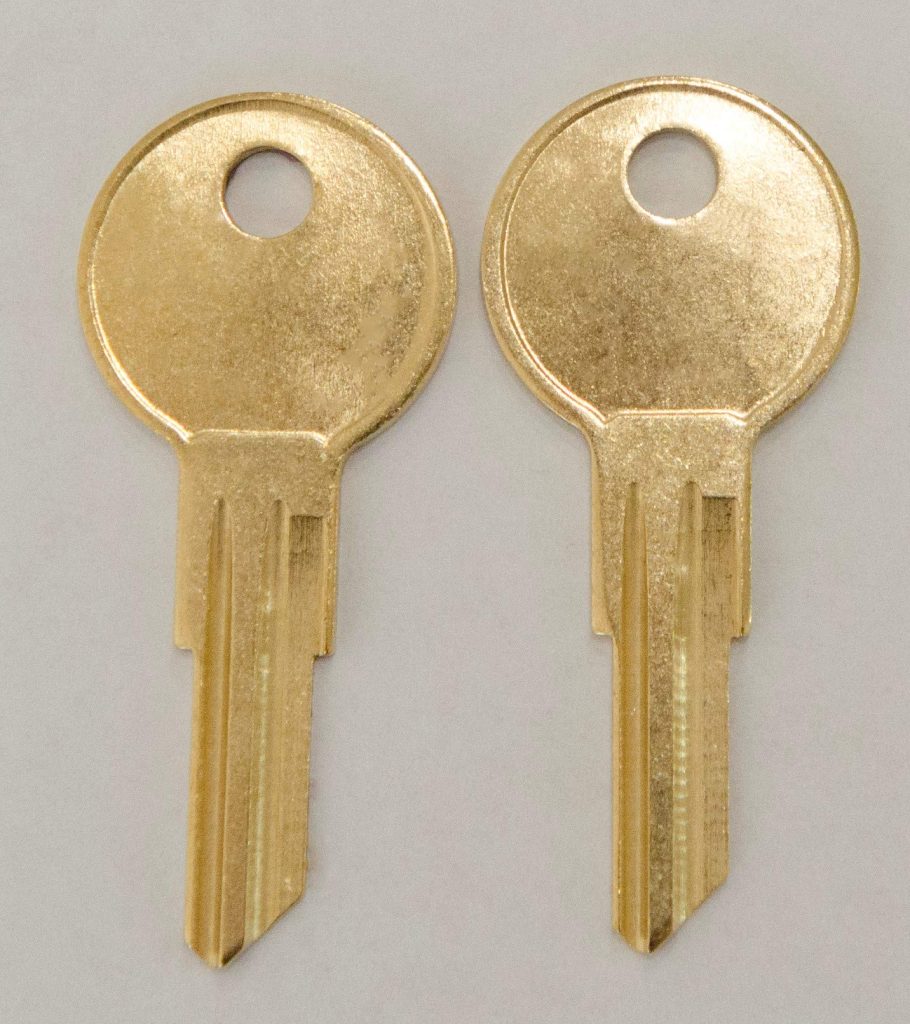
The product itself is simple: a single replacement key, cut at the factory to match the UM348 code, intended to fit a Herman Miller lock stamped with that number. There is no programming, no locksmith visit, and no need to remove the lock from the cabinet. The practical workflow is straightforward. You find the code stamped on the face of the lock cylinder, order the matching key, and it arrives already cut. For anyone managing a bank of filing cabinets in an office, that is a meaningful convenience, because a locksmith call for a single cabinet key often costs more than the key itself and may involve a scheduled visit.
Functionally, the key is what you would expect from a replacement part in this category. It is a standard flat metal key, cut to the manufacturer’s code rather than duplicated from an original, which matters because duplication requires an existing key. If every copy has been lost, code cutting is the only path short of lock replacement. The UM range covers a broad span of lock numbers, so the main task for a buyer is confirming the exact code on the lock before ordering. Getting that number wrong is the most common way this purchase goes badly, and it is worth checking twice, ideally with a photo of the stamping.
In real-world use, these keys tend to serve two audiences. The first is facilities and office managers responsible for a floor of Herman Miller storage, where cabinets get reassigned, moved, or inherited without keys. The second is individuals who bought a used cabinet at surplus or auction and received it locked with no key at all. In both cases, a pre-cut code key restores normal use without drilling the lock, which is the alternative most people want to avoid.
There are limitations worth stating plainly. Because the key is cut to a code rather than to your specific lock’s wear pattern, fit can vary slightly on older, well-used locks. A cabinet that has been opened thousands of times may have a cylinder that is looser or stickier than when new, and a fresh code-cut key can feel stiff at first. It usually works, but it may need a little jiggle or graphite rather than gliding in like the original did. Buyers should also understand that this is a key only. It is not a lock, not a set of two despite some listing language suggesting pairs, and not a universal fit. If the code on your lock is outside the UM227–UM350 range, this specific product will not help.
Compared with the alternatives, the trade-offs are clear. A local locksmith can cut a key from an existing original or impression a lock when no key exists, and that route handles odd or worn locks better. But it costs more and takes time. Ordering a replacement lock assembly is another option, and it guarantees a fresh cylinder and keys, but it means installation work and possibly mismatched hardware across a row of cabinets. The code-key approach sits in the middle: cheap, fast, and dependent entirely on getting the code right.
This key is suitable for facilities staff, office managers, and secondhand-cabinet owners who have confirmed their lock code and want a low-cost way back into a working cabinet. It is not suitable for anyone who has not verified the code, anyone whose lock number falls outside the stated range, or anyone expecting a key to compensate for a damaged or failing lock mechanism. It is also not the right choice if you still have an original key, since duplicating that is usually simpler and produces a closer fit.
Expectations should stay modest. This is a small, functional part, and its value depends almost entirely on the accuracy of the code match. When the code is right, it does exactly what it should. When it is wrong, no amount of key quality will save the order, so the real work happens before checkout, not after delivery.