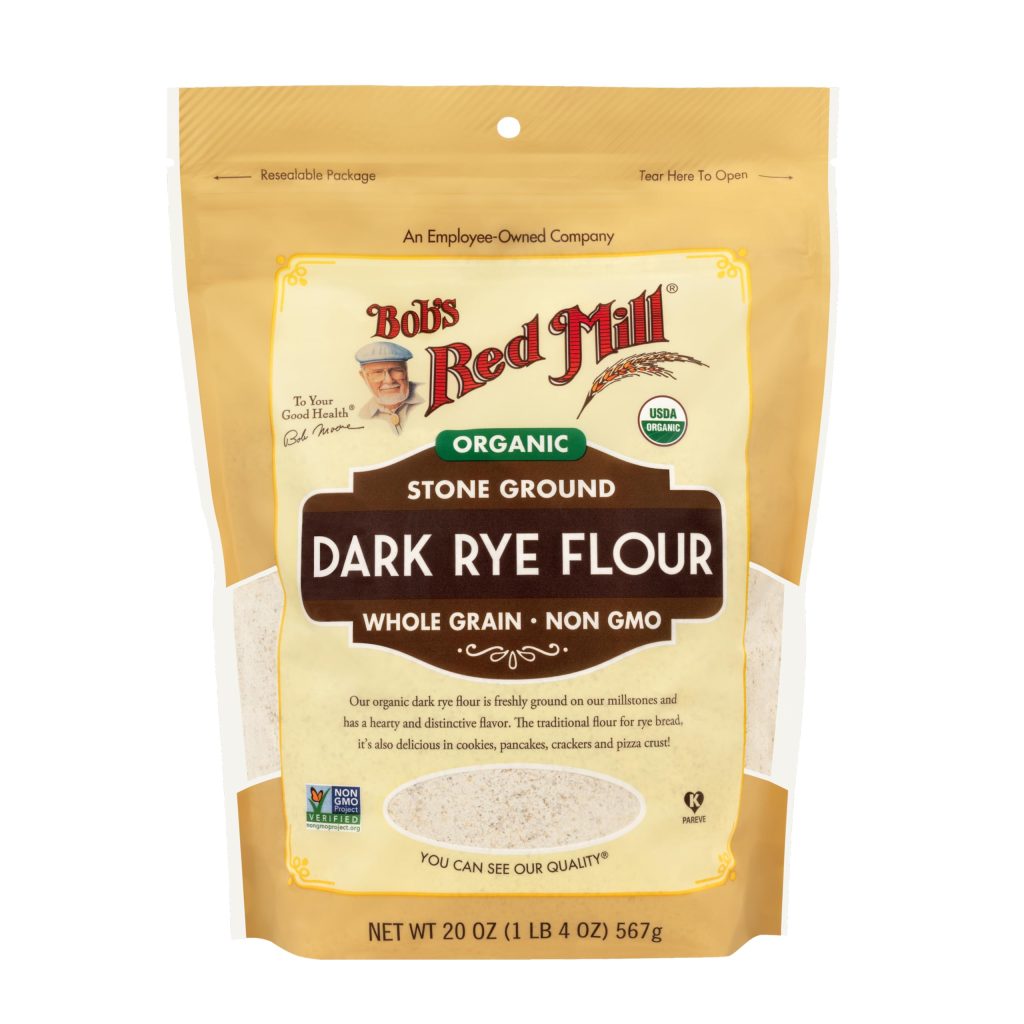
Rye flour occupies an odd corner of the home baking aisle. Most supermarkets stock one bag of light rye, often pushed to the bottom shelf, and call it a day. Bob’s Red Mill’s Organic Dark Rye Flour is a step beyond that: a whole-grain, stone-ground product that includes more of the bran and germ than lighter rye flours, which gives it a deeper color, a stronger flavor, and a different set of behavior in dough. The 20-ounce bag is small enough that it won’t sit in the pantry for years, which matters for a whole-grain flour that goes rancid faster than white flour.
What separates dark rye from light rye is milling. Light rye sifts out much of the bran, leaving a pale, milder flour that behaves more predictably in bread. Dark rye keeps more of the whole grain, so it ferments faster, absorbs more water, and contributes a pronounced sour, earthy tang. That’s the point for anyone baking deli-style rye, pumpernickel-adjacent loaves, or dense Scandinavian-style breads. It’s also why dark rye is a poor substitute in recipes written for light rye—the dough will feel wetter and the crumb tighter than the recipe author intended.
In practice, most people use this flour as a flavoring component rather than a base. A typical approach is swapping 15 to 30 percent of the bread flour in a sourdough or yeasted loaf for dark rye, which adds color and tang without collapsing the structure. Rye has little gluten and lots of pentosans, the carbohydrates that make rye doughs sticky and gummy if handled like wheat dough. Bakers who treat it as a drop-in replacement for all-purpose flour usually end up with a dense brick. Used as an accent, it performs well: the flour hydrates readily, the flavor carries through fermentation, and the resulting loaf has a moist, slightly chewy interior that keeps for days.
Beyond bread, the flour works in crackers, pancakes, and some cookie recipes where a molasses-like bitterness is welcome. It’s less forgiving in quick breads and cakes, where the coarse grind and strong flavor can overwhelm lighter ingredients. The 20-ounce size is enough for roughly three to four loaves at a 20 percent substitution rate, or about two batches of rye crackers. That’s a reasonable amount for occasional bakers, though anyone baking rye weekly will find it runs out quickly and may prefer a larger bag or a bulk source.
Organic certification is a real differentiator here. Certified organic rye is harder to find than organic wheat, and Bob’s Red Mill sources it through a supply chain that the company has documented for years. Whether that matters depends on the buyer; for some, it’s the reason to choose this bag over a cheaper conventional option, and for others it’s an unnecessary premium.
The trade-offs are worth spelling out. First, freshness: whole-grain rye flour has a shorter shelf life than white flour because the oils in the germ go rancid. The bag is resealable, but once opened, the flour is best used within a few months, and storing it in the freezer extends that window. Second, consistency: because it’s stone-ground whole grain, the grind varies slightly from batch to batch, and hydration needs can shift accordingly. Bakers who weigh ingredients and adjust water by feel will manage fine; those following recipes by volume may find results inconsistent. Third, flavor intensity: this is a genuinely assertive flour. In small amounts it’s an asset; in larger amounts it can dominate a loaf to the point where other grains disappear.
Compared with light rye flour, dark rye is less versatile but more distinctive. Light rye is the safer choice for beginners or for recipes that call for rye as a background note, while dark rye rewards bakers who want the flour to be a feature. Compared with whole wheat flour, rye brings a sourness and a tighter crumb that whole wheat doesn’t, and it ferments noticeably faster, which changes sourdough timing. Compared with pre-mixed rye bread blends—which often combine rye flour with wheat flour and sometimes caraway—this is a single ingredient, so the baker controls the ratio. That’s more work but more flexibility.
Who is this for? Home bakers who already make sourdough or yeasted bread and want to add rye loaves to their rotation, people interested in Scandinavian and Eastern European baking traditions, and anyone who wants a certified organic whole-grain rye in a manageable size. It’s also a sensible entry point for bakers curious about rye who don’t want to commit to a five-pound bag.
Who is it not for? Beginners looking for a forgiving flour to learn bread baking with—start with bread flour or whole wheat and add rye later. Anyone expecting to substitute it one-for-one in wheat recipes will be disappointed. And bakers who bake rye only a few times a year may find even this small bag goes stale before it’s finished, unless they freeze it.
The bottom line: a well-sourced, whole-grain dark rye that does exactly what dark rye should—strong flavor, fast fermentation, dense crumb—with the usual caveats about freshness and handling. It’s not a beginner’s flour, and it isn’t meant to be used alone. Treated as a flavor component and stored properly, it earns its place in a working baker’s pantry.