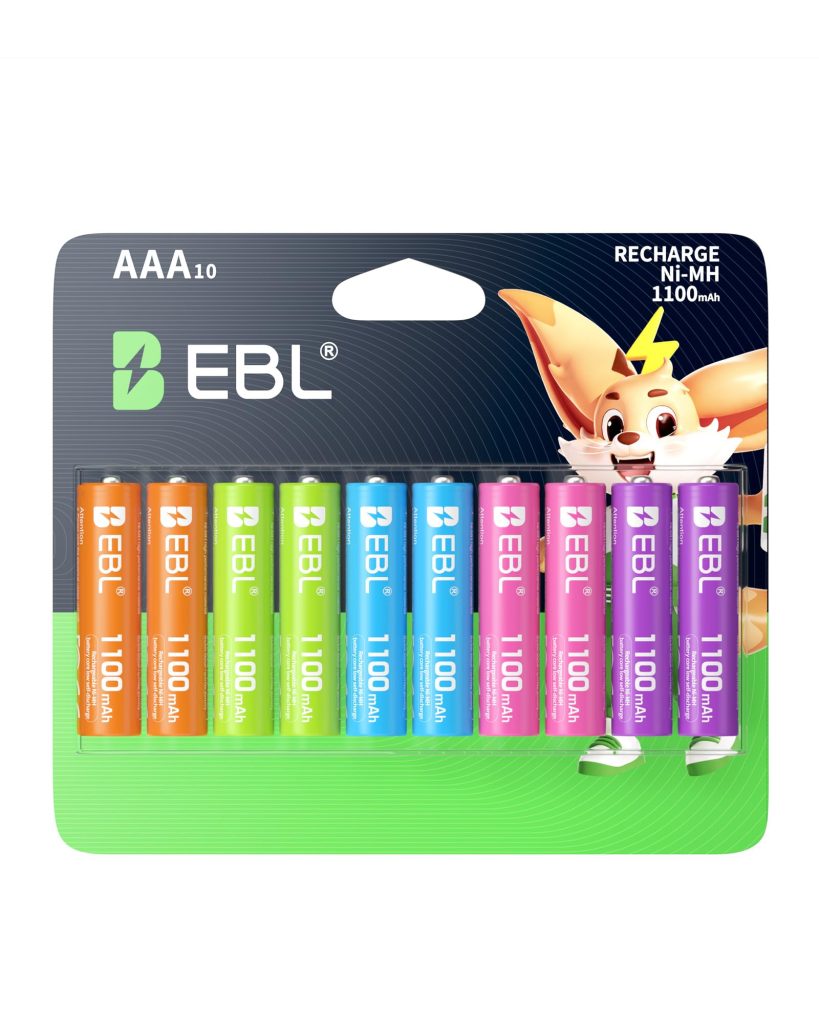
Rechargeable AAA batteries are one of those purchases you make once and then mostly forget about—until a remote dies mid-show or a kid’s toy starts winding down. The EBL Rechargeable AAA 10-Pack (1.2V NiMH, 1100mAh, pre-charged) sits in the crowded middle of the market: not the cheapest, not the highest-capacity, but a sensible option for households that go through a lot of small batteries. This review is based on the product’s specifications and typical user reports, not a long-term lab test.
In real-world use, these are the batteries you’d drop into TV remotes, wireless mice, game controllers, kitchen scales, and the endless stream of battery-powered toys. The 1100mAh capacity is on the higher end for AAA NiMH—many standard rechargeables hover around 800–1000mAh—so you can expect a bit more runtime per charge than with basic cells. They come pre-charged, which means you can use them straight out of the pack, though the initial charge may not be full. EBL doesn’t specify the exact pre-charge level, but it’s usually around 70–80% for NiMH cells.
One of the practical advantages of NiMH is that they don’t suffer from the memory effect that plagued older nickel-cadmium batteries, so you can top them off without worrying about reducing capacity. They also handle moderate discharge rates well, making them fine for most household electronics. However, they are not low-self-discharge (LSD) batteries like Eneloops, so they will lose charge over time even when not in use—typically a few percent per month. That’s a trade-off: you get a higher capacity than many LSD cells, but you’ll need to recharge them before use if they’ve been sitting in a drawer for six months.
The 10-pack is a reasonable quantity for a family: enough to keep a few devices running while others are charging. But it’s worth noting that you’ll need a separate charger, which adds to the overall cost. EBL sells chargers separately, and while their own brand chargers are affordable, any reputable NiMH charger will work. If you’re new to rechargeables, factor in that expense.
Performance-wise, these batteries are best suited for low-to-moderate drain devices. They’ll do fine in remotes, clocks, and LED flashlights, but for high-drain devices like digital cameras or powerful gaming controllers, you might notice shorter runtime compared to premium LSD cells or disposable alkalines. Also, NiMH batteries have a nominal voltage of 1.2V versus 1.5V for alkalines; most devices handle this fine, but a few picky gadgets may show a low-battery warning earlier than expected.
Compared to disposable alkalines, the EBLs will save money over time if you use them regularly. A 10-pack of alkalines might cost $5–$8 and last a few months in a remote; the EBLs cost more upfront (around $15–$20) but can be recharged hundreds of times. However, if you only replace batteries once a year, the savings are minimal. Compared to low-self-discharge NiMH like Panasonic Eneloops, the EBLs have a slightly higher capacity (1100mAh vs. 800mAh for Eneloop AAA) but lose charge faster when idle. Eneloops are better for devices you use infrequently, while EBLs are fine for regularly used items.
Who is this for? It’s a good fit for households with children (toys), people who use wireless peripherals daily, or anyone looking to reduce disposable battery waste. It’s not ideal for professional photographers or high-drain users who need maximum reliability and low self-discharge—those users should look at Eneloop Pro or similar. Also, if you need batteries for a device that sits unused for months (like a emergency flashlight), LSD cells are a better choice.
In summary, the EBL Rechargeable AAA 10-Pack offers a solid balance of capacity and price for everyday use. It’s not the most advanced option, but it gets the job done for common devices, provided you’re willing to manage charging and accept the self-discharge trade-off. Just don’t expect premium performance in extreme conditions.