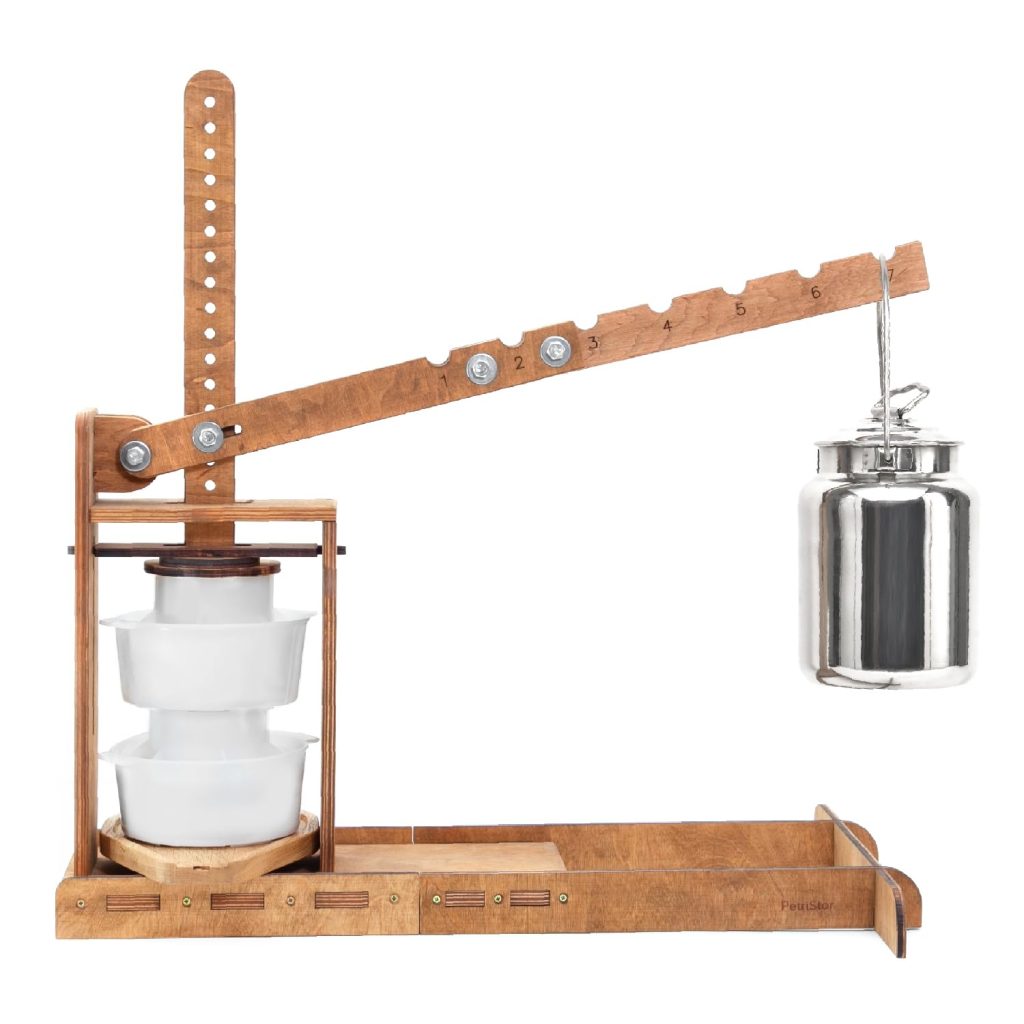
For home cheesemakers, pressing curds is a critical step that determines the final texture of hard and semi-hard cheeses. The Dutch Wooden Cheese Press offers a traditional lever-based approach to this task, accommodating up to 200 pounds of pressure. This review examines its design, functionality, and practical considerations for different types of cheesemakers.
The press is constructed primarily from wood, with a lever arm and a wooden follower that fits inside the included molds. Two cheese molds, each with a 1.2-liter capacity, are provided, allowing you to press two smaller wheels simultaneously or one larger wheel if you stack them. The lever mechanism works by multiplying force applied to the end of the arm through a pivot point, theoretically achieving up to 200 pounds of pressure at the follower. However, the actual pressure depends on how much weight you hang from the lever arm—typically a bucket of water or weighted plates. The wooden components are unfinished, which is common for such presses to avoid chemical contaminants, but it means you should oil them occasionally to prevent cracking and warping.
In real-world use, this press is best suited for cheeses that require moderate pressure, such as cheddar, gouda, or jack. The lever design allows for gradual pressure increase, which is important for knitting curds without trapping excess whey. The two molds are a nice touch for experimenting with different recipes or making smaller batches. However, the wooden construction has trade-offs: it can absorb moisture and odors over time, and it requires more maintenance than stainless steel alternatives. Also, the pressure gauge is not included, so you’ll need to calculate the weight needed based on the lever ratio, which can be a bit of a guessing game for beginners.
Compared to screw-type presses, which are often made of stainless steel and apply pressure directly via a threaded rod, this lever press offers a more traditional feel and can achieve higher pressures with less physical effort. Screw presses are generally easier to clean and maintain, but they can be more expensive. The Dutch wooden press is a budget-friendly option for those who want to try their hand at pressing without a large investment. However, it may not be ideal for very hard cheeses like parmesan that require extreme pressure over long periods, as the wooden components might not hold up as well as metal.
Who is this for? It’s suitable for beginner to intermediate home cheesemakers who make small batches of semi-hard or hard cheeses and appreciate a traditional aesthetic. It’s also a good choice for those who want to press two cheeses at once. Who is it not for? Those who prioritize ease of cleaning and low maintenance might prefer a stainless steel press. Also, if you’re making large volumes or very hard cheeses regularly, a more robust press might be necessary. The lack of a pressure gauge means you’ll need to rely on recipes and experience to get consistent results, which could frustrate some users.
In summary, the Dutch Wooden Cheese Press is a functional, traditional tool that gets the job done for small-scale cheesemaking. It has its quirks—wooden parts require care, and pressure calculation is manual—but it’s a viable option for hobbyists looking to expand their cheesemaking capabilities without breaking the bank.


