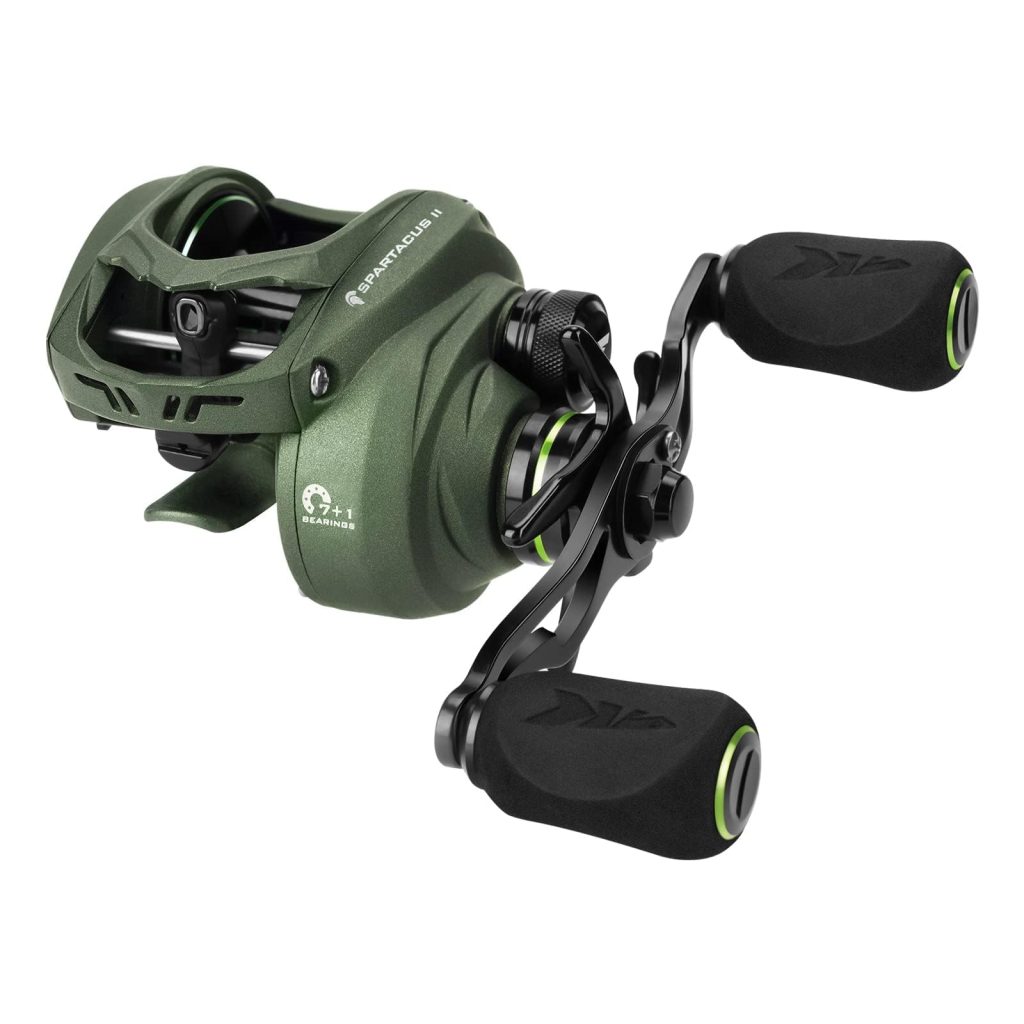
The KastKing Spartacus II sits in a crowded field of entry-level baitcasters, and the left-hand 7.2:1 version in green is aimed at anglers who want a reasonably fast retrieve without spending much. It is the kind of reel that tends to show up on a first baitcasting setup, on a dedicated flipping rod, or as a spare in the boat bag. The question is whether it makes sense for those roles, and the answer depends heavily on what you expect from a reel at this price.
The Spartacus II uses a graphite frame and side plates, which keeps weight down but does not deliver the rigidity of an aluminum frame. The 7.2:1 gear ratio pulls in roughly 29 inches of line per turn of the handle, which is a middle-of-the-road speed suited to moving baits, soft plastics, and general-purpose freshwater fishing. The reel carries a 10-bearing system, a magnetic braking system adjustable via an external dial, and a star drag rated around 17.6 pounds. Line capacity is reasonable for a reel this size, and the left-hand retrieve configuration will appeal to anglers who prefer to crank with their dominant hand.
In practice, the Spartacus II is most at home on a medium or medium-heavy casting rod throwing crankbaits, spinnerbaits, chatterbaits, and Texas-rigged plastics. The external magnetic brake dial is genuinely convenient on the water, since you can adjust for wind or a lure change without opening the side plate. That matters more than spec-sheet bearing counts for a newer baitcaster user. The drag is smooth enough for the bass and pike most buyers will target, and the 7.2:1 ratio is a sensible compromise for anglers who throw a bit of everything rather than specializing.
Where the reel shows its price is in refinement. The graphite body flexes under load, and that flex is noticeable when you lean into a hookset or fight a heavier fish. The braking system is effective but not especially nuanced; fine-tuning between a light lure and a heavy one takes more dialing than with a more expensive magnetic or dual-brake system. Spool tension and brake adjustments can be fussy out of the box, and the reel benefits from a proper cleaning and relubrication sooner than premium reels do. Some units arrive with more gear noise than others, which is a common trait in this tier rather than a defect specific to KastKing.
Cast control is the usual learning curve. The Spartacus II is not a reel that flings weightless lures with abandon; it prefers lures with some mass behind them. Anglers stepping up from spinning gear should expect a few backlashes while dialing in the brakes, and the reel rewards a smooth casting stroke over a hard snap. Distance is adequate rather than impressive, and into a headwind the braking system asks for more adjustment than a higher-end reel would.
Compared with a spinning reel of similar price, the baitcaster offers more control over lure placement and better accuracy around cover, but it demands more skill and is less forgiving of light lures and windy conditions. Compared with a step-up baitcaster from a major brand, the Spartacus II gives up frame rigidity, brake refinement, and long-term durability, but it costs a fraction of the price. For someone testing whether baitcasting suits them, that trade-off is defensible; for someone fishing hard every weekend, the upgrade is usually worth it.
The left-hand 7.2:1 green version is a reasonable choice for bass anglers fishing ponds, reservoirs, and rivers from shore or a small boat, and for anyone who wants a dedicated rod setup without a large outlay. It is also a sensible second reel for a kayak or canoe where gear gets knocked around. It is less suitable for anglers chasing large fish in heavy cover, for saltwater use, or for anyone who throws finesse lures below roughly a quarter ounce on a regular basis. Tournament anglers and people who fish several days a week will likely outgrow it quickly.
Maintenance is straightforward but not optional. Rinsing after freshwater use, occasional oiling of the spool bearings, and a yearly teardown will extend its life considerably. Treat it as a tool with a finite service life rather than a long-term investment, and the Spartacus II does what it is supposed to do without much drama.