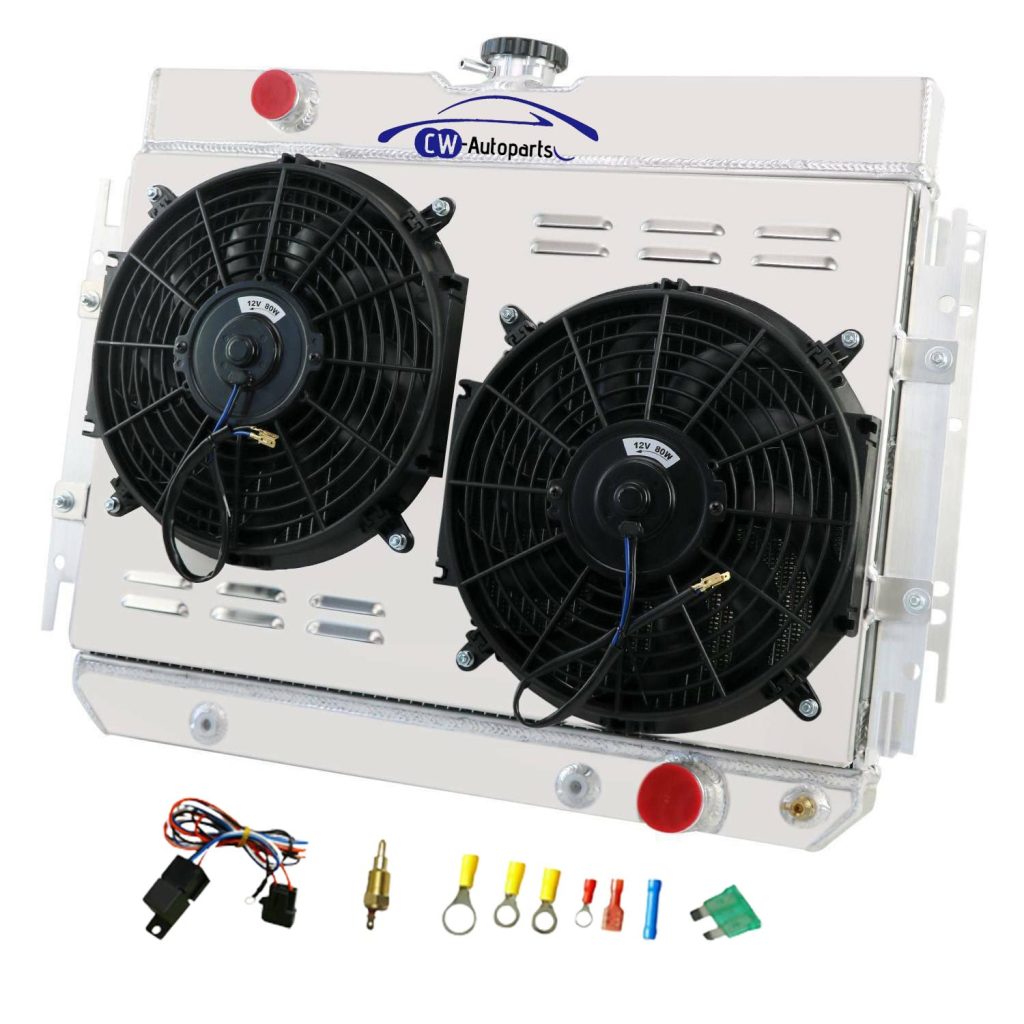
If you’re restoring or maintaining a classic Chevrolet from the 1960s, cooling is often a weak point. Original brass radiators were adequate when new, but decades of use, corrosion, and higher underhood temperatures from modern fuels and air conditioning can push them beyond their limits. The CW-AutoParts 3-row aluminum radiator with dual 12-inch fans, shroud, and relay aims to address that, but it’s not a one-size-fits-all solution. Here’s a closer look at what it offers and where it might fall short.
The kit is designed for a range of 1959-1968 Chevrolet models, including Bel Air, Biscayne, Impala, Caprice, Chevelle, and El Camino. It uses an all-aluminum construction with a three-row core, which typically provides better heat dissipation than a traditional two-row copper/brass unit. The included dual 12-inch electric fans and shroud are meant to replace the engine-driven fan, freeing up a small amount of horsepower and improving airflow at idle. The relay and wiring are also part of the package, which simplifies installation for those who don’t want to source components separately.
In real-world use, this setup is most at home in a mildly modified or stock vehicle that sees street duty, occasional highway cruising, and maybe a few drag strip passes. The three-row core offers more cooling capacity than a stock replacement, but it’s not a race-grade unit. For a big-block with high compression or a turbocharged setup, you’d likely need a larger, crossflow design with a higher fin count. For a small-block or inline-six, it’s probably more than sufficient. The dual fans move a decent amount of air, but they’re not brushless or particularly high-output; they’ll keep temperatures in check in traffic, but if you’re stuck in a prolonged traffic jam on a 100-degree day with the A/C on, you might see temps creep up. That’s not a knock against this specific product as much as a reality of electric fan setups in general.
Installation is where these kits can get tricky. The radiator is a direct-fit for the listed applications, but ‘direct-fit’ in the classic car world often means ‘fits with minor adjustments.’ The mounting brackets may require slight bending or shimming, and the fan shroud might need trimming to clear accessory drives or hoses. The included relay is a basic 40-amp unit, which is adequate for the fans, but the wiring diagram is generic and may not match your car’s existing harness. Plan on spending a weekend on the install if you’re doing it yourself, and consider upgrading to a higher-quality relay and fuse block if you want long-term reliability.
One notable trade-off is that aluminum radiators are more susceptible to electrolysis if your cooling system isn’t properly maintained. You’ll need to use the correct coolant (typically a 50/50 mix of distilled water and aluminum-compatible antifreeze) and ensure your grounds are solid. Unlike copper/brass, aluminum can’t be easily repaired by a local radiator shop; a puncture often means replacement. That’s a consideration for a daily driver or a car that sees a lot of road debris.
Compared to a stock replacement radiator, this kit offers better cooling at a similar or slightly higher price point, especially when you factor in the fans and shroud. A comparable aftermarket setup from a brand like Be Cool or Griffin would cost significantly more, but those often come with a higher build quality and better customer support. If you’re on a budget and need a functional upgrade, the CW-AutoParts kit is a reasonable choice. If you’re building a show car or a high-performance machine, you might want to look at a more premium option.
So who is this for? It’s best suited to the DIY enthusiast with a mostly stock or mildly built Chevy from the listed years who wants to improve cooling without breaking the bank. It’s also a decent option for someone replacing a failed original radiator and wanting to upgrade to electric fans at the same time. Who is it not for? Those with high-horsepower engines, those who want a bolt-in, no-modification solution, or those who prefer the serviceability of a copper/brass radiator. Also, if you have a car with a non-standard engine swap or custom front-end setup, fitment could be a headache.
In summary, the CW-AutoParts 3-row aluminum radiator and fan kit is a practical upgrade for classic Chevy owners who need better cooling for street use. It’s not without its quirks—fitment may require massaging, and the fans have limits—but it delivers on the basics at a price that won’t scare you off. Just go in with realistic expectations and a willingness to tinker.