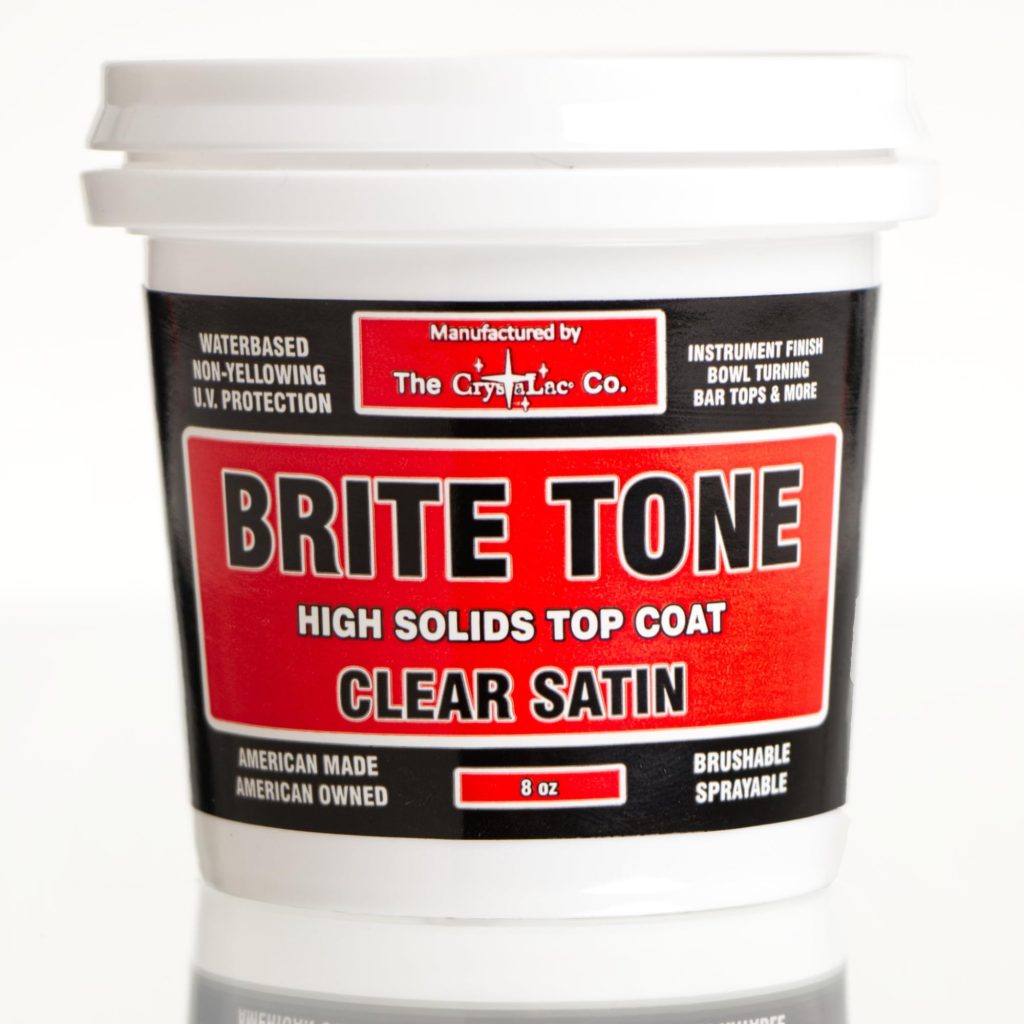
CrystaLac Brite Tone High Solids Polyurethane is a water-based finish designed specifically for musical instruments. This 8 oz mini container in clear satin is aimed at luthiers and DIY builders who want a durable, clear coat that doesn’t yellow over time. In this review, we’ll examine its features, real-world performance, and how it stacks up against other instrument finishes.
Water-based polyurethane has gained popularity in instrument finishing for its low odor, easy cleanup, and non-yellowing properties. CrystaLac Brite Tone High Solids is formulated with a high resin content, meaning it builds faster than many other water-based finishes. This can reduce the number of coats needed, saving time and effort. The finish is available in various sheens; we’re focusing on clear satin, which offers a subdued, natural look that many players prefer for both acoustic and electric instruments.
In practice, this finish is typically applied with a spray gun, though it can also be brushed or wiped on. It dries to a hard, protective film that resists moisture, alcohol, and wear—important for instruments that see regular use. The high solids content means each coat adds more thickness, so you might need only 3-4 coats for a solid build, compared to 6-8 with thinner finishes. However, achieving a flawless finish requires careful surface prep and application technique; runs and orange peel can occur if you’re not experienced with spray equipment.
One of the standout features of CrystaLac Brite Tone is its clarity. It dries clear and remains clear over time, unlike some oil-based finishes that amber with age. This is particularly important for light-colored woods like maple or ash, where yellowing would be undesirable. The satin sheen is achieved with flattening agents that settle well, providing a consistent low-sheen look without needing to rub out the finish. That said, some users report that the satin can appear slightly cloudy if applied too thickly, so thin coats are recommended.
Durability is a key selling point. Polyurethane finishes are known for their toughness, and this one is no exception. It forms a hard film that resists scratches and chemicals, making it suitable for instruments that get heavy play. However, like any finish, it’s not indestructible; deep gouges can still occur, and repair can be tricky because polyurethane doesn’t melt into previous coats like lacquer does. This means touch-ups may be more visible, especially on satin finishes where blending is harder.
Compared to nitrocellulose lacquer, a traditional instrument finish, CrystaLac Brite Tone is more environmentally friendly and safer to use indoors. Nitro lacquer is solvent-based, highly flammable, and requires proper ventilation. Water-based polyurethane like this one has low VOCs and cleans up with water. However, nitro lacquer is often preferred for its ability to burn into previous coats, making repairs seamless. It also tends to have a warmer, more vintage look as it ages, which some players prefer. CrystaLac, being water-based, doesn’t offer that same chemical burn-in, so repairs can be more challenging.
Another alternative is oil-based polyurethane, which is more durable than water-based but takes longer to dry and yellows over time. CrystaLac Brite Tone sits in a middle ground: it’s more durable than many water-based finishes, doesn’t yellow, and dries relatively quickly. But it may not be as hard as some oil-based options, and it requires more careful application to avoid a plastic-like appearance.
Who is this for? It’s well-suited for experienced luthiers or serious DIY builders who have spray equipment and a dust-free workspace. If you’re finishing a guitar, bass, or other stringed instrument and want a durable, clear satin finish that won’t yellow, this is a solid choice. It’s also good for those who prefer water-based products for health or environmental reasons.
However, it’s not for everyone. Beginners might find it challenging to apply without runs or uneven sheen. If you’re looking for a finish that’s easy to apply by hand, a wipe-on poly or tung oil might be more forgiving. Also, if you’re restoring a vintage instrument and want to maintain authenticity, nitrocellulose lacquer is the traditional choice. And for those on a tight budget, this 8 oz mini is convenient but more expensive per ounce than larger sizes; if you’re finishing multiple instruments, buying in bulk is more economical.
In terms of performance expectations, don’t expect a perfect finish out of the can. You’ll need to practice your spraying technique, control the environment (temperature and humidity), and possibly wet-sand and buff to achieve a professional look. The satin sheen is more forgiving than gloss, but it still shows imperfections if not applied evenly.
Overall, CrystaLac Brite Tone High Solids Polyurethane is a capable instrument finish that offers good durability and clarity. It’s not a miracle product, and it has its quirks, but for the right user, it can deliver professional results. Just be prepared to invest time in learning how to use it effectively.