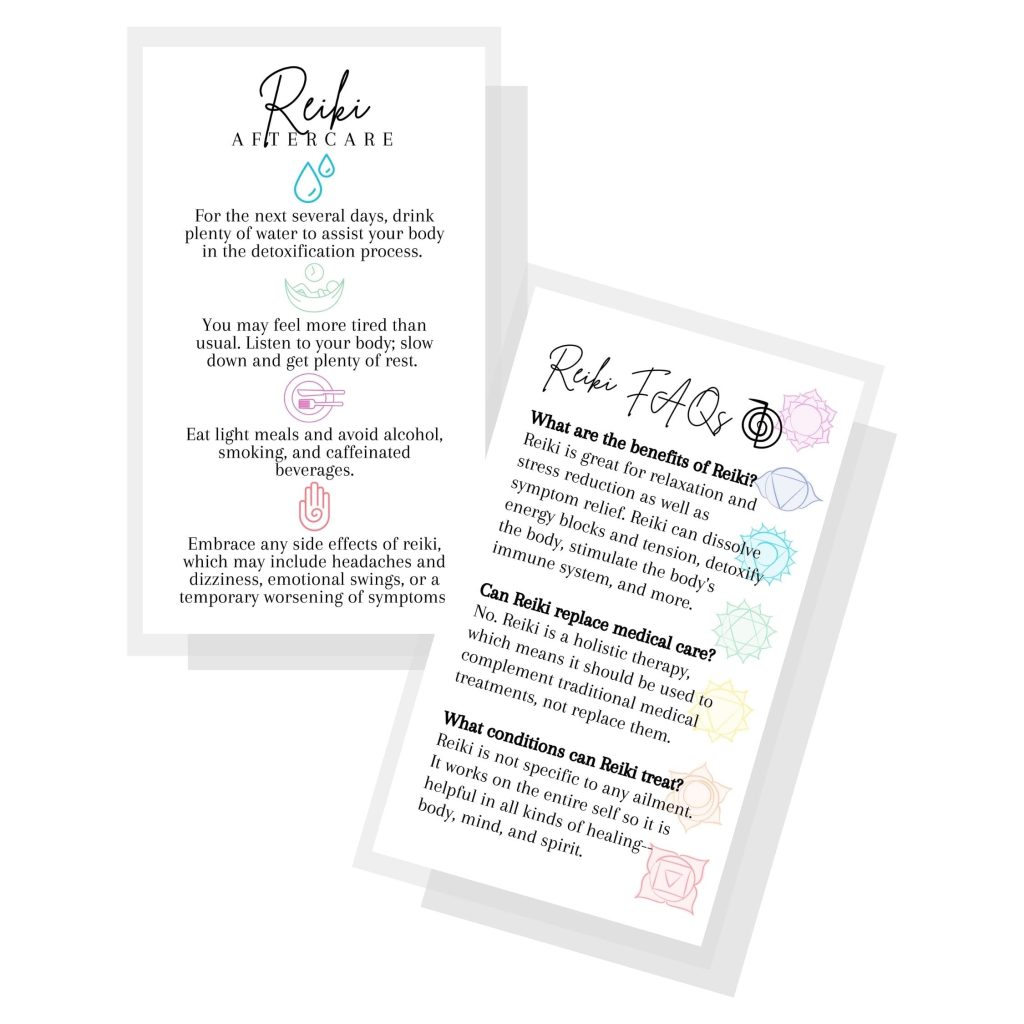
For Reiki practitioners, the end of a session often comes with a flurry of questions from clients: What should I do next? Why do I feel tingling? How much water should I drink? Answering these repeatedly can eat into time and energy. The Reiki Aftercare and FAQ Client Cards aim to streamline that process. This 50-pack of 2 x 3.5-inch business cards, printed with chakra symbols and brief aftercare guidance, is designed to be handed to clients after a session. The idea is simple: provide a takeaway that reinforces post-session care and reduces repetitive explanations.
The cards cover common aftercare instructions: drink water, rest, journal, avoid alcohol, and so on. They also include a few FAQs, such as what to expect from Reiki and why some people feel emotional release. The chakra symbols add a visual element that aligns with the spiritual nature of Reiki. At 2 x 3.5 inches, they are the size of a standard business card, so they fit easily into a wallet or pocket. The white background with subtle symbols keeps the design clean and professional, though the text is small—some clients might need reading glasses.
In practice, these cards serve as a gentle reminder for clients who may forget verbal instructions. They also act as a subtle marketing tool: the practitioner’s contact information can be added on the back, turning the card into a referral aid. For new practitioners, having a printed handout can lend an air of professionalism and help establish boundaries around aftercare without lengthy conversations. For seasoned practitioners, it might feel redundant if they already have a robust follow-up system.
One limitation is the one-size-fits-all approach. Reiki aftercare can vary based on the client’s needs, the style of Reiki practiced, and the practitioner’s philosophy. These cards offer generic advice that may not align with everyone’s approach. For example, some practitioners emphasize grounding exercises, while others focus on emotional release. The cards don’t allow for customization beyond what’s pre-printed. Also, the FAQ section is brief; clients with deeper questions will still need to ask the practitioner directly.
Compared to alternative aftercare tools, such as a printed aftercare sheet or a digital PDF sent via email, these cards are more portable and tangible. A full-page handout can provide more detailed information, but it’s less likely to be kept. Digital files are easy to lose or ignore. The cards strike a balance between convenience and information, but they can’t replace a thorough verbal explanation. Some practitioners might prefer to create their own cards with personalized content, which offers greater flexibility but requires design time and printing costs.
Who are these cards for? They suit practitioners who want a ready-made, professional-looking handout without the hassle of designing one. They are also useful for those who practice in settings where quick turnover is common, such as massage therapy clinics or wellness fairs. However, they are not ideal for practitioners who offer highly customized aftercare or who work with clients who need more detailed guidance. Clients with low vision may struggle with the small text, and those who prefer digital resources might discard the card.
In terms of quality, the cards are printed on standard cardstock—nothing fancy, but adequate for a business card. They are not laminated, so they can dog-ear over time. The chakra symbols are printed in a subtle color, which might not reproduce well if the practitioner wants to add their own branding. The pack of 50 is a reasonable quantity for occasional use; a busy practitioner might go through them quickly and need to reorder.
Overall, the Reiki Aftercare and FAQ Client Cards are a practical, low-cost tool that can enhance the client experience and reduce repetitive explanations. They are not a substitute for personalized care, but they serve as a helpful reminder and a subtle marketing piece. For practitioners seeking a simple, ready-made solution, these cards are worth considering. For those who prefer a more tailored approach, creating custom cards might be a better fit.


