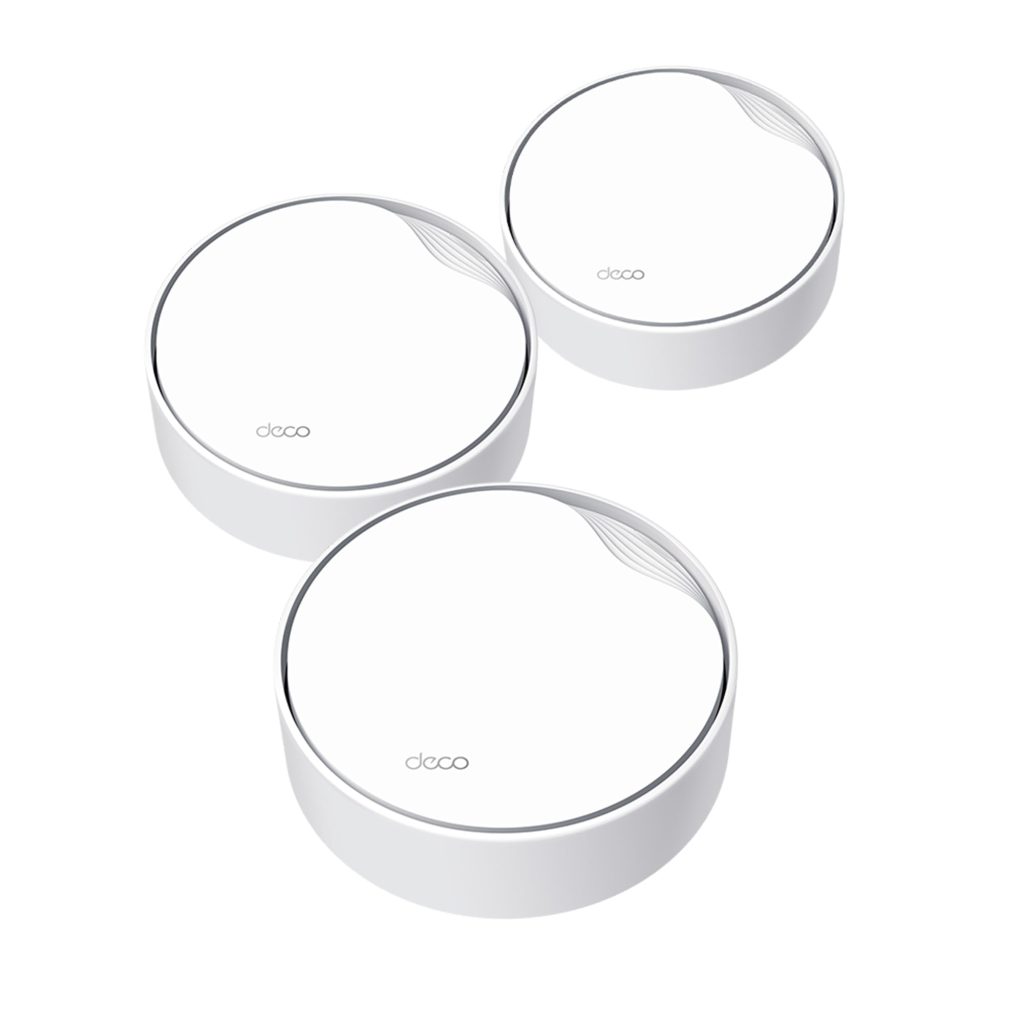
The TP-Link Deco X50 AX3000 mesh system takes a slightly different approach than many consumer mesh kits. Instead of the typical puck-shaped nodes you place on shelves, these units are designed to be mounted on a wall or ceiling. This makes them a more deliberate installation choice, particularly for users who want a cleaner look or need to cover spaces where floor or desk placement isn’t ideal.
In real-world use, the Deco X50 performs reliably for everyday tasks like streaming 4K video, video conferencing, and browsing. The WiFi 6 support helps maintain decent speeds when multiple devices are connected, though you shouldn’t expect a dramatic leap over a good WiFi 5 system unless you have many WiFi 6 clients. The dual 2.5G ports on each node are a notable inclusion—they allow for wired backhaul at higher speeds than standard gigabit, which can reduce latency and improve throughput for bandwidth-heavy activities. However, most users will only benefit from this if their internet plan exceeds 1 Gbps and they have compatible devices.
One trade-off worth noting is the mounting requirement. While the wall or ceiling mount design is a space-saver, it also means you need to run power to each node’s location. The included power adapters are compact, but the installation process is less flexible than simply placing a node on a table. Additionally, the Deco app, while functional, can feel a bit basic for advanced users who want granular control over settings like band steering or QoS prioritization. The system works well out of the box, but power users may find the lack of detailed configuration options limiting.
Compared to a traditional router and extender setup, the Deco X50 offers a more seamless roaming experience. Mesh systems like this one hand off devices between nodes with less interruption than extenders, which often create separate networks. That said, if you already have a wired Ethernet backbone in your home, a more traditional access point system (like those from Ubiquiti or TP-Link’s own Omada line) might give you better performance and control for a similar price. The Deco X50 is more of a middle ground—easier to set up than enterprise gear but less customizable.
Who is this system for? It suits homeowners or renters who want a tidy, mountable solution and don’t mind the installation effort. It’s also a good fit for people with multi-gig internet who want to take advantage of the 2.5G ports. On the other hand, it’s less ideal for those who prefer to place nodes on furniture or need extensive manual tuning. If you’re a gamer or heavy user who wants to tweak every setting, a more configurable system might be a better choice.
Overall, the Deco X50 AX3000 is a competent mesh system that does what it sets out to do. It’s not revolutionary, but it covers the basics well with a few thoughtful additions. Just go in knowing that the mounting design is a feature with trade-offs, and the software simplicity cuts both ways.