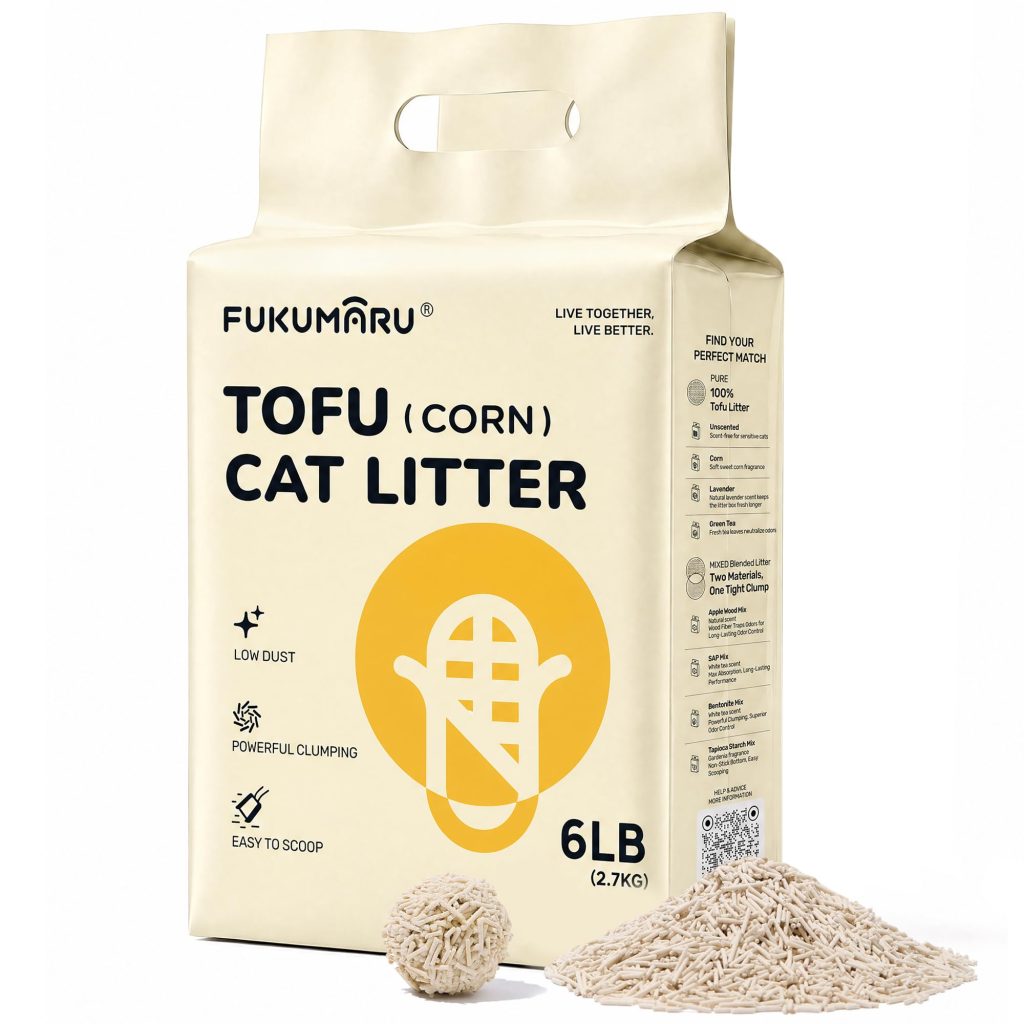
Corn-based litters have carved out a steady niche among cat owners who want something that clumps well without the dust and weight of conventional clay. The FUKUMARU Corn Cat Litter, sold in a 5.5-pound bag, is one of several products in that category. It is marketed as flushable, unscented, low-tracking, and capable of around-the-clock odor control. Those claims deserve some scrutiny, because corn litter behaves differently from clay in ways that matter day to day.
In practice, this is a litter you scoop daily and top off as needed, the same routine as any clumping product. The pellets are lightweight, and the bag itself is small enough to carry and pour without much effort, which is a genuine convenience for people who haul litter up stairs or store it in tight spaces. Because the formula is unscented, the box smells like corn and, eventually, like cat waste; there is no perfume layer masking either. That is either a feature or a drawback depending on how sensitive you or your cat are to fragranced litter.
The functional profile is fairly straightforward. Corn starch and corn fiber bind urine into clumps, and the company positions those clumps as flushable. The litter is described as dust-free, though in real-world use corn litters tend to produce some fine particulate when poured, even if it is far less than clay. The pellets are designed to resist tracking, and the unscented formulation is aimed at households with odor-sensitive cats or people.
- Material: corn-based, plant-derived, biodegradable
- Clumping: forms scoopable clumps from urine
- Flushable: marketed for toilet disposal, one clump at a time
- Scent: unscented, no added fragrance
- Size: 5.5-pound bag, a relatively small package
Clumping performance is the first thing most people notice. Corn litter generally clumps firmly enough to scoop cleanly, but it can be softer than the rock-hard clumps sodium bentonite clay produces, especially in a box that is not scooped daily. If a cat urinates in the same corner repeatedly and the clump sits, it can break apart on the scoop and leave residue behind. Daily scooping is not optional with this type of litter; it is the difference between a box that stays usable and one that turns sour quickly. The 24/7 odor control claim should be read with that in mind. Corn litter controls odor reasonably well when maintained, but it does not have the same ammonia-blocking reputation as clay, and the unscented formula offers no fragrance backup.
The flushable claim is the most consequential and the most misunderstood. Many municipal sewer systems and septic experts discourage flushing cat litter, even litter labeled flushable, because clumps can clog pipes and because cat feces can carry Toxoplasma, which wastewater treatment does not reliably eliminate. FUKUMARU’s flushable positioning is convenient for apartment dwellers without outdoor trash access, but it is worth checking local guidance before making flushing a habit. Scooping into a sealed bag and disposing in the trash is the safer default.
Tracking is a mixed story. The pellets are lighter and less dusty than clay, and many users report less scatter around the box. But lightweight corn granules can cling to paws and get kicked out of the box, and the small particle size means some litter will end up on the floor regardless. A textured mat helps. Dust is genuinely lower than with clay, which matters for cats with respiratory sensitivity and for people who dislike the cloud that rises when pouring a fresh bag.
Compared with clumping clay litter, the trade-offs are clear. Clay is heavier, dustier, and generally cheaper per pound, but it clumps harder and tends to control odor more aggressively. Corn litter is lighter, more biodegradable, and lower in dust, but it costs more per pound and demands more consistent maintenance. Compared with pine or paper pellet litters, corn clumps better and is easier to scoop, though pellets track less and last longer between full changes. The 5.5-pound bag is on the small side; a single cat may go through it in a few weeks, so the cost per month adds up faster than with a large clay box.
Who is this for? It suits owners of one or two cats who scoop daily, want an unscented and lower-dust option, and are willing to pay a bit more for a plant-based litter. It is also a reasonable fit for households where clay dust is a concern. Who should look elsewhere? Multi-cat homes with heavy box traffic may find odor control stretched thin, and anyone who wants to scoop every few days will likely be disappointed. Cats that are picky about texture may reject corn pellets at first, so a gradual transition mixed with the old litter is worth trying.
The FUKUMARU corn litter is a competent entry in a crowded category rather than a standout. It does the basics well, particularly on dust and scent, but the small bag size, softer clumps, and the caveats around flushing keep it from being a clear upgrade over clay for every household. It is best treated as a maintenance-intensive, fragrance-free option for committed scoopers.