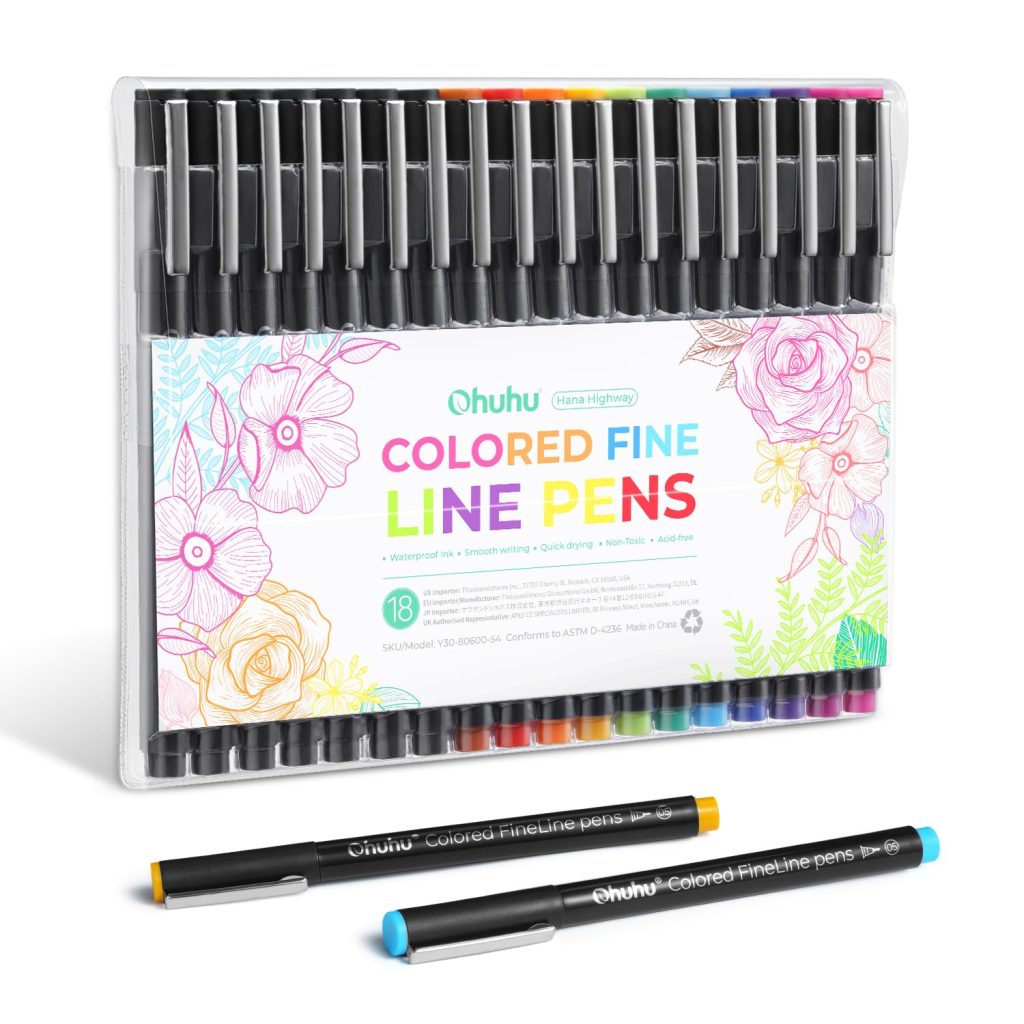
Ohuhu is a brand often associated with affordable art supplies, and their 18-count colored micro fineliner pens fit that mold. These pens are marketed for artists, but they also appeal to anyone who needs fine lines in color—from bullet journalers to architectural sketchers. In this review, we look at how they perform in real-world use, where they fall short, and who might benefit from them.
The pens come in a clear plastic wallet with a snap closure. The set includes 18 colors: a mix of primaries, secondaries, and a few earth tones. The barrels are slim and hexagonal, which helps prevent rolling, and each pen has a color-coded cap and end plug. The caps snap on securely, though they are not posted-friendly—posting them on the back makes the pen top-heavy. The tips are metal-clad, which adds durability, and the ink is water-based and acid-free. Ohuhu claims the ink is quick-drying and smudge-resistant, which we found to be mostly true on standard paper.
In practice, these pens are best for detailed line work. The 0.4mm tip is fine enough for hatching, cross-hatching, and small lettering. The ink flows smoothly without skipping, and the colors are vibrant, though some shades—like the yellow and light green—are a bit pale and require multiple passes to build intensity. The pens work well on smooth papers like Bristol and marker paper, but on rougher surfaces like cold-press watercolor paper, the tips can catch and fray over time. They are not waterproof, so they will bleed if used with water-based markers or watercolors. For mixed media, you would need to use them after water-based applications or switch to a waterproof pen.
One of the main limitations is the color selection. While 18 colors offer variety, the set lacks subtle pastels and deep, rich tones. The blacks and grays are useful for shading, but the overall palette feels limited for serious illustration. Also, the ink is not lightfast, meaning artwork could fade over time if displayed in bright light. This is common in budget pens, but worth noting for archival work. Another trade-off is the lack of individual replacement pens; you have to buy the whole set again if one runs out.
Compared to similar products like Sakura Pigma Microns or Staedtler Pigment Liners, the Ohuhu pens are significantly cheaper. However, the trade-off is in consistency and longevity. Sakura and Staedtler pens are known for their archival quality and reliable ink flow, while Ohuhu pens may have slight variations in ink output between colors. For casual use, the difference might not matter, but for professional work, the higher-priced alternatives are more dependable.
Who are these pens for? They suit beginners, students, and hobbyists who want a affordable set for practice, note-taking, or bullet journaling. They are also a good option for artists who need a secondary set for quick sketches or color-coding. However, they are not ideal for professional illustrators who require archival, lightfast ink, or for those who need a wide range of colors. If you plan to use them with water-based media, look for waterproof fineliners instead.
In terms of durability, the pens held up well over several weeks of regular use. The tips did not dry out when capped, and the ink did not leak. However, after heavy use on textured paper, the tips showed signs of wear, which affected line precision. The caps also became slightly loose over time, but not enough to cause drying. The set is lightweight and portable, making it easy to carry in a pencil case.
Overall, the Ohuhu 18-count colored micro fineliner pens are a decent budget option for casual artists. They offer a good range of colors for the price, and the fine tips are suitable for detailed work. But they come with caveats: limited color range, non-archival ink, and tips that may not hold up on rough paper. If you are looking for a starter set or a supplementary set for sketching, these are worth considering. If you need professional-grade pens, it is better to invest in a more established brand.


