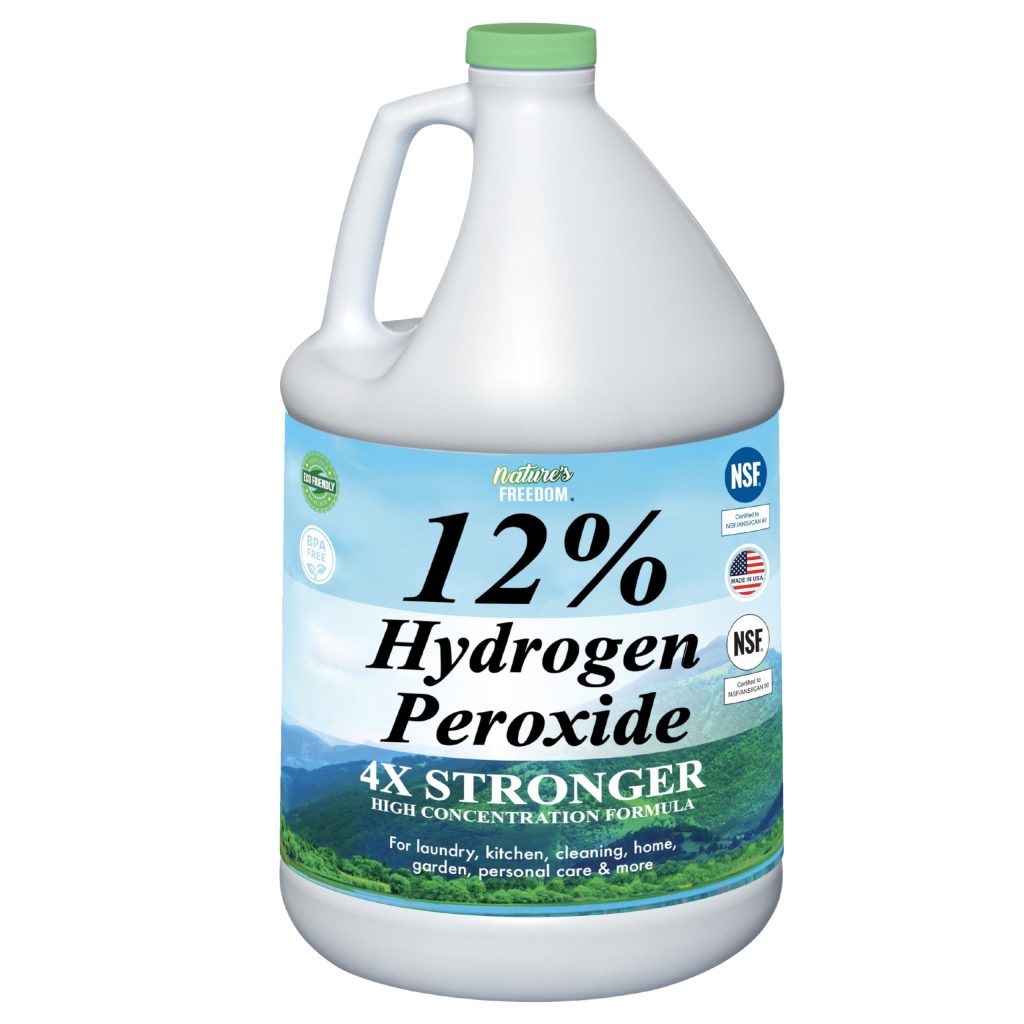
Hydrogen peroxide is a staple in many households, but the typical brown bottle from the drugstore is often just 3% concentration and stabilized with additives. Nature’s Freedom offers a different take: a 12% food-grade hydrogen peroxide solution made with just H2O2 and purified water. It’s NSF listed, meaning it meets standards for use in food processing environments. But what does that actually mean for everyday use? This review takes a closer look at what the product is, how it’s used, and where it might—or might not—fit into your routine.
At its core, this is a straightforward product: 12% hydrogen peroxide diluted in purified water. No stabilizers, no preservatives, no added fragrances. That simplicity is a key selling point for those who want a clean-label solution. The 12% concentration is significantly stronger than the common 3% drugstore variety, which means it must be handled with care. It’s intended for dilution, not direct use. The gallon size is generous, offering 128 fluid ounces of concentrate that can be mixed down to create many gallons of working solution. For example, diluting to 3% yields four times the volume, making it economical for frequent users.
So, what do people actually do with a gallon of 12% food-grade hydrogen peroxide? The food-grade designation and NSF listing open up uses in kitchens, breweries, and food processing facilities. It’s often used to sanitize surfaces, equipment, and even produce. In home settings, it might be diluted for cleaning countertops, cutting boards, or the refrigerator. Some use it in hydroponic systems to oxygenate water and prevent root rot. Others employ it as a mild bleach alternative for laundry or as a disinfectant for surfaces. Because it breaks down into water and oxygen, it leaves no harmful residues, which is a plus for food-contact surfaces.
However, it’s not a one-size-fits-all solution. The high concentration demands careful handling. It can irritate skin and eyes, and ingesting it without proper dilution is dangerous. You’ll need gloves and eye protection when mixing, and it should be stored out of reach of children and pets. Also, while it’s food-grade, that doesn’t mean it’s meant to be consumed directly; it’s for processing and cleaning. Another trade-off is the lack of stabilizers. While that’s appealing for purity, it also means the product may degrade faster than stabilized versions. Hydrogen peroxide naturally decomposes over time, especially when exposed to light or heat. So, storing it in a cool, dark place is essential, and using it within a reasonable timeframe is wise. The gallon jug is also fairly heavy and takes up space, so it’s best for those who have a dedicated storage area.
Compared to other cleaning agents, hydrogen peroxide occupies a unique niche. It’s not as harsh as chlorine bleach but still effective against many microorganisms. Unlike vinegar, it doesn’t leave a lingering odor. However, it’s also not a surfactant, so it won’t cut through grease like soap. It’s best used as part of a multi-step cleaning process: clean first, then sanitize with hydrogen peroxide. For those used to ready-to-use sprays, the dilution step might feel like a hassle. But for those who value control over concentration and ingredients, it’s a worthwhile trade-off.
Who is this for? It’s ideal for small business owners in food service, hobbyist brewers, hydroponic gardeners, and homeowners who prefer to mix their own cleaning solutions. It’s also suitable for anyone looking to reduce single-use plastic waste, as the gallon can be diluted into reusable spray bottles. On the other hand, it’s not for someone who wants a grab-and-go cleaner. If you’re uncomfortable with measuring and diluting, or if you need a product that can be used straight out of the bottle, this isn’t for you. It’s also not a replacement for medical-grade hydrogen peroxide, which is typically 3% and intended for first aid.
In terms of performance, expectations should be realistic. At 12%, it’s effective for sanitizing when properly diluted. But it’s not a miracle cleaner; it won’t remove heavy grime or stains without mechanical action. It’s a sanitizer, not a detergent. Also, while it’s NSF listed, that doesn’t mean it’s approved for all applications; always check local regulations for food safety. The shelf life is another consideration. Unopened, it can last a year or more, but once opened, it begins to lose potency. Testing the concentration with a peroxide test strip can help ensure it’s still effective.
Overall, Nature’s Freedom 12% Hydrogen Peroxide is a practical choice for those who need a concentrated, additive-free sanitizer. It’s not without its drawbacks—the need for dilution, careful storage, and relatively short shelf life after opening—but for the right user, it offers a flexible and economical solution. It’s a product that rewards a bit of knowledge and preparation, and it’s best suited for those who are comfortable handling chemicals responsibly.