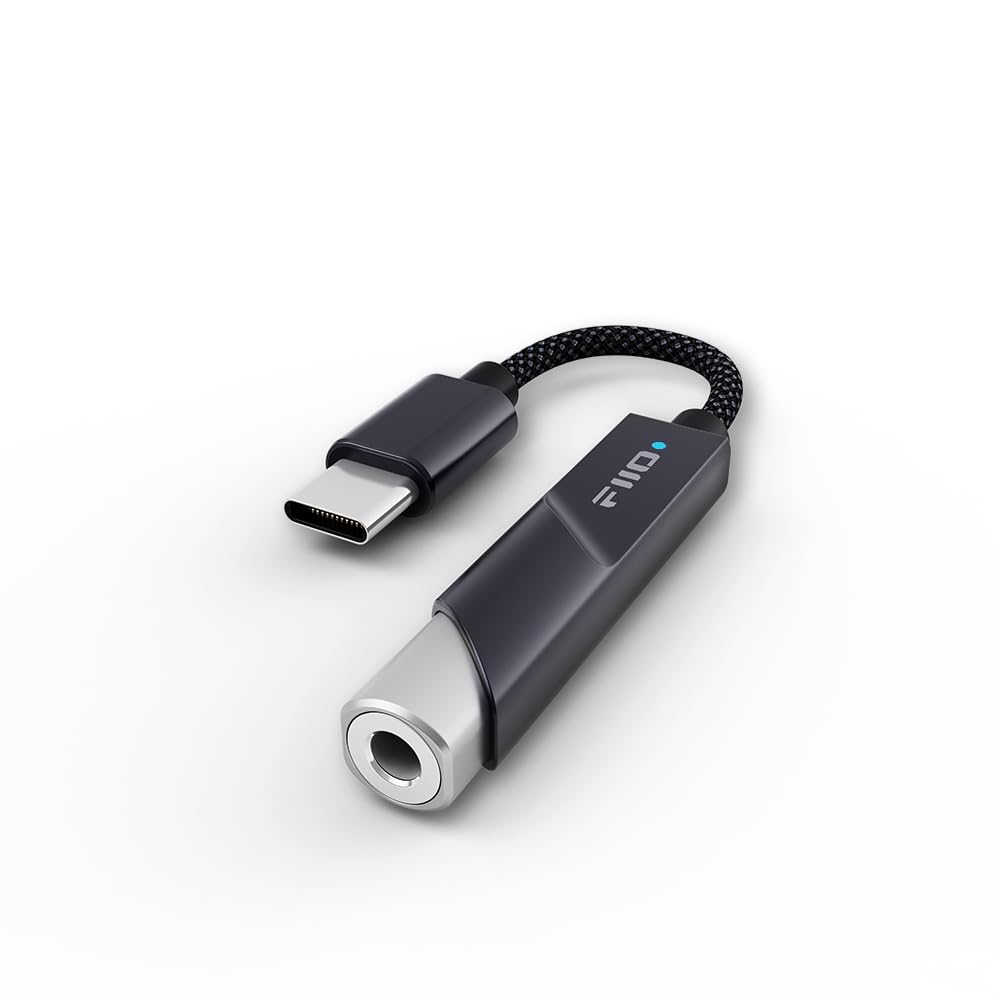
The FiiO KA11 is a USB-C to 3.5mm audio adapter that also functions as a digital-to-analog converter (DAC) and headphone amplifier. Priced around $30, it targets users who want better sound from wired headphones on devices that lack a headphone jack, such as many modern smartphones, tablets, and laptops. In practice, it’s a small dongle that plugs into a USB-C port and provides a 3.5mm output for traditional headphones. This review examines its features, real-world performance, and who might benefit from it.
From a functional standpoint, the KA11 supports PCM audio up to 32-bit/384kHz and DSD up to 256. It uses a built-in DAC chip (likely a Cirrus Logic or ESS model, though FiiO doesn’t specify) and provides up to 45mW of output power at 32 ohms. The aluminum alloy body feels sturdy, and the attached cable is short but flexible. It’s available in black and silver, with the black version reviewed here. The device is plug-and-play on Android, iOS, Windows, and Mac, though iOS users may need a Lightning-to-USB-C adapter (not included).
In daily use, the KA11 shines for its simplicity. Plug it into a phone, connect your headphones, and you’re set. There’s no app or driver required. The sound quality is a noticeable step up from typical built-in headphone jacks, especially on devices known for weak audio. The KA11 delivers a clean, neutral sound with a slight warmth in the midrange. Bass is tight and well-controlled, while treble is detailed without being harsh. The amplifier section provides enough power for most IEMs and efficient over-ear headphones, but it struggles with high-impedance, low-sensitivity models. For example, planar magnetic headphones like the HiFiMan Sundara will sound thin and underpowered.
One of the main limitations is the lack of a volume control. You must adjust volume through your device, which can be fiddly, especially on Android where the volume steps might be coarse. Another trade-off is the fixed cable, which could be a point of failure over time. Also, the KA11 doesn’t support microphone input, so if your headphones have an inline mic, it won’t work for calls. That’s a significant drawback for some users.
Compared to similar products like the Apple USB-C to 3.5mm adapter or the Google Pixel dongle, the KA11 offers higher output power and support for higher-resolution audio formats. However, those alternatives are cheaper and often sufficient for casual listening. The KA11 is for those who want a bit more headroom and better sound quality. It competes with other budget DAC dongles like the Shanling UA1 or the TempoTec Sonata HD, which offer similar features but may have different sound signatures.
Who is this for? It’s ideal for commuters, students, or anyone who wants to use their wired headphones with a modern phone or laptop without carrying a separate DAC/amp. It’s also a good entry point for those curious about high-resolution audio. However, it’s not for audiophiles with demanding headphones, nor for those who need microphone support for calls. If you primarily use wireless earbuds, the KA11 won’t add much value.
In summary, the FiiO KA11 is a solid, no-frills DAC dongle that improves audio quality for wired headphones on the go. It has its limitations, but at its price point, it’s a reasonable option for budget-conscious listeners. Just don’t expect it to drive power-hungry headphones or replace a dedicated desktop amplifier.


