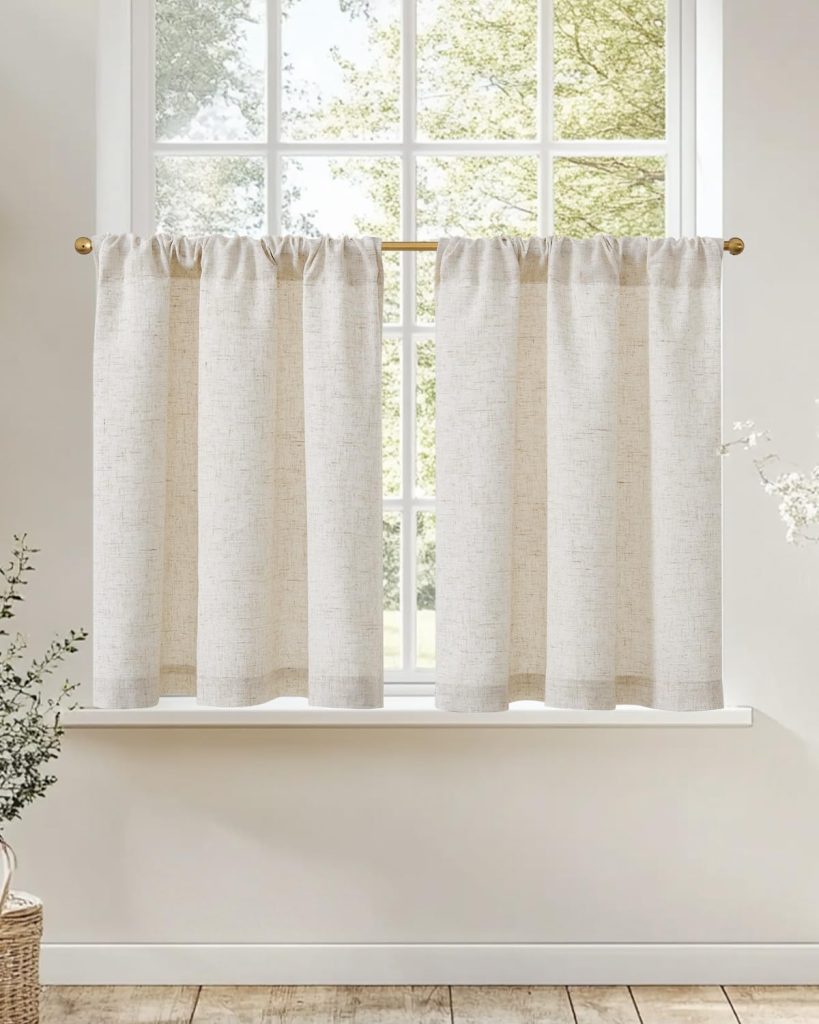
Tier curtains occupy a specific niche in window dressing, and the JINCHAN Crude Linen set in 26×45 inches is a straightforward example of the category. These are short panels—45 inches long, 26 inches wide, sold as a pair—intended for half-windows, café-style coverage, or layering beneath longer drapery. The rod pocket header means they slide onto a standard rod without rings or clips, which keeps installation simple but limits how the curtains hang and operate.
The fabric is described as crude linen, and that phrasing matters. This is not softened, garment-washed linen; it reads as a textured, slightly rustic weave with the visible slubs and irregularity associated with the look. Buyers should expect a firmer hand and a more matte, earthy appearance than polyester faux-linen panels. The upside is a natural texture that photographs and lives well in casual, farmhouse, or cottage-style rooms. The trade-off is that crude linen typically wrinkles readily and may not drape as fluidly as blended fabrics, so the panels can look a bit stiff straight out of the package.
In practice, a 26×45 tier pair is most often used in kitchens over a sink, in bathrooms where privacy is the priority, or on smaller bedroom and basement windows. The two-panel format gives a center-split look that works with a café rod or a narrow tension rod mounted inside the window frame. Because the rod pocket is sewn rather than tabbed or grommeted, the curtains gather tightly when pushed to the side, which is fine for a stationary look but less convenient if you open and close them daily—the fabric bunches and the pocket can bind on thicker rods.
Functionally, the set covers the basics: a rod pocket header, two matching panels, and a length that suits half-window coverage. The 26-inch width per panel is modest, so the total coverage is around 52 inches before gathering. Once the fabric is pushed onto a rod, the effective width shrinks considerably, which means these panels suit windows roughly 30 to 40 inches wide. On anything wider, they will look sparse and may not close fully without stretching flat. That is a real limitation worth flagging—tier curtains are often bought by window width, and the gathered-versus-flat math catches people out.
Light control and privacy are moderate. The crude linen weave is opaque enough to block a direct sightline during the day, but it is not a blackout fabric and will let a soft glow through. For a bathroom or a street-facing kitchen, that is usually acceptable; for a bedroom where darkness matters, it is not. There is no lining, so the back of the panel shows the same texture, and the seams are visible if you inspect closely. Construction is serviceable rather than refined—hem stitches are simple, and the rod pocket is a basic folded channel. Nothing here suggests heirloom quality, but the price point generally reflects that.
Compared with a similar alternative, such as polyester faux-linen tier curtains, the JINCHAN set trades easy-care convenience for texture. Polyester blends resist wrinkling, hold pleats, and can be machine-washed without much fuss; crude linen tends to crease, may shrink slightly on the first wash, and often benefits from ironing or steaming while slightly damp. On the other hand, the synthetic versions can look flat and slightly shiny, while this set reads more convincingly as natural fabric. Against a cotton canvas tier, the linen look is more textured and a bit lighter in feel, though canvas may hold its shape better over time.
Care expectations should be realistic. Check the label before washing; crude linen is often best washed cold on a gentle cycle and line-dried or tumble-dried low, then pressed while damp. Skipping that step leaves visible fold lines from the packaging that can take days to relax. The rod pocket also means the header can sag if the rod is thin, so a rod diameter that fills the pocket reasonably well helps the panels hang straighter.
Who is this for? It suits renters and homeowners dressing small kitchen, bathroom, or basement windows who want a natural-textured, casual look without committing to custom treatments. It is a reasonable choice for layering under longer curtains on a double rod, and for anyone who prefers a rustic, unfussy aesthetic. Who is it not for? Anyone needing blackout coverage, wide-window coverage from a single pair, or a crisp, tailored drape should look elsewhere. Households that dislike ironing or want machine-wash-and-hang simplicity may also find the linen care routine more effort than they want. As an editorial observation, this set does what tier curtains are supposed to do—cover a small window with a bit of texture—provided the buyer goes in with accurate expectations about width, drape, and upkeep.