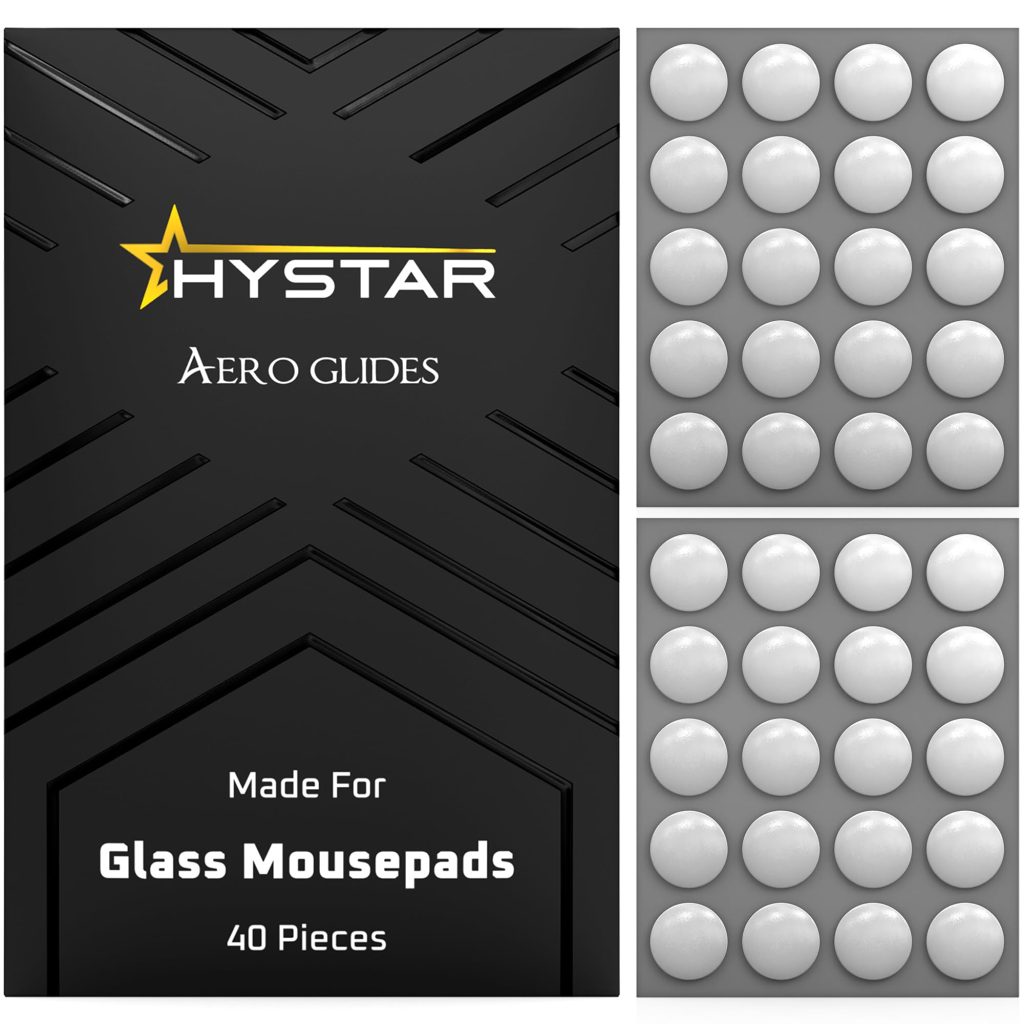
Mouse skates are one of those upgrades that can quietly change how a mouse feels, especially if you’re using a glass mousepad. The Hystar Aero Glides are a set of 40 dot-style PTFE skates designed for glass surfaces. They promise high-density PTFE, rounded edges, and quiet operation. But do they deliver? After spending time with them, here’s a breakdown of what you get and what to expect.
If you’re not familiar, mouse skates are the small feet underneath your mouse that contact the pad. Stock skates are often thin and made from basic PTFE, which can wear down or feel inconsistent. Aftermarket skates like these aim to reduce friction, improve glide consistency, and sometimes quiet the sound of the mouse moving across the pad. The Aero Glides are dot-shaped, meaning you apply multiple small circles instead of large strips. This gives you flexibility in placement and can accommodate different mouse base shapes.
What’s in the box and how they work
The package includes 40 dots, which is generous. You’ll likely only need 4 to 8 per mouse, depending on the size and weight of your mouse and your preferred feel. The dots are made from high-density PTFE, which is a denser version of the material used in most skates. High-density PTFE tends to be more durable and can provide a more consistent glide over time. The edges are rounded and polished, which is a nice touch because it reduces the chance of the skate catching on the pad surface, especially on textured glass.
Installation is straightforward: clean the bottom of your mouse, peel the adhesive backing, and place the dots. Because they’re dots, you can position them near the corners or along the edges, mimicking the stock skate layout or experimenting with something new. The adhesive seems strong enough to hold during use, but you can remove them later with a bit of force and some adhesive remover if needed.
Real-world performance on glass
Glass mousepads are known for their speed and low friction, but they can also be noisy and unforgiving if your skates aren’t up to par. The Aero Glides aim to address that. On a glass pad, these skates produce a noticeably quieter glide than many stock skates. The rounded edges help here, as they prevent the skate from digging into the pad. The glide itself is smooth and fast, as you’d expect from PTFE on glass. It’s not ice-skating-on-fresh-ice fast, but it’s a clear improvement over worn stock feet.
One thing to note: because they’re dots, the contact area is smaller than with full-size skates. That can make the mouse feel a bit less stable if you’re used to larger skates, especially during quick stops. Some players prefer the added control that larger skates provide. Also, while the PTFE is high-density, it will still wear down over time, especially on glass, which is abrasive. You might need to replace them every few months with heavy use. That’s typical for PTFE skates, but worth knowing.
Where they fit in the market
Compared to other aftermarket skates, like the popular Tiger Arc or Corepad skates, the Aero Glides are in a similar price range but offer a different approach. Tiger Arcs are often pre-cut for specific mice, which makes installation foolproof but limits versatility. The Aero Glides’ dot format means they can fit almost any mouse, but you have to figure out placement yourself. If you’re comfortable with a bit of DIY, that’s a plus. If you want a precise drop-in replacement, pre-cut skates might be a better choice.
Another alternative is ceramic skates, which are extremely durable and can last years, but they’re also more expensive and can be noisier on glass. The Aero Glides sit in the middle: more durable than basic PTFE, quieter than ceramic, and more affordable than both.
Who should consider these?
These skates are a good fit for someone who uses a glass mousepad and wants a quieter, smoother glide without spending a lot. If you like to tinker and don’t mind experimenting with dot placement, you’ll get along well with them. They’re also a solid choice if you have a mouse that doesn’t have many pre-cut skate options available.
However, they’re not for everyone. If you prefer the stability of full-size skates or want a set-and-forget solution, you might be happier with pre-cut skates designed for your specific mouse. Also, if you’re using a cloth pad, these skates will work, but the benefits are less pronounced—cloth pads are already quieter and more forgiving, so the rounded edges and high-density PTFE matter less. And if you’re looking for maximum speed, you might want to look at ceramic or glass skates instead.
A few more things to keep in mind
The 40-dot count is generous, but it also means you’ll have leftovers. That’s fine for future replacements, but keep them somewhere safe—they’re small and easy to lose. The adhesive is strong, but if you need to reposition a dot, you’ll likely need a new one because the adhesive can lose tackiness. Also, while the skates are quiet, they’re not completely silent; on glass, you’ll still hear some sound, just less than with stock skates.
Overall, the Hystar Aero Glides are a practical upgrade for glass pad users who want a balance of performance, quietness, and value. They’re not a miracle product, but they do what they claim: provide a smooth, relatively quiet glide with the flexibility of a dot format. If that sounds like what you’re after, they’re worth considering.


