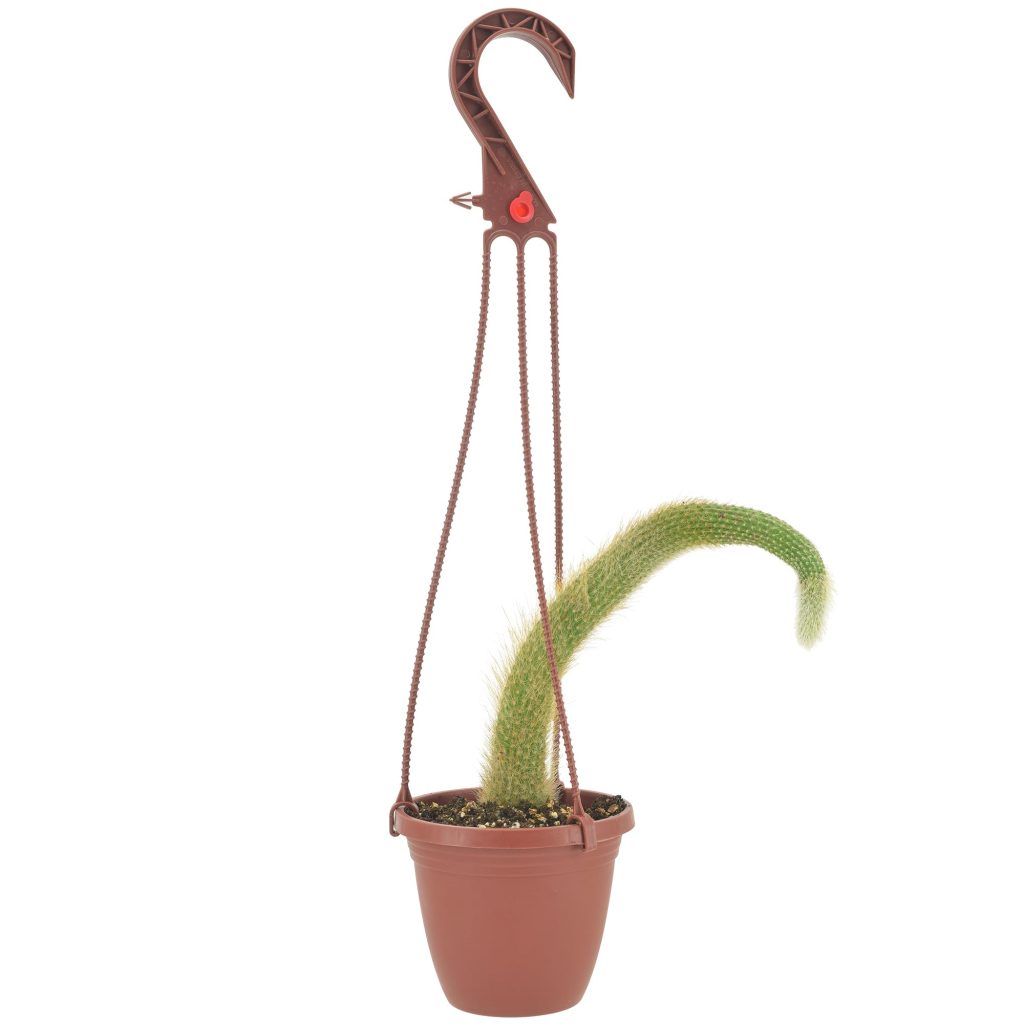
The Monkey Tail Cactus (Cleistocactus colademononis) has become one of those plants that circulates heavily on social media, largely because of its appearance: long, white, hair-like spines that drape downward and genuinely resemble a monkey’s tail. Arcadia Garden Products sells a 4-inch specimen already planted in a plastic hanging basket, which is a sensible format for a plant whose natural growth habit is to cascade rather than stand upright. The question worth asking is whether the convenience of a pre-hung basket justifies the price and the compromises that come with it.
In practice, this plant is most often bought as a gift or as an easy first hanging succulent. The plastic basket with its attached hanger means it can go straight onto a bracket, a curtain rod hook, or a porch beam without repotting. That is the main functional appeal. The 4-inch pot size is small, which suits a young plant, but it also means the basket will look sparse for the first season or two. Buyers should expect a modest plant, not a fully trailing specimen.
The plant itself is a columnar cactus that produces offsets and can eventually form a substantial cascade of stems. The soft white spines are the defining feature, and they are far less hazardous to handle than the spines on many other cacti, which matters in households with children or pets brushing past. Indoors, it wants bright light, ideally several hours of direct sun, and it is prone to etiolation (thin, stretched growth) if kept in dim corners. Outdoors in warm climates it can take more sun, but in hot afternoon sun the stems may scorch, so some filtered light is safer. Watering is the usual cactus regimen: thorough soak, then let the soil dry almost completely. Overwatering is the most common way these plants decline, and a plastic hanging basket with limited drainage is a real consideration here.
That brings up a limitation worth stating plainly. Plastic hanging baskets sold with plants often have minimal or poorly placed drainage, and the soil mix used in mass-market nursery pots tends to be peat-heavy and water-retentive. For a cactus, that combination is not ideal. Many buyers will end up repotting into a freer-draining mix within the first few months, which somewhat undercuts the convenience of buying a pre-planted basket. The plastic itself is utilitarian rather than decorative; it is functional, but it will not look like a design object on a styled patio. If appearance matters, plan on transferring the plant to a nicer hanging planter once it settles.
Compared with other hanging succulents, the Monkey Tail sits in an interesting middle ground. String of pearls and burro’s tail are similarly trailing and arguably more dramatic in a basket, but both are considerably more fragile and less forgiving of missed waterings and low humidity. A Christmas cactus or a hanging echeveria offers flowers and easier care but lacks the unusual texture. The Monkey Tail’s advantage is its tolerance and its distinctive look; its disadvantage is that it is slow to fill out a basket and, in cooler or low-light homes, may never produce the long trailing stems people expect from photos. Blooming is possible on mature plants, with small red tubular flowers appearing along the stems, but a 4-inch starter is unlikely to bloom in its first year indoors.
Real-world use tends to fall into a few patterns. Indoors, it works well hung near a south- or west-facing window where the trailing stems can hang free, or on a covered porch in warmer zones. It is also a reasonable desk or office plant only if the desk gets genuine sunlight; otherwise it will slowly decline. As a gift, the pre-potted basket solves the problem of presenting a plant that looks finished rather than bare, though the recipient should be told about the light and water requirements or the plant may not last long.
Who is this for? It suits beginners who want an unusual but forgiving succulent, gift-givers who want something already assembled, and anyone with a bright spot where a trailing plant can hang without obstruction. It is not suitable for low-light rooms, for people who prefer low-maintenance plants they can water on a fixed schedule, or for buyers expecting an instant, full trailing display. Those wanting a statement hanging piece right away may be better served by a larger, established specimen from a specialty nursery, even at a higher price.
The honest summary: this is a practical, no-frills way to start with an unusual cactus. The plant is the draw; the plastic basket is a delivery mechanism, and a mediocre one. Expect to repot eventually, expect slow growth, and expect to manage light and water carefully. Within those expectations, it does what it promises.