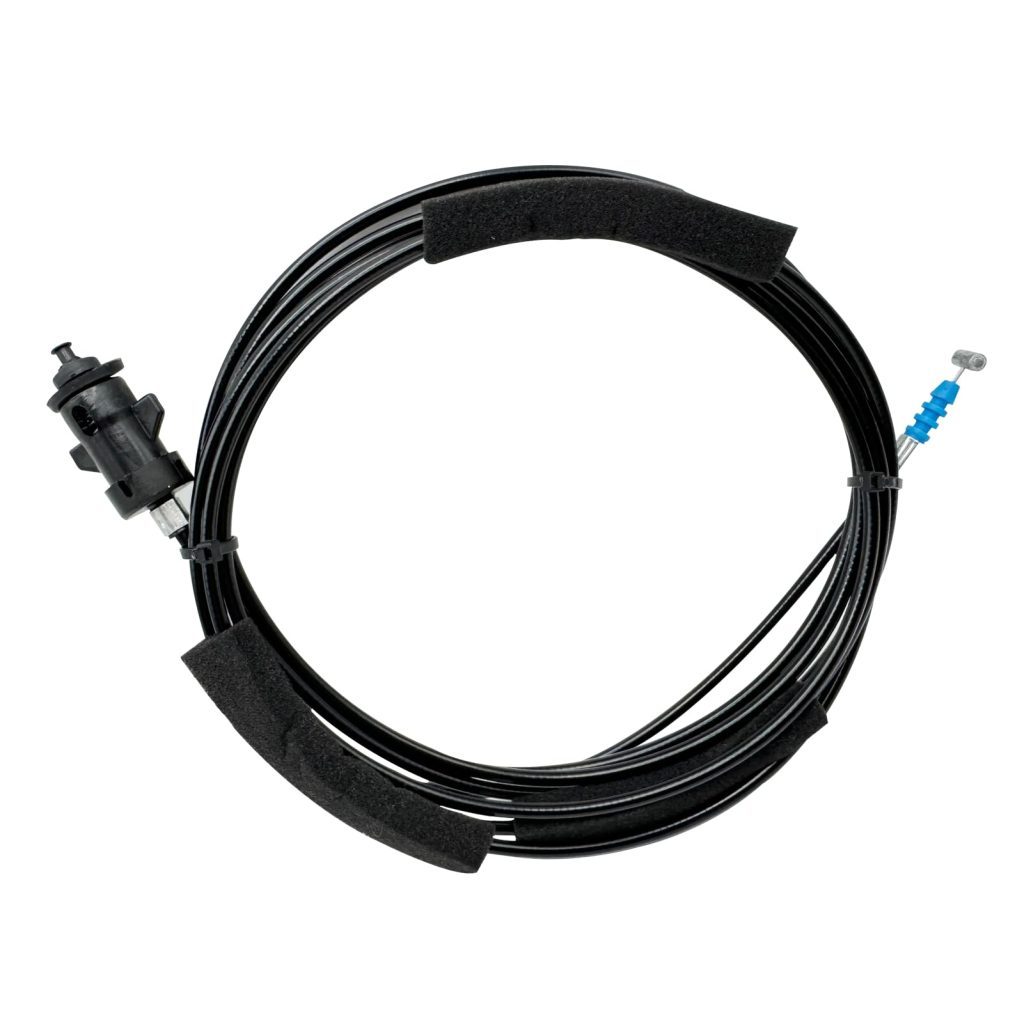
When the fuel door on a 2012–2016 Honda CR-V stops popping open, it’s usually not the door itself but the release cable that has stretched, corroded, or snapped. This replacement cable, part number 74411-T0A-003, is designed to fit those model years and restore the simple pull-to-open function. It’s a small part, but without it, every refueling stop becomes a minor annoyance. In this review, we’ll look at what the cable is, how it’s used, its key features, and where it falls short.
The cable assembly consists of a rubber sheath and an inner steel wire. The rubber outer jacket protects the wire from moisture and debris, while the steel core provides the tensile strength needed to pull the latch mechanism. The ends are fitted with plastic or metal connectors that attach to the fuel door latch on one side and the release lever inside the cabin on the other. Installation typically requires removing a few interior trim panels to route the cable, but it’s a job that a patient DIYer can handle with basic hand tools. The part is a direct replacement for the OEM cable, meaning it should fit without modification.
In real-world use, this cable is subjected to repeated pulling and exposure to the elements. Over time, the rubber can crack, and the steel wire can fray or rust, leading to a stiff or non-functional release. This replacement aims to address those issues with materials that match the original specifications. However, it’s not a heavy-duty upgrade; it’s a stock-style part. If you’re looking for a long-term fix, you might consider applying a silicone lubricant to the cable before installation to extend its life, though that’s not a permanent solution.
Key functional features include the direct fit for 2012–2016 CR-V models, the use of rubber and steel wire materials, and the inclusion of the necessary end fittings. The cable is black, which matches the original color and blends into the vehicle’s interior and undercarriage. It’s important to note that this is not a universal part; it’s specifically designed for the CR-V, so it won’t fit other Honda models or different year ranges. The part number 74411-T0A-003 is a good reference to verify compatibility before purchase.
One limitation is that the rubber sheath may not be as durable as some aftermarket options that use a more flexible or reinforced material. In cold climates, the rubber can become stiff, making the release feel sluggish until the interior warms up. Also, the steel wire is prone to rust if the rubber sheath is compromised, so it’s worth inspecting the cable periodically. Compared to a generic cable kit that requires cutting and crimping, this pre-assembled cable saves time but costs more. However, the convenience of a direct fit often outweighs the higher price for many owners.
This cable is suitable for DIYers who are comfortable removing interior panels and have a service manual or online guide. It’s also a good option for those who want to restore the factory function without upgrading to a custom setup. It is not suitable for someone looking for a performance upgrade or a cable that will never fail; like any mechanical part, it will wear out eventually. Also, if your CR-V has a different fuel door mechanism (e.g., electronic release), this cable won’t work.
In terms of performance expectations, this cable should restore the fuel door release to working order, but it’s not a permanent fix. Depending on usage and climate, it may last several years. If you frequently use the fuel door, the cable may wear faster. It’s a good idea to keep a spare or at least know where to get one quickly. Installation is straightforward but requires some patience. The cable should be routed away from sharp edges and moving parts to prevent premature wear.
Overall, this replacement cable is a practical solution for a common problem in older CR-Vs. It’s not exciting, but it’s necessary. The materials are adequate for the job, and the fit is specific to the model years listed. Just don’t expect it to outlast the original by a wide margin. If you’re handy with tools and want to avoid a trip to the dealer, this part is worth considering. But if you’re not comfortable with interior disassembly, it’s best to have a professional install it.


