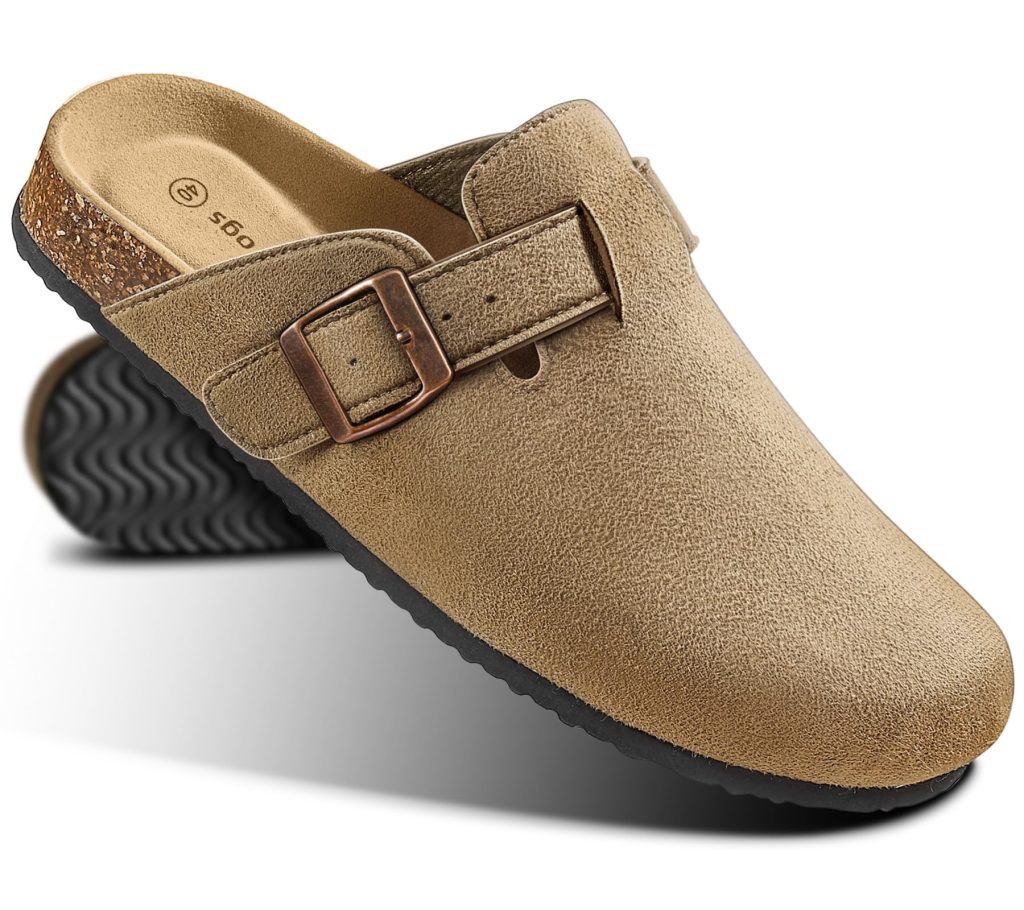
Mule clogs occupy a specific niche in footwear: easy to slip on, structured enough to walk in, and casual enough for errands or a quick trip outside. The KEMISANT Women’s Mule Clogs sit squarely in that category, pairing a cork footbed with arch support and a fleece lining. They are clearly aimed at people who want the comfort of a house slipper with enough sole to handle a grocery run or a dog walk. Whether they deliver on that promise depends on how you plan to use them.
The core of the shoe is the cork footbed, which is a familiar material in comfort footwear because it molds gradually to the shape of the foot. KEMISANT adds arch support to that base, and the upper is lined with fleece. The outsole appears to be a rubber or synthetic tread, which is what separates these from pure indoor slippers. The mule silhouette means there is no heel strap or back closure, so the foot slides in from the top and stays put through friction and the footbed’s contour.
In practice, these are the kind of shoes people keep by the door. The fleece lining makes them warm, which points toward fall and winter use or chilly indoor floors. The cork and arch support suggest they can handle longer stretches of standing than a flat slipper. Someone working from home might wear them through a morning of kitchen tasks, then out to the mailbox. That is a realistic use case, and it is where this style of clog tends to perform best.
There are functional details worth noting. The cork footbed is designed to be supportive rather than soft and squishy, so the initial feel may be firmer than expected. Cork tends to break in over a week or two of wear, conforming to pressure points. The fleece lining adds warmth but also adds bulk, which can make the fit feel snugger than a comparable unlined clog. Buyers who are between sizes may want to consider the larger option, especially if they plan to wear socks. The slip-on design is convenient, but it also means less lateral stability than a shoe with a back strap.
That instability is the main trade-off. Mules are not designed for quick pivots, uneven terrain, or long walks. The lack of a heel counter means the foot can shift side to side, and on stairs or sloped ground the shoe may feel less secure than a sneaker or a closed-back clog. For someone who wants a shoe for standing at a counter or walking a flat neighborhood block, this is fine. For hiking trails or a full day of sightseeing, it is the wrong tool. The fleece lining also raises a durability question: linings in this style can mat down over time, particularly in the heel area, and they are not replaceable.
Compared with a traditional leather clog or a molded EVA clog, the KEMISANT pair leans toward warmth and indoor-to-outdoor convenience. EVA clogs are lighter and easier to rinse clean, which makes them better for gardening or wet conditions. Leather clogs offer more structure and a more polished look but often cost more and take longer to break in. The fleece-lined cork approach here is a middle ground: softer against the skin than leather, warmer than EVA, and more supportive underfoot than a basic slipper. It is not the most rugged option in any of those comparisons, but it does not claim to be.
Who is this for? It suits people who want a warm, supportive slip-on for home and light errands, especially those who find flat slippers too thin or unsupportive. It also works for anyone who likes the cork footbed feel and does not need a back strap. Who should look elsewhere? People with narrow feet may find the mule shape too loose, and anyone who needs a shoe for long distances, wet weather, or uneven ground should choose a different category. Those who run hot may also find the fleece lining too warm for year-round wear.
Realistic expectations matter here. These are not orthopedic shoes, and the arch support is moderate rather than clinical. The cork will mold, but it will not transform into a custom orthotic. The fleece will feel plush at first and compress with use. Treated as a comfortable, warm, slip-on clog for casual wear, the KEMISANT mule does what it is designed to do. Treated as an all-day walking shoe, it will disappoint. The distinction is worth keeping in mind before buying.