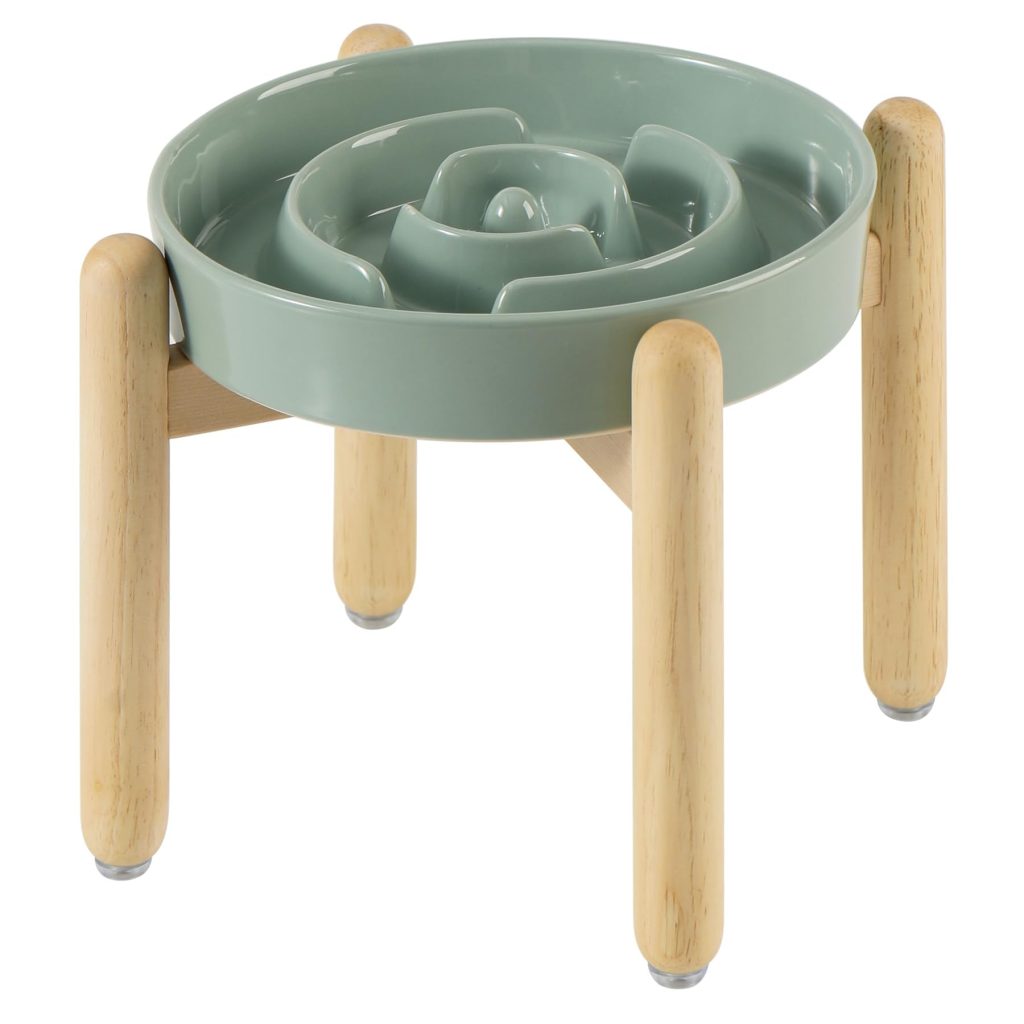
Slow feeders tend to fall into two camps: flimsy plastic maze bowls that skitter across the floor, and ceramic designs that are heavier but sometimes awkward to use. The Havniva Elevated Slow Feeder sits in the second camp, pairing an 8.3-inch ceramic bowl with a raised stand. The premise is straightforward: elevate the bowl to a more comfortable height for the dog and use an internal obstacle pattern to slow eating. Whether that combination works depends heavily on the dog.
In practice, these bowls are used for one of two reasons. The first is gulping. Dogs that inhale their food in under a minute are at higher risk of bloat and vomiting, and a slow feeder forces them to work around ridges or dividers to get each bite. The second is posture. Raised bowls can reduce neck strain for older dogs or large breeds, though the veterinary consensus on elevated feeding is more mixed than product listings suggest. The Havniva addresses both, which is why it draws attention, but each feature deserves separate scrutiny.
What the bowl actually is
The core component is a ceramic bowl measuring 8.3 inches across, set into an elevated frame. Ceramic is the notable choice here. It is heavier than plastic, which keeps the bowl from sliding during enthusiastic eating, and it does not hold odors the way some plastics can. The trade-off is obvious: ceramic chips and cracks if dropped, and an elevated ceramic bowl is not something you want to hand-wash carelessly over a tile floor. The internal slow-feeder pattern is molded into the ceramic rather than being a separate insert, which means no loose pieces to lose or clean around.
- Material: Ceramic bowl with a raised stand
- Diameter: 8.3 inches, sized for medium to large dogs
- Design: Molded internal ridges or dividers to extend mealtime
- Elevation: Fixed height stand, not adjustable
The fixed height is worth flagging. Elevated feeders that cannot be adjusted suit a narrower range of dogs than adjustable stands. A tall Labrador and a short Corgi have very different needs, and an 8.3-inch bowl on a fixed stand will fit one far better than the other. Buyers should measure their dog’s standing shoulder-to-elbow height before committing, because a poorly fitted elevated bowl can put the neck at an awkward angle rather than relieving strain.
How it performs in daily use
For fast eaters, the molded pattern does what it is supposed to: it converts a thirty-second meal into several minutes of licking and maneuvering. That is the main functional benefit, and it holds up as long as the dog does not simply flip the bowl. The ceramic weight helps here, though a determined dog on a smooth floor can still push an elevated stand around. A rubberized base or a mat underneath is a reasonable precaution.
Cleaning is where ceramic slow feeders divide opinion. The molded ridges trap kibble dust and wet food residue, and the corners require a brush rather than a quick rinse. Dishwasher safety depends on the specific model and stand construction, so check the manufacturer’s guidance rather than assuming. Hand-washing a heavy ceramic bowl nightly gets old, and that is a real ongoing cost of ownership that listings tend to gloss over.
Where it falls short
The biggest limitation is fit. An elevated, fixed-height bowl is a commitment to one dog size and one feeding posture. Multi-dog households with different breeds will likely find it suits one dog well and the other poorly. The ceramic construction also means this is not a travel or outdoor bowl; it is a stay-at-home piece of equipment. And while slow feeders help with gulping, they are not a substitute for veterinary advice if a dog shows signs of bloat or chronic regurgitation.
How it compares
Against a standard stainless steel elevated feeder, the Havniva’s advantage is the slow-feeding function built into the bowl itself. A plain raised stainless bowl is easier to clean and nearly indestructible, but it does nothing to slow eating. Against a plastic maze slow feeder, the ceramic version is more stable and less prone to odor retention, but it is heavier, breakable, and harder to clean. Neither category is universally better; the choice hinges on whether slowing intake or easy maintenance matters more.
Who it suits and who it does not
This bowl makes sense for owners of medium to large dogs that eat too quickly and who want a stable, non-sliding feeder at home. It is also a reasonable option for older dogs that benefit from a raised eating position, provided the height matches the dog. It is less suitable for small breeds, multi-dog homes with mixed sizes, frequent travelers, and anyone who wants a bowl they can rinse and stack without fuss. Owners of dogs that aggressively flip or chew bowls should look at weighted stainless alternatives instead. Overall, it is a functional piece of feeding equipment with a clear use case and equally clear constraints.