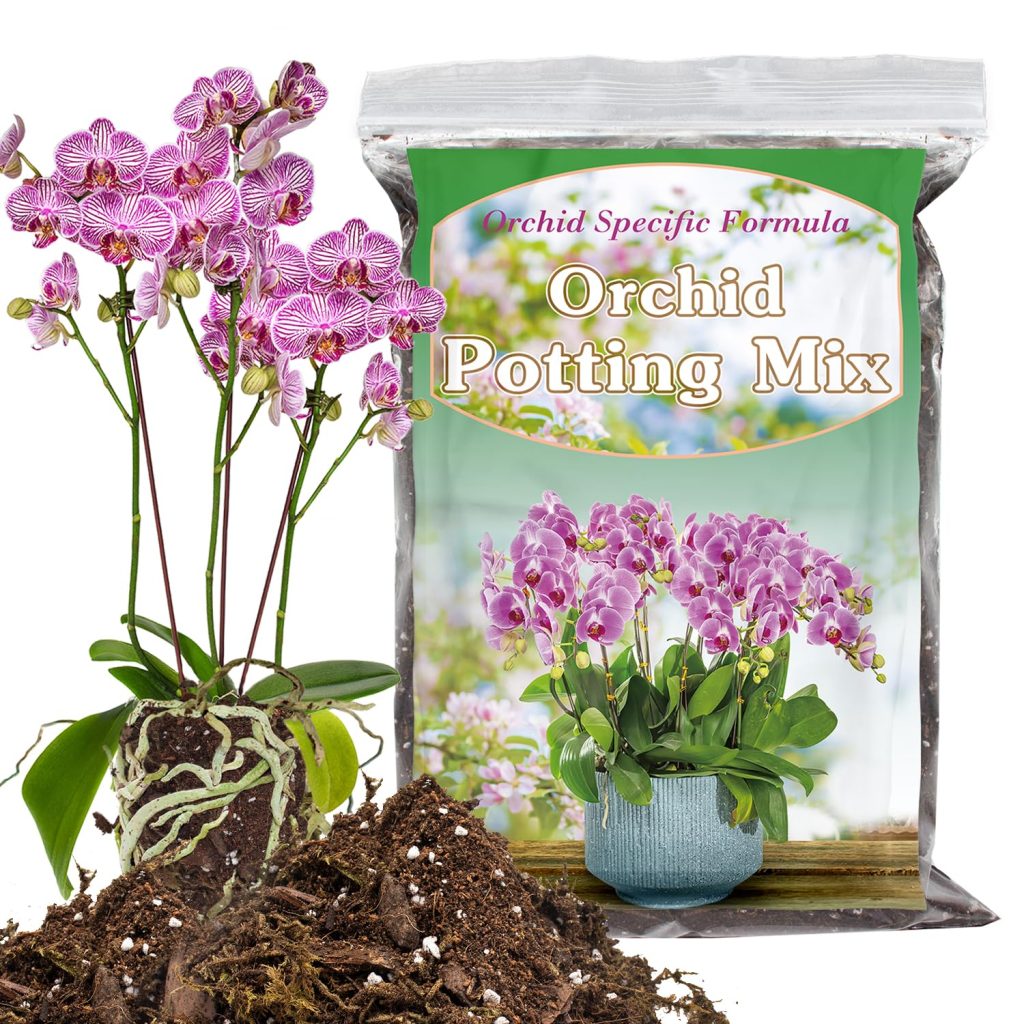
Orchid potting mix is one of those purchases where size matters as much as composition. The HOUNANG Premium Orchid Bark Potting Mix arrives in a 1-quart bag, which is a modest amount — enough for roughly one or two small-to-medium orchids depending on pot size, but not a bulk supply. That framing is useful before anything else, because buyers who assume they are getting a full repotting kit for a collection will be disappointed. This is a starter or single-plant quantity.
The mix is built around orchid bark, the chunky, airy medium that epiphytic orchids like Phalaenopsis and Cattleya are adapted to. Bark-based mixes are the standard for a reason: they hold some moisture while allowing rapid drainage and airflow around the roots, which is closer to how these plants grow on tree limbs in nature than a dense peat-based soil would be. The product is described as premium, though the bag itself does not spell out a detailed ingredient ratio, which is a common gap in this category. Buyers who want to know exactly what percentage of bark, perlite, or charcoal they are getting will find the labeling thin.
In practice, a mix like this is used at repotting time, typically every one to two years as bark breaks down and compacts. The workflow is straightforward: unpot the orchid, trim dead roots, shake out old medium, and settle the plant into fresh mix. A 1-quart bag is manageable for that task with a single plant, and the chunky texture is generally easier to work with than fine, dusty mixes that cling to roots and create mess. The bark pieces are sizable enough to leave gaps for air, which is the main functional point of the product.
- Format: 1-quart bag, suited to one or two small plants rather than a collection
- Base material: Orchid bark, the conventional medium for epiphytic orchids
- Texture: Chunky and open, intended to support drainage and root airflow
- Use case: Repotting Phalaenopsis, Cattleya, and similar bark-loving orchids
- Labeling: Ingredient proportions are not clearly detailed on the packaging
The most obvious limitation is quantity relative to price. Orchid bark is not expensive per unit volume, and a 1-quart bag sits at the small end of what is sold. If you have more than a couple of plants, or if you repot annually, you will likely go through this quickly and may find better value in larger bags from garden suppliers. There is also the question of freshness: bark degrades over time, and a small bag that sits on a shelf for months before use loses some of its structural benefit. Buyers should check the condition of the bark on arrival rather than assume it is freshly packed.
Compared with a general-purpose potting soil, this mix is a different category entirely. Standard soil retains far more moisture and compacts around roots, which is a common cause of root rot in orchids. Even a chunky all-purpose mix with added perlite is usually too dense for long-term orchid health. On the other side, a specialized sphagnum moss setup holds moisture differently and suits some growers in dry climates or for certain genera, but it requires more careful watering discipline. Bark mix like this one sits in the middle: more forgiving than moss for beginners, far more appropriate than soil.
Who is this for? Someone with one or two orchids due for repotting, or a grower who wants a small quantity to try bark culture without committing to a large bag. It also works for topping up a pot or for a single rescue plant. Who is it not for? Collectors with several plants, anyone repotting large specimens, or growers who want transparent ingredient ratios and consistent sourcing. Those buyers are better served by larger, more explicitly labeled orchid bark products from established suppliers.
Performance expectations should stay realistic. This is a medium, not a fertilizer or a treatment. It will not fix root rot on its own, and it does not replace proper watering habits — orchids in bark still need to dry between waterings, and the schedule depends on your home’s humidity and light. The mix does its job if it stays open and chunky for a year or two before breaking down. On that basic criterion, the HOUNANG bag appears to deliver, provided the quantity fits your needs and you accept the limited labeling.