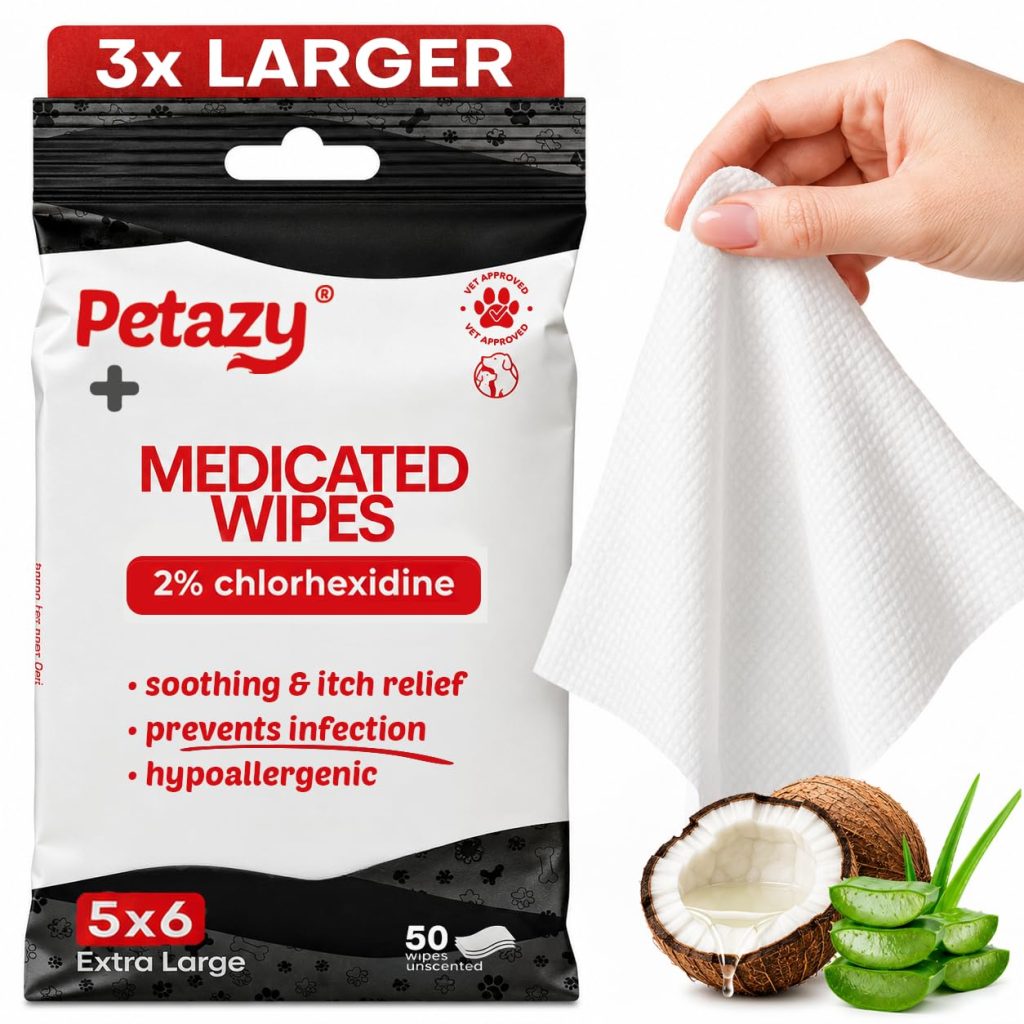
Petazy’s 2% chlorhexidine wipes are a medicated option for pet owners dealing with skin issues like yeast infections, ringworm, and hot spots. The wipes are marketed as 3X larger than typical pet wipes, measuring 5×6 inches, and come in a 50-count pack. Chlorhexidine is a common antiseptic used in veterinary medicine, and a 2% concentration is on the higher end for over-the-counter products. This review examines how these wipes perform in real-world scenarios, their limitations, and who might benefit from them.
In practice, these wipes are used to clean and treat affected areas on a pet’s skin. The larger size is a genuine advantage: it allows for covering more surface area with fewer wipes, which is helpful for larger dogs or multiple spots. The wipes are moist but not dripping, and they have a mild medicinal scent that dissipates after a few minutes. For pets with fold dermatitis, hot spots, or paw yeast issues, wiping the area once or twice daily is a typical routine. Owners should note that chlorhexidine can be drying, so monitoring for irritation is wise. Also, these wipes are not a substitute for veterinary care; if the condition persists or worsens, a vet visit is necessary.
Key features include the 2% chlorhexidine concentration, which is effective against bacteria and fungi. The wipes also contain soothing ingredients like aloe vera and vitamin E, which can help calm irritated skin. The packaging is a resealable pouch to prevent drying out. However, some users report that the wipes can leave a sticky residue if not fully dried, and the scent may be off-putting to sensitive pets. Additionally, while the wipes are gentle, they are not intended for use on open wounds or near the eyes. The 50-count pack may last a few weeks with daily use on a small area, but for larger areas, it might run out quickly.
Compared to alternative products like medicated shampoos or sprays, these wipes offer convenience and targeted application. Shampoos require bathing, which can be stressful for some pets, while sprays may startle animals. Wipes are a middle ground: they allow for precise cleaning without a full bath. However, for widespread skin issues, a medicated bath or prescription treatment might be more effective. Another alternative is miconazole-based wipes, which are specifically for yeast but may not have the same antibacterial coverage as chlorhexidine.
Who is this for? Pet owners with dogs or cats that have minor skin irritations, hot spots, or yeast infections will find these wipes useful as part of a broader treatment plan. They are also handy for cleaning paws after walks or for pets with skin folds. However, they are not suitable for pets with known allergies to chlorhexidine or for treating severe infections without veterinary guidance. Also, cats may be more sensitive to the scent and residue, so introducing slowly is advised.
In terms of performance, these wipes are not a miracle cure. They can help manage symptoms and prevent spread, but they won’t eliminate a severe infection overnight. Consistent use is key. The 2% concentration is strong enough to be effective but might be too harsh for pets with very sensitive skin. Some users might need to dilute or use less frequently. The wipes are also not individually wrapped, so they can dry out if the pouch isn’t sealed properly.
Overall, Petazy’s wipes are a practical tool for minor skin issues, offering the benefits of chlorhexidine in a convenient format. They are not a replacement for professional veterinary care, and owners should manage expectations. For those seeking a gentle, medicated wipe for occasional use, this product is worth considering, but it’s not without its drawbacks.