Compression calf sleeves occupy an odd space in running gear. They promise better circulation, reduced muscle vibration, and quicker recovery, but the evidence behind those claims is mixed and highly individual. CEP’s Core Run Compression Calf Sleeves 5.0 sit near the top of the price range for this category, which makes it fair to ask what the extra money actually buys and whether most runners need it.
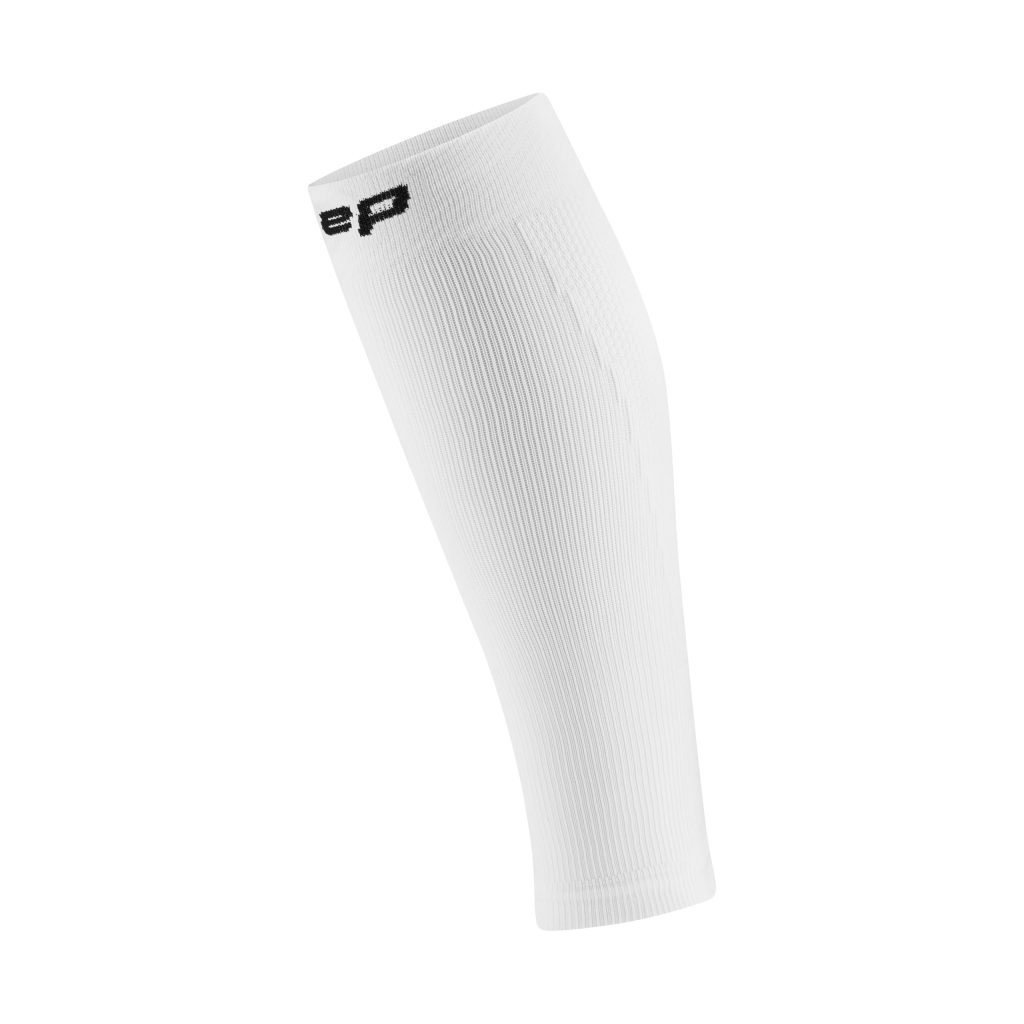
The Core Run line is CEP’s everyday training offering, distinct from the brand’s more aggressively priced performance tiers. The 5.0 designation refers to the current generation of the garment, and the changes between versions have largely been incremental: refined fit, updated fabric blends, and small adjustments to the graduated compression profile. In white, the sleeves are visually clean but also unforgiving—more on that below.
In practice, these are worn in a few predictable ways. Some runners put them on for long runs or tempo sessions, particularly on hard surfaces where calf fatigue builds. Others use them for post-run recovery, wearing them for an hour or two after training. A smaller group wears them during travel or on days spent standing. The sleeves are sold in pairs and sized by calf circumference, which matters more than height or shoe size. Getting the size right is the single biggest factor in whether the garment feels supportive or merely tight.
Functionally, the sleeves use a graduated compression design, meaning pressure is highest at the ankle and decreases toward the top of the calf. The fabric is a synthetic blend with mesh zones for ventilation, and the cuff edges are finished with silicone-free gripper bands intended to keep the sleeve from sliding. CEP publishes compression values in millimeters of mercury for its medical-grade lines, though the Core Run sleeves are positioned as athletic rather than medical products, so those figures are less prominently specified. The construction feels dense and well-finished, with flatlock seams that sit flush against the skin.
What the sleeves do well is provide a consistent, firm hold without the bunching that plagues cheaper alternatives. The graduated profile is noticeable—the ankle feels snug while the upper calf feels less restricted—and the gripper bands generally hold position through a run, though very sweaty conditions can cause minor migration. The mesh panels do help with heat management, but no calf sleeve is genuinely cool in summer, and these are no exception. Runners who overheat easily may find them uncomfortable above roughly 25°C.
The most obvious trade-off is price. Comparable calf sleeves from established running brands often cost meaningfully less, and the performance gap is not always easy to detect in day-to-day use. The research on compression garments for performance is inconclusive; benefits tend to show up more reliably in perceived soreness and recovery than in measurable speed gains. Buyers should treat these as a comfort and recovery aid rather than a performance enhancer.
The white colorway deserves its own caveat. White compression fabric shows dirt, sweat stains, and road grime quickly, and repeated washing—which the fabric tolerates well—gradually dulls the appearance. Runners who train on trails, in wet weather, or on gritty city roads will likely find a darker color more practical. The white version reads as a race-day or gym option rather than an everyday training workhorse.
Fit is another limitation worth flagging. Because sizing is based on calf circumference, runners between sizes face a genuine dilemma: size down and risk excessive tightness that can feel restrictive on longer efforts, or size up and lose some of the intended compression benefit. The sleeves also have a relatively narrow size range compared with some competitors, which may exclude very large or very small calves. Trying them on before committing is advisable where possible.
Compared with compression socks, which cover the foot as well, calf sleeves offer more flexibility—they can be paired with any sock and removed mid-run if needed. Compared with lower-priced sleeves, the CEP version justifies part of its premium through construction quality and fit consistency, but not through dramatic functional superiority. Runners considering alternatives might look at sleeves from other running-focused brands or at compression socks if they want foot coverage as well.
These sleeves suit runners who already use compression regularly, value a firm graduated fit, and are willing to pay for build quality. They also work for recovery-focused users who want a dedicated sleeve rather than a sock. They are less suitable for casual runners buying their first compression garment, for anyone training primarily in hot conditions, and for those who want a white sleeve to stay white. Runners on a budget will find adequate options elsewhere, and anyone expecting a clear performance boost should temper expectations. As a well-made, firmly compressive sleeve, the Core Run 5.0 does its job; whether that job is worth the price is a personal calculation.