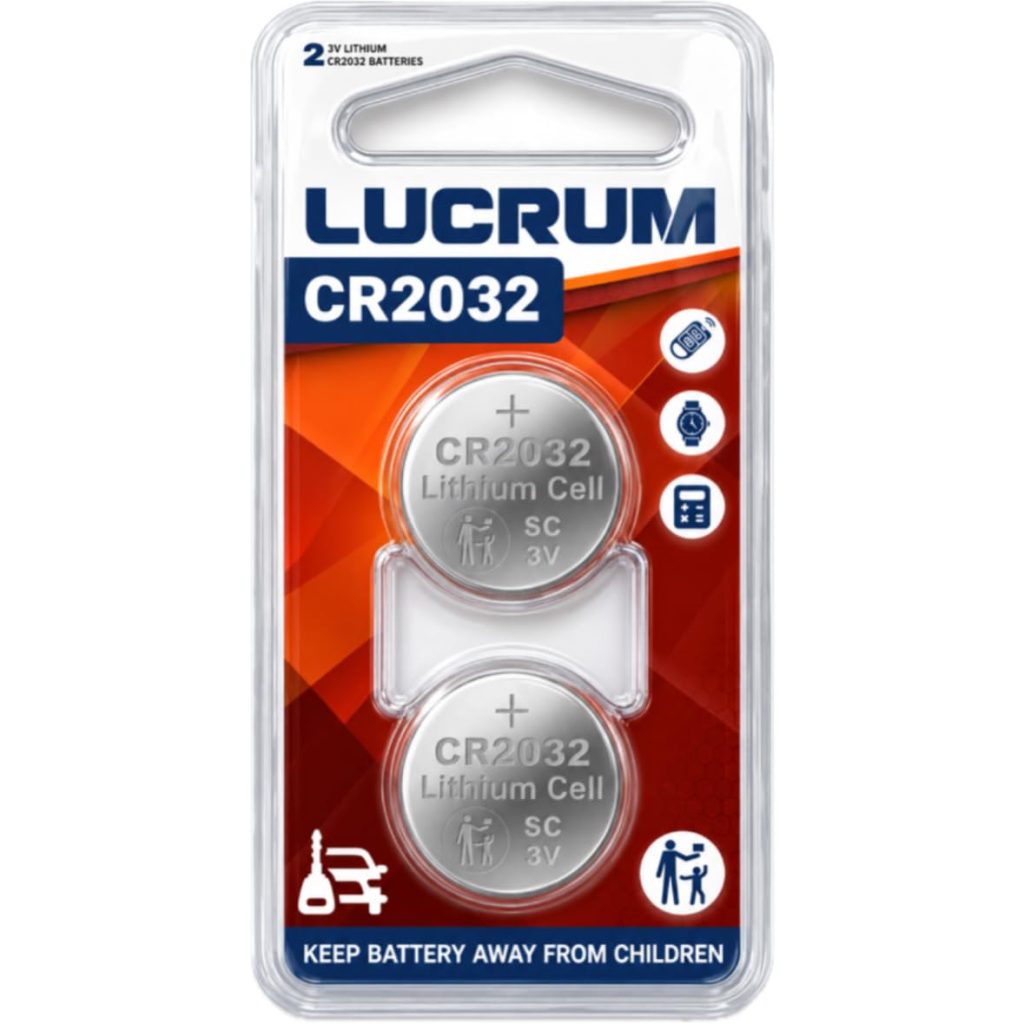
Glucometer batteries are one of those purchases nobody thinks about until the meter refuses to turn on, usually at an inconvenient moment. The Lucrum 2-pack of CR2032 cells is aimed squarely at that situation, marketed for use with Bayer Contour Next, Contour Next Gen, and Contour Next EZ meters. It is a modest product in a category where the stakes are low but the timing matters, and it is worth looking at what you actually get before deciding whether it belongs in a drawer at home.
The core proposition is simple: two CR2032 lithium coin cells, the 3-volt size that powers a long list of small medical and household devices. Contour Next meters use this cell type, and the packaging explicitly calls out the three Contour models listed above. If your meter is one of those, the fit question is settled. If you own a different brand or an older meter, check the battery compartment or manual first, because CR2032 is common but not universal, and some meters take AAA cells or a different coin size.
In real use, these batteries live a quiet life. Most people install one when the low-battery icon appears or when the meter simply stops responding, then forget about it until the next time. A two-pack is a reasonable quantity for a single household: one cell goes in the meter, the other sits in a drawer as a spare. That spare matters more than it might seem. Running out of meter power mid-test, or discovering a dead battery before a morning reading, is exactly the kind of small disruption that a spare prevents. For anyone who tests regularly, keeping a backup on hand is closer to common sense than to stockpiling.
Functionally, these are standard lithium coin cells, and there is not much to differentiate one brand from another at the chemistry level. CR2032 cells hold a nominal 3 volts and are designed for low-drain devices like glucose meters, kitchen scales, key fobs, and small remote controls. Lucrum does not publish an unusual capacity figure or a special formulation in the product listing, so the realistic expectation is ordinary CR2032 performance: months of use in a meter that is powered on briefly several times a day. Buyers should not expect these to outlast premium-brand cells by a wide margin, and there is no independent test data here to suggest they would.
Where a product like this earns its place is convenience and packaging. Buying a two-pack sized for a specific device category saves the guesswork of matching a coin cell to a meter at the store, and the labeling makes the intended use clear. The trade-off is that you are paying for a small, device-specific pack rather than buying CR2032 cells in bulk. A larger multipack of generic CR2032 batteries will usually cost less per cell and work just as well in a Contour meter, since the meter does not care about branding. The Lucrum pack makes sense for someone who wants a quick, correctly sized replacement without researching cell types, not for someone optimizing cost per battery.
There are other limitations worth noting. Coin cells have a shelf life, and a spare that sits unused for years may lose some capacity before it is needed, so the two-pack format is best suited to households that will actually use both cells within a reasonable window. Storage conditions matter too; heat and humidity shorten lithium cell life, so a kitchen drawer near the stove is a worse home for a spare than a cool, dry cabinet. None of this is unique to Lucrum, but it is relevant to how useful a two-pack really is.
Compared with rechargeable alternatives, disposable coin cells remain the practical choice for glucose meters. Rechargeable CR2032 cells exist, but their lower nominal voltage and the need for a separate charger make them a poor fit for a medical device that expects a stable 3-volt supply. Compared with buying a name-brand multipack at a pharmacy, the Lucrum pack competes on convenience rather than price or proven longevity.
Who is this for? Primarily Contour Next, Next Gen, and Next EZ owners who want a correctly labeled replacement and a spare without shopping around. It also suits caregivers managing a meter for someone else, where having a backup cell on hand avoids a trip to the store. Who is it not for? Owners of other meter brands, anyone who already keeps a bulk supply of CR2032 cells, and buyers expecting measurable performance advantages over generic coin cells. For those groups, a standard multipack is the more sensible purchase.
Overall, the Lucrum two-pack is a utilitarian item that does its job without ceremony. It is not a product that invites enthusiasm, and it should not be reviewed as one. The realistic assessment is that it provides two standard CR2032 cells in packaging that matches a common meter family, at a price that is likely higher per cell than bulk alternatives. For the specific shopper it targets, that trade-off is acceptable; for everyone else, the generic route is just as good.