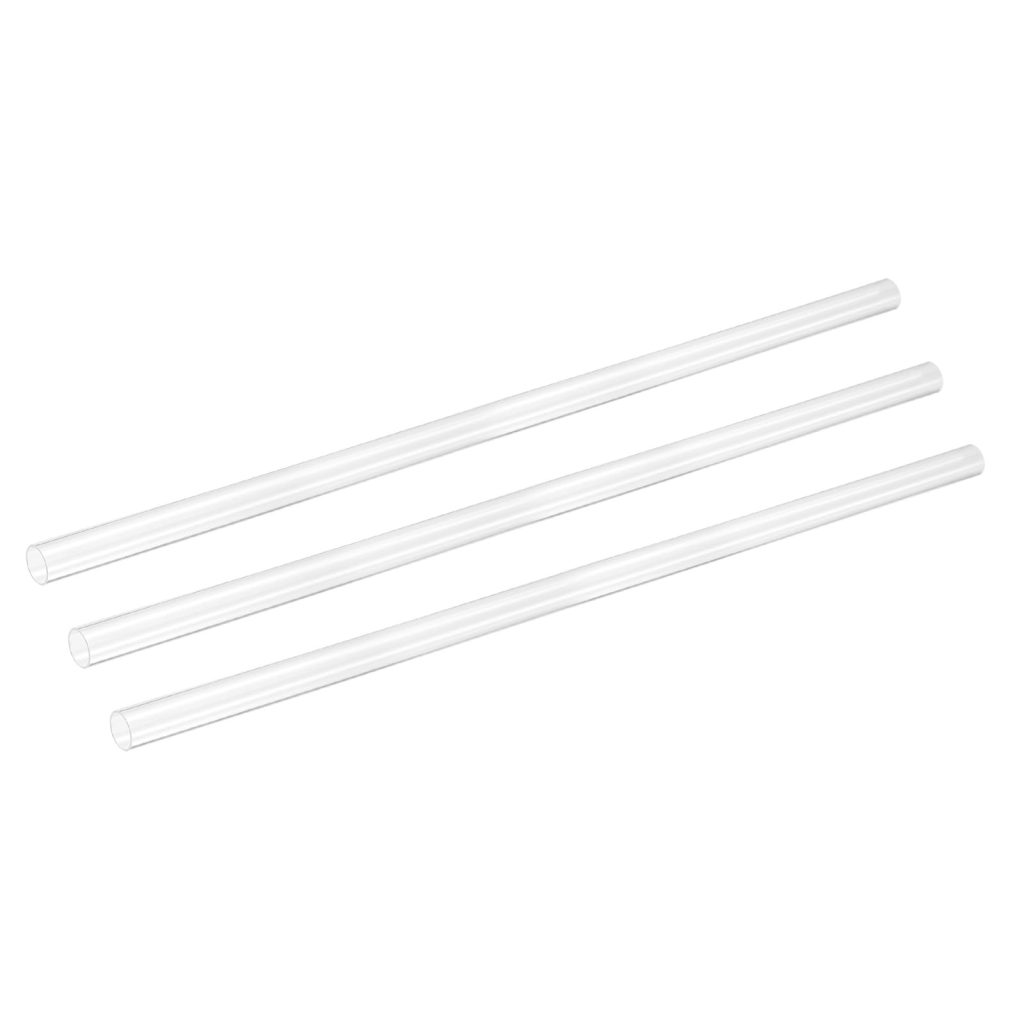
Clear rigid tubing is one of those materials that seems simple until you need it for a specific project. The uxcell 3-pack of acrylic pipe, with a 12mm inner diameter and 16mm outer diameter, sits in a middle ground: larger than typical aquarium airline tubing, smaller than PVC plumbing pipe, and made from a material that prioritizes clarity over flexibility or pressure resistance. This review looks at what the tubing actually offers, where it tends to work well, and where it can fall short.
What you get and how it’s made
The package includes three straight lengths of clear pipe, each 20 inches long. The material is described as acrylic, though the product title also mentions polycarbonate. In practice, most clear rigid tubing in this size range is acrylic. Acrylic offers excellent optical clarity and is reasonably strong, but it can crack under sharp impact or stress. Polycarbonate would be more impact-resistant, but also more expensive and slightly less clear. Without testing, it’s hard to say definitively which material this is, but the distinction matters if you plan to use it in a high-vibration or high-impact environment. The dimensions are consistent: 12mm ID and 16mm OD means a 2mm wall thickness. That’s thin enough to keep weight down but still rigid enough for most light-duty applications.
Where this tubing fits in real projects
This size is often used in aquarium setups for custom filter returns or spray bars, where the clear material lets you see flow and check for debris. It also works for LED lighting projects, such as building a custom light tube or protecting LED strips. In DIY plumbing, it can serve as a sight glass or a low-pressure drain line. Crafters use it for display stands, dollhouse plumbing, or kinetic sculptures. The 20-inch length is convenient because it’s long enough to cut multiple pieces but short enough to ship without excessive packaging.
Performance and limitations
The tubing is rigid, so it won’t bend around corners like vinyl or silicone tubing. You’ll need fittings, elbows, or a heat source to shape it if your project requires turns. Acrylic can be bent with a heat gun, but it’s easy to overheat and cause bubbles or deformation. Also, the clear surface shows scratches and smudges readily, so it’s best for applications where appearance matters but not where it will be handled roughly. Pressure resistance is limited: this is not for high-pressure water lines. It’s fine for gravity-fed or low-pressure systems, but it can burst if you push it. The 2mm wall is a trade-off: thinner walls give a larger inner diameter for a given outer diameter, but they also reduce strength. For most hobby uses, it’s adequate, but for anything structural, consider thicker-walled tubing.
How it compares to alternatives
If you need flexibility, vinyl tubing is the obvious alternative. It bends easily and is inexpensive, but it’s not clear in the same way—vinyl tends to yellow over time and isn’t as transparent. If you need higher pressure resistance, PVC pipe is stronger and available in similar sizes, but it’s opaque and requires primer and cement for connections. For optical clarity, glass is superior but fragile and harder to cut. Acrylic sits in the middle: clearer than vinyl, safer than glass, and easier to work with than PVC for light-duty projects. Compared to polycarbonate tubing, acrylic is more scratch-resistant but less impact-resistant. If your project involves potential impacts, polycarbonate might be worth the extra cost.
Who should consider this
This tubing is a good fit for hobbyists who need a clear, rigid tube for low-pressure or decorative purposes. Aquarium keepers building custom returns, LED enthusiasts making light tubes, and DIYers creating small-scale plumbing models will find it useful. It’s also suitable for educational projects or science demonstrations where visibility is key. However, it’s not for you if you need a flexible connection, if you’re working with high pressure or temperature, or if you need to bend it without special tools. It’s also not ideal for outdoor use, as acrylic can degrade with prolonged UV exposure. And if you need a food-grade or medical-grade material, this isn’t certified for those uses.
Final thoughts
The uxcell acrylic pipe is a straightforward material that does what it says: provides clear, rigid tubing in a convenient size and quantity. It’s not a high-performance product, and it has clear limitations, but for the right projects, it’s a practical choice. Just be aware of its brittleness and scratch susceptibility, and plan your connections accordingly. If you need something more durable or flexible, look at polycarbonate or vinyl tubing instead.


