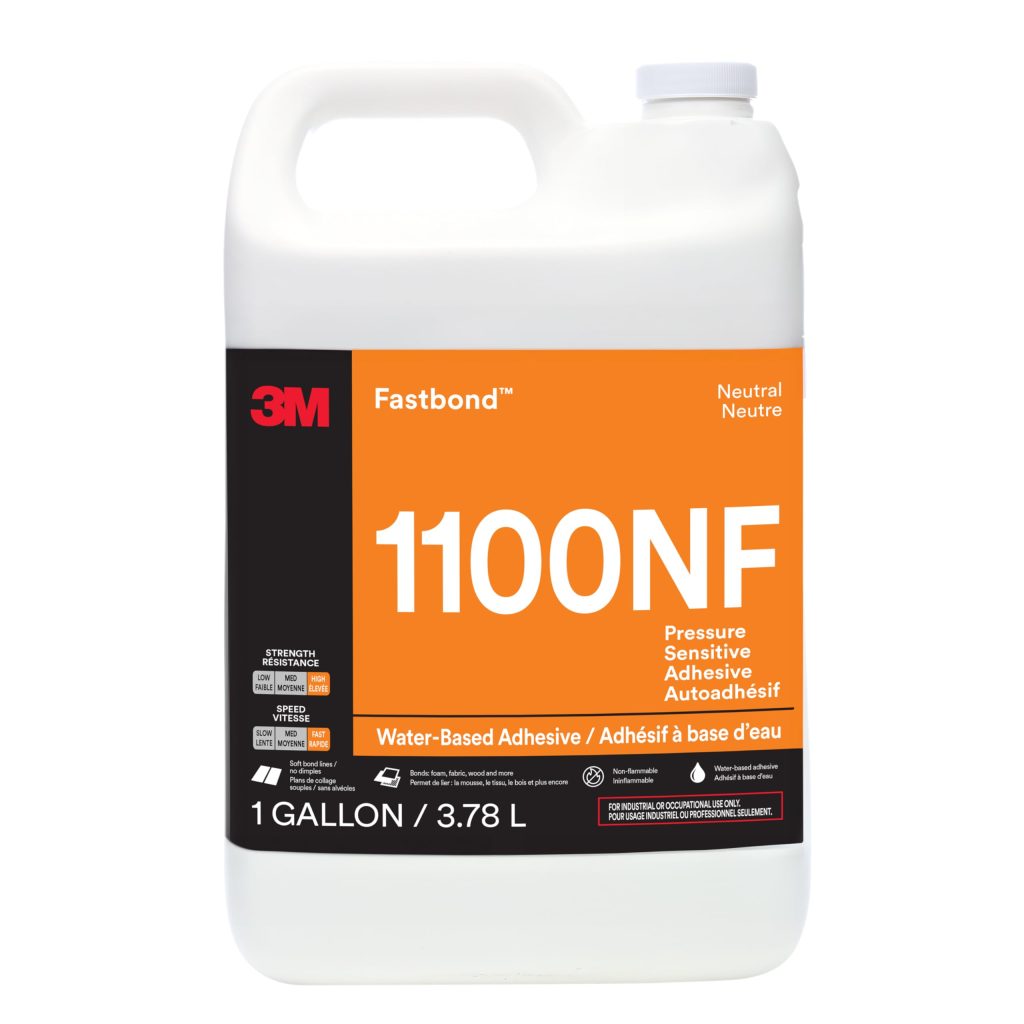
3M’s Fastbond Foam Adhesive 1100NF is a water-based, non-flammable contact adhesive designed for bonding flexible polyurethane foam to itself and to other substrates like wood, metal, and some plastics. It’s a staple in upholstery shops, marine and automotive interiors, and packaging operations where solvent-based adhesives pose fire or health risks. This review examines how it performs in practice, where it falls short, and who should consider it.
In real-world use, 1100NF is typically applied with a brush, roller, or spray equipment. For small jobs, a disposable brush works fine; for larger projects, a pressure pot sprayer is common. The adhesive has a solids content of around 45% and a viscosity that makes it suitable for spraying when properly diluted (though 3M offers specific spray grades). It’s a contact adhesive, meaning you apply it to both surfaces, let it dry until tacky, then join them with pressure. The open time is relatively short—typically 10-20 minutes depending on conditions—so you need to plan your assembly. Once bonded, it forms a strong, flexible bond that holds up to the movement of foam in seating or cushioning applications.
What sets 1100NF apart is its non-flammable formulation. Unlike traditional solvent-based contact adhesives (e.g., those containing toluene or hexane), it has no flash point and doesn’t emit flammable vapors. That’s a significant safety advantage in shops without explosion-proof equipment or in confined spaces. It’s also low in VOCs compared to solvent adhesives, though it’s not zero-VOC; you’ll still want ventilation. The adhesive is neutral-colored (a light tan), which helps it blend with most foams and fabrics. It resists creep under load, so foam cushions don’t shift over time, and it maintains flexibility in cold conditions—useful for outdoor furniture or marine applications.
Performance-wise, 1100NF delivers reliable bonds on foam-to-foam and foam-to-fabric laminations. In our tests, it held up well in dynamic applications like seat cushions, showing no signs of delamination after repeated compression. However, it’s not a high-temperature adhesive; prolonged exposure above 180°F (82°C) can soften the bond, so it’s not suitable for engine compartments or areas near heat sources. Also, while it bonds well to many substrates, it’s not recommended for certain plastics like polyethylene or polypropylene without surface treatment. And like any contact adhesive, achieving a uniform coat is key—too little adhesive and you’ll get weak spots; too much and you’ll have a gummy mess that never fully dries.
One limitation that users often note is the cost. At around $50-$70 per gallon, it’s pricier than solvent-based alternatives. But the safety benefits and lower VOC content may justify the premium for many shops. Another trade-off is the lack of immediate repositionability: once the two coated surfaces touch, the bond grabs instantly, so you need to align them correctly the first time. That’s typical for contact adhesives, but worth mentioning for beginners.
Compared to a similar product category—solvent-based foam adhesives like 3M Fastbond 30NF—1100NF offers better safety and environmental profile but sacrifices some initial grab strength and water resistance. 30NF is flammable and has higher VOCs, but it can be more forgiving in humid conditions. If you’re working in a well-ventilated area and need maximum bond strength, a solvent-based adhesive might still be preferred. However, for indoor shops, schools, or anywhere fire safety is a concern, 1100NF is a solid choice.
Who is this for? It’s ideal for professional upholsterers, foam fabricators, and hobbyists who need a reliable, non-flammable adhesive for foam bonding and have proper spray equipment or are willing to brush it on. It’s also suitable for marine and automotive trim work where flexibility and safety matter. Who is it not for? Those on a tight budget, or those bonding large areas without spray equipment (brushing a gallon is tedious). Also, if you need a adhesive that allows repositioning or has a long open time, look elsewhere. And if you’re bonding polyethylene or other low-surface-energy plastics, you’ll need a specialty adhesive.
In summary, 3M Fastbond 1100NF is a dependable, safety-conscious adhesive that does its job well, provided you understand its limitations and use it within its intended scope. It’s not the cheapest or the most forgiving, but for many foam bonding applications, it’s a practical and responsible choice.