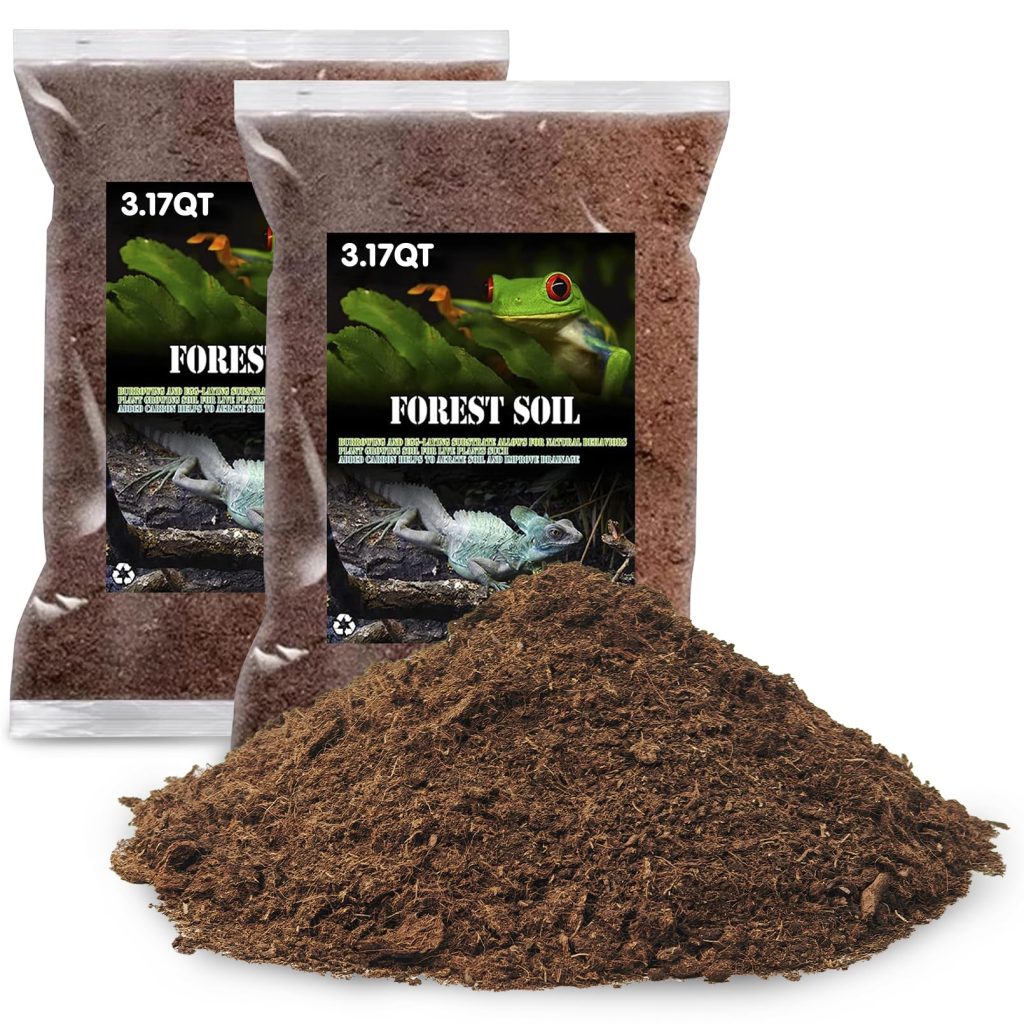
VCEPJH’s reptile soil substrate arrives as a 3-liter bag of loose, earth-like bedding marketed for burrowing species — tortoises, bearded dragons, snakes, tarantulas, geckos, frogs, and hermit crabs all appear in the listing. That is a wide net, and the first thing worth understanding is what 3 liters actually means in practice. It is a small quantity. In a standard 40-gallon bearded dragon enclosure, a 3-liter bag covers only a thin layer across part of the floor, nowhere near the depth a true burrower needs. Buyers should treat this as a trial-size or top-up purchase rather than a full habitat setup.
Functionally, the substrate is a soil-type mix designed to hold shape when damp, which is the core requirement for burrowing animals. Keepers typically use it by adding water gradually and mixing until it clumps without dripping, then packing it into a layer deep enough for the animal to tunnel. For tarantulas and some frogs, a moist, firm layer is genuinely useful; for arid-species geckos, it may be too moisture-retentive unless allowed to dry out. The material is loose and relatively fine, which suits digging but also means it can cling to food dishes and water bowls and track onto enclosure glass.
Performance expectations should stay modest. This is not a bioactive, pre-mixed vivarium soil with a cleanup crew or drainage layer built in. It is plain substrate. It will need spot-cleaning, periodic replacement, and monitoring for mold if kept too wet in a poorly ventilated enclosure. In humid setups, especially with frogs or hermit crabs, the soil can compact and sour over time; in dry setups it can become dusty. Either way, it is a consumable, not a permanent fixture.
Compared with alternatives, the trade-offs are clear. Coconut coir is cheaper per liter in bulk and expands dramatically from a compressed brick, making it far more economical for large enclosures, though it holds moisture differently and some keepers find it less firm for deep burrows. Sand-soil mixes are popular for bearded dragons and tortoises because they drain better and mimic natural ground, but they require careful ratios and carry impaction concerns if used loosely with young animals. Paper towel or reptile carpet remains the low-effort option for quarantine or easy cleaning. VCEPJH’s soil sits in the middle: more naturalistic than carpet, less economical than coir, and less specialized than a species-specific mix.
The 3-liter size is the main limitation, and it is a real one. For a hermit crab tank or a small tarantula enclosure, it may be adequate for a single bedding change. For a tortoise or adult bearded dragon, expect to buy multiple bags, which quickly erodes any cost advantage. The listing’s broad species coverage is also a caution flag — a substrate that claims to suit both a tropical frog and a desert gecko cannot be ideal for both, and buyers should match moisture needs to their specific animal rather than trusting the label’s range.
Who is this for? Keepers with small enclosures — tarantulas, juvenile geckos, small frogs, or a hermit crab setup — who want a ready-to-use soil without buying a compressed block and rehydrating it. It also suits someone trialing a loose substrate for the first time before committing to a bulk purchase. Who should skip it? Owners of large or deep-burrowing species, anyone setting up a full bioactive vivarium, and keepers on a tight budget who will burn through 3 liters quickly. It is also not a substitute for proper husbandry research; substrate alone does not make a habitat suitable.
Overall, this is a serviceable small-format soil substrate with a natural feel and reasonable burrowing behavior, held back by its modest volume and the overly broad species claims in its marketing. Buy it for small enclosures or as a sample; plan around it for anything larger.