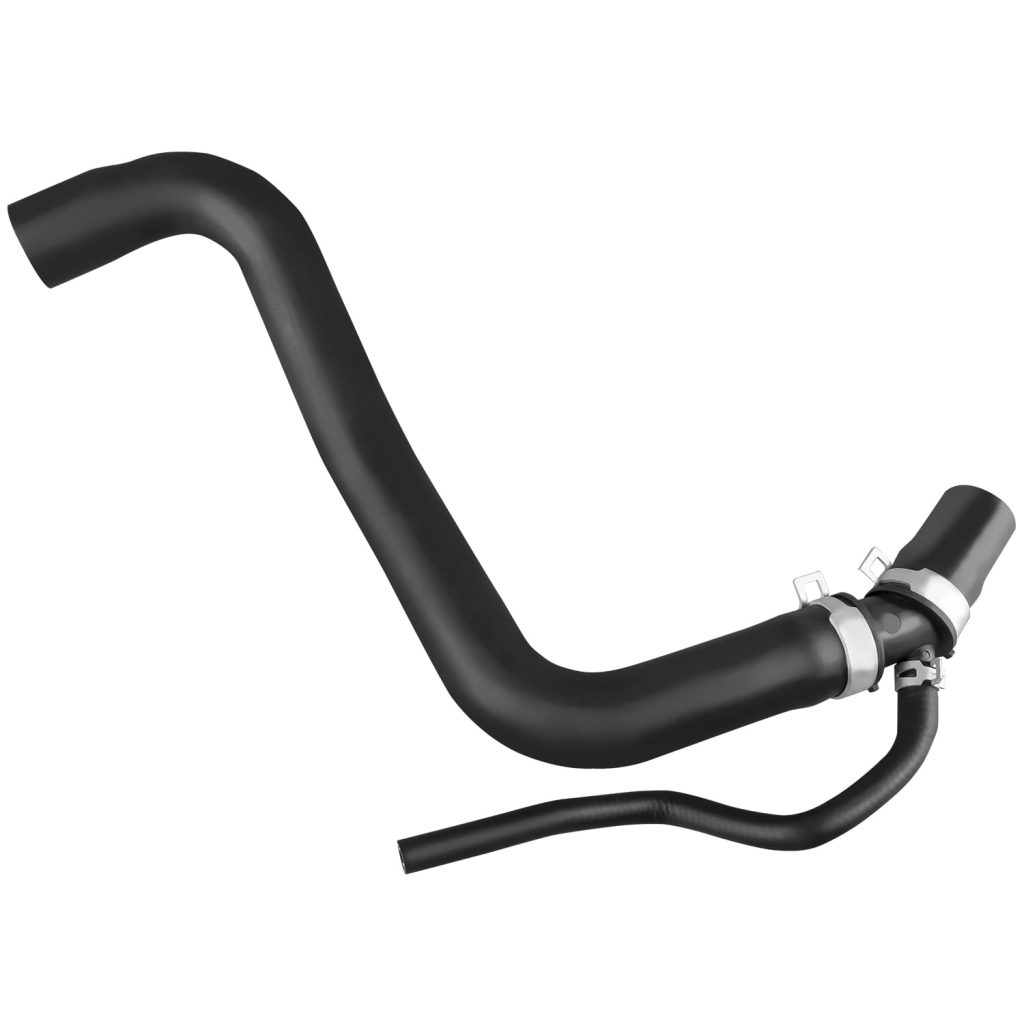
The upper radiator hose is one of those parts most RAV4 owners never think about until it fails. On the 2009–2012 RAV4 with the 2.5L four-cylinder or 3.5L V6, this molded rubber hose carries hot coolant from the engine to the top of the radiator, and when it lets go—usually as a split seam or a swollen bulge near a clamp—the result is a fast coolant loss and a temperature gauge that climbs quickly. Aftermarket replacements like this one exist to get the vehicle back on the road without a dealer-only part number, and that is the lens through which it should be judged.
This is a direct-fit upper hose intended for both engine variants of that generation. The molding follows the factory routing, including the bends needed to clear the intake and accessory components, and it terminates at the radiator and thermostat housing ends with the correct inner diameter for the stock spring clamps or worm-drive clamps. Buyers should confirm engine size and model year before ordering, since the 2.5L and 3.5L use different cooling layouts despite sharing a body, and listings for this era are not always perfectly clear about which variant a given hose covers.
In real use, this is a straightforward maintenance part rather than a performance upgrade. The typical scenario is a RAV4 with 100,000 to 180,000 miles on it, where the original hose has hardened, or a cooling system job where the hose comes off anyway and replacing it is cheap insurance. Installation is a drain-and-refill job: clamp off or drain the coolant, loosen the two clamps, twist and pull the old hose free, clean the necks, and seat the new one. The job is accessible from the top of the engine bay and does not require removing the radiator, though the V6 is tighter around the hose path than the four-cylinder.
What the part does well is the basics. The rubber has a reasonable wall thickness and the reinforcement is visible at the bends, which matters because the upper hose sees constant heat cycling and pressure pulses. The molded shape holds its routing without kinking when installed correctly, and the ends seat fully on the necks. For a stock replacement on a daily-driven RAV4, that is the core requirement, and this hose meets it.
There are trade-offs worth naming. First, this is a commodity aftermarket hose, and quality varies between production runs; some units arrive with slightly rough flash at the mold seams or a stiff feel out of the box that softens once the engine heats up. Second, the rubber compound is not obviously superior to a factory hose, and owners who plan to keep the vehicle another decade may prefer an OEM part for peace of mind. Third, the listing does not include clamps, so reusing the originals is expected—fine if they are in good shape, less so if they are corroded.
Compared with a silicone hose, this rubber part is the conservative choice. Silicone hoses tolerate higher temperatures and last longer in theory, but they cost several times as much, often need different clamps, and are overkill for a stock RAV4 that is not towing or tracked. Compared with a genuine Toyota hose, the aftermarket unit saves money at the cost of some consistency. Neither comparison makes this a bad buy; it just places it in the budget-replacement category, which is where most shoppers for this part already are.
Who should buy it: owners of a 2009–2012 RAV4 facing a leaking or swollen upper hose, DIYers comfortable with a coolant drain and refill, and anyone doing a preventive cooling system refresh on a higher-mileage vehicle. Who should look elsewhere: owners who want OEM fit and material certainty, those with a modified or heavily loaded vehicle who might benefit from silicone, and anyone unsure which engine they have—verify the displacement first, because ordering the wrong hose wastes a coolant fill.
Realistic expectations are modest. This hose should perform like a stock replacement for a normal service life, but it is not a lifetime part and should be inspected at each coolant change for softness, cracking, or bulging at the clamps. Install it with clean necks and properly tensioned clamps, burp the cooling system thoroughly, and it will do its job quietly. That is a fair outcome for a low-cost consumable, and it is the standard by which this part should be judged.