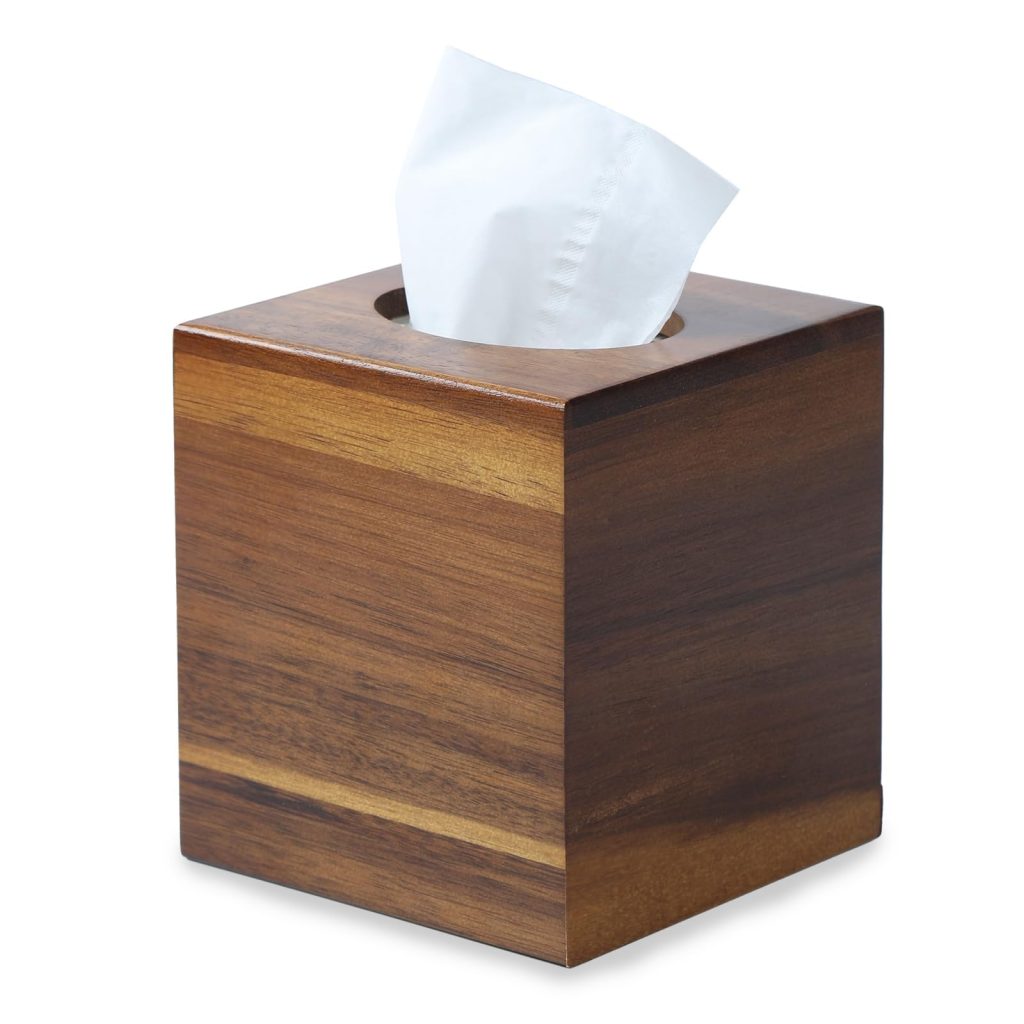
Tissue box covers occupy an odd category of home goods. They solve a problem nobody thinks about until the cardboard box on the coffee table starts looking tired, and then suddenly a $20 piece of wood seems like a reasonable idea. The YANGQIHOME Acacia Wood Tissue Box Cover sits squarely in that space: a square cube measuring 5.3 x 5.3 x 6.1 inches, sized to hide a standard facial tissue box while adding a bit of warm wood grain to a bathroom counter, dining table, or living room side table.
The first thing worth understanding is what this product actually is. It is a rigid wooden shell, not a dispenser with springs or mechanical parts. You lift the lid or slide the box in, and the tissues pull through an opening in the top. That simplicity is both the appeal and the limitation, and it shapes almost everything else about how the cover performs day to day.
Where it fits in real use
Most people buy a cover like this for one of three spots: a guest bathroom where the toilet-paper-and-tissue situation is visible, a dining table where a bare cardboard box looks out of place during meals, or a living room end table that gets used during cold season. The acacia construction matters here. Acacia is a dense, relatively hard wood with a pronounced grain pattern, and the natural variation means two units will not look identical. That is a genuine plus for a decorative object, since it avoids the flat, printed look of veneer or plastic covers. The finish on most units in this line reads as a matte-to-satin oil or lacquer, which holds up to occasional wipedowns better than unfinished wood would.
The square footprint is a practical choice. At roughly 5.3 inches per side, it sits stable on a table and does not tip when you pull a tissue one-handed, which is a common failure of lighter plastic covers. The 6.1-inch height accommodates standard cube and rectangular tissue boxes, though taller boutique boxes may not fit. The top opening is sized for standard tissue pull-through, and in normal use the tissues feed without tearing, provided the box inside is positioned so the opening aligns with the slot.
What it does well, and what it does not
- Build and appearance: Solid wood construction with visible acacia grain gives it a furniture-like presence that plastic or fabric covers cannot match. It reads as intentional decor rather than a disguise.
- Stability: The weight and flat base keep it planted during one-handed pulls, which is the main functional test for a cover like this.
- Refill friction: This is the trade-off. Because there is no spring-loaded platform, as the tissue box empties the remaining tissues sit lower and can be harder to reach, and some users will find themselves lifting the lid or tipping the cover to get the last few sheets. It is a minor annoyance, not a dealbreaker, but it is the kind of thing a plastic pop-up dispenser avoids entirely.
- Moisture exposure: Wood and bathrooms are not a natural pairing. Occasional splashes and wipedowns are fine, but a cover sitting directly next to a sink or shower will see humidity over time. Acacia handles this better than pine or MDF, but it is not waterproof, and standing water on the base should be avoided.
How it compares
The closest alternative category is the plastic or metal pop-up dispenser, which typically costs less and offers easier refilling but looks utilitarian. A step up in price and formality would be a marble or ceramic cover, which is heavier and more formal but also more fragile and prone to chipping if dropped. The acacia cover lands in a middle zone: warmer and more casual than stone, more substantial than plastic, and priced in a range where it makes sense as a small upgrade rather than a design statement. Compared with fabric or leather wraps, the wood version is easier to clean and will not absorb spills, though it is less forgiving if knocked off a counter.
Who should consider it
This cover suits anyone who wants a tissue box to blend into a wood-accented room, especially in spaces with oak, walnut, or other warm-toned furniture. It is a reasonable fit for a guest bathroom, a home office desk, or a dining sideboard where the box is visible but not constantly handled. It is less suitable for a primary bathroom with heavy steam exposure, for households that go through tissues quickly and want effortless refills, or for anyone expecting a mechanical dispenser. If the priority is function over appearance, a simple plastic cover will do the job for less. If the priority is a small, durable decorative object that happens to hold tissues, this one is a sensible choice, provided you accept the occasional reach for the last sheet.