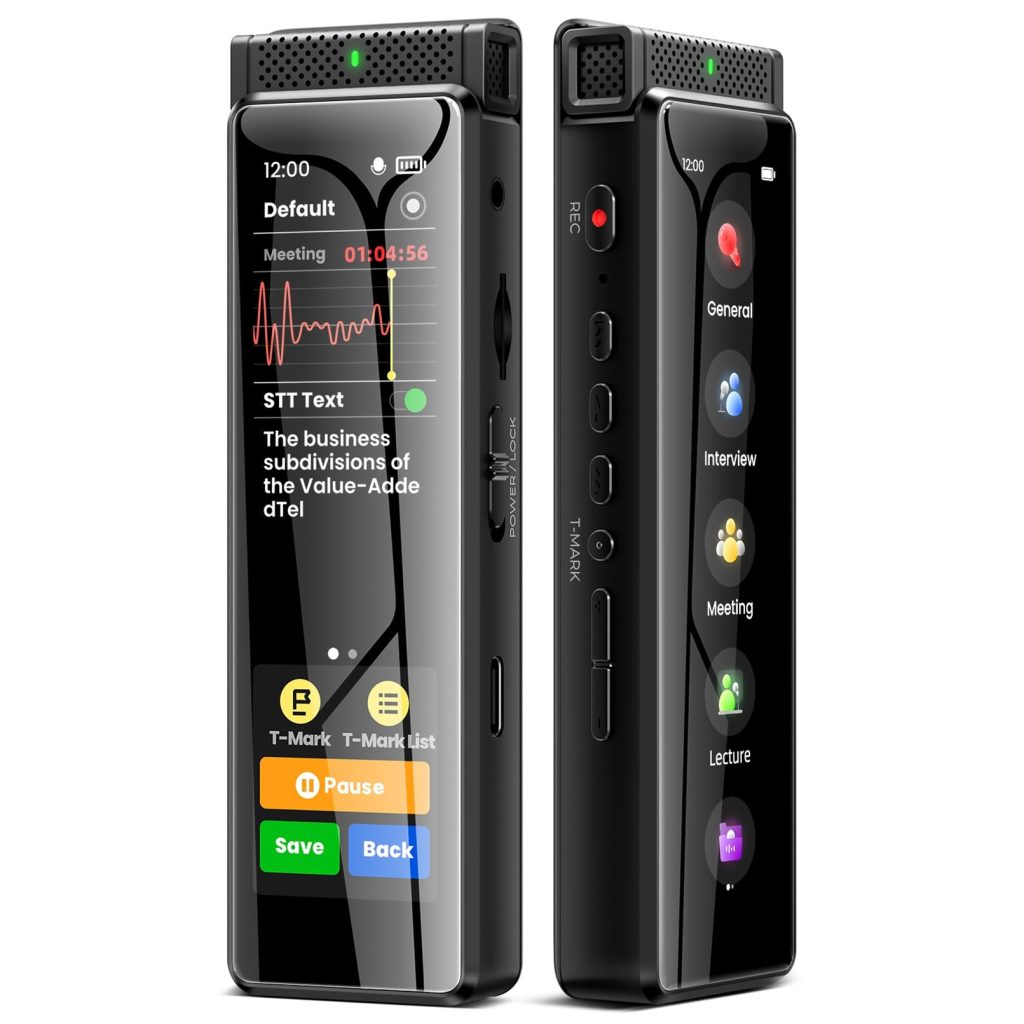
The Innioasis R1 is a digital voice recorder that aims to blend the convenience of a touchscreen interface with the core functionality of a dedicated recording device. Priced in the mid-range, it offers 8GB of internal storage, Bluetooth connectivity, and voice-activated recording. But how does it hold up in everyday use? We spent time testing its features to provide an honest assessment.
From the outset, the R1’s most striking feature is its full touchscreen display. At 2.4 inches, it’s large enough to navigate menus and view recording levels, but it’s not without quirks. The interface is responsive, though occasional lag reminds you that this isn’t a high-end smartphone. The screen is bright and clear indoors, but becomes difficult to read in direct sunlight, a common trade-off for LCD panels in this category.
In real-world scenarios, the R1 is designed for students, journalists, and professionals who need a reliable recorder for lectures, interviews, or meetings. The 8GB of storage translates to roughly 580 hours of recording at the lowest quality setting, or about 90 hours at the highest. That’s ample for most users, and there’s no microSD card slot for expansion, which might be a limitation for those needing weeks of continuous recording.
The voice-activated recording feature, often called VOR (Voice Operated Recording), is a mixed bag. It works as expected: recording starts when sound is detected and pauses during silence. This is handy for saving storage and reducing editing time. However, the sensitivity isn’t adjustable, and in noisy environments, it may trigger on background noise, leading to unwanted segments. In quiet settings, it performs well, but don’t expect flawless operation.
Bluetooth connectivity is a welcome addition, allowing you to pair wireless headphones or a speaker for playback. It also enables file transfer to a smartphone via the companion app, though the app itself is basic and occasionally buggy. The Bluetooth range is average, and we experienced occasional dropouts when moving around. For wired listening, there’s a 3.5mm headphone jack, which is a nice inclusion.
Audio quality is decent for a device in this price range. The built-in microphone captures clear voice recordings in close proximity, but it struggles with distant sounds or in large rooms. The lack of a external microphone input is a significant drawback for serious users who might want to use a lavalier or shotgun mic. The speaker is adequate for quick playback but is tinny and not suitable for critical listening.
Battery life is rated at around 20 hours of continuous recording, which is respectable. In our tests, we got closer to 15 hours with mixed use, including Bluetooth playback. Charging is via USB-C, which is convenient, but the device takes about 2.5 hours to fully charge. There’s no fast charging support.
Compared to traditional voice recorders like the Olympus WS series, the R1 offers a more modern interface but falls short in build quality and microphone sensitivity. The Olympus devices are known for their durability and superior audio capture, while the R1 feels more like a consumer gadget. On the other hand, the R1’s touchscreen and Bluetooth make it more user-friendly for those who prefer a smartphone-like experience.
Who is this for? It’s suitable for students recording lectures, professionals capturing meetings, and casual users who want a straightforward recording device with modern conveniences. It’s not for professional journalists or musicians who require high-fidelity audio and external mic support. Also, if you need expandable storage or robust build quality, you might want to look elsewhere.
In summary, the Innioasis R1 is a competent voice recorder that gets the basics right but doesn’t excel in any particular area. Its touchscreen and Bluetooth are nice perks, but the lack of a microSD slot and external mic input limits its appeal for advanced users. For the price, it’s a reasonable option if you prioritize ease of use over professional-grade features.


