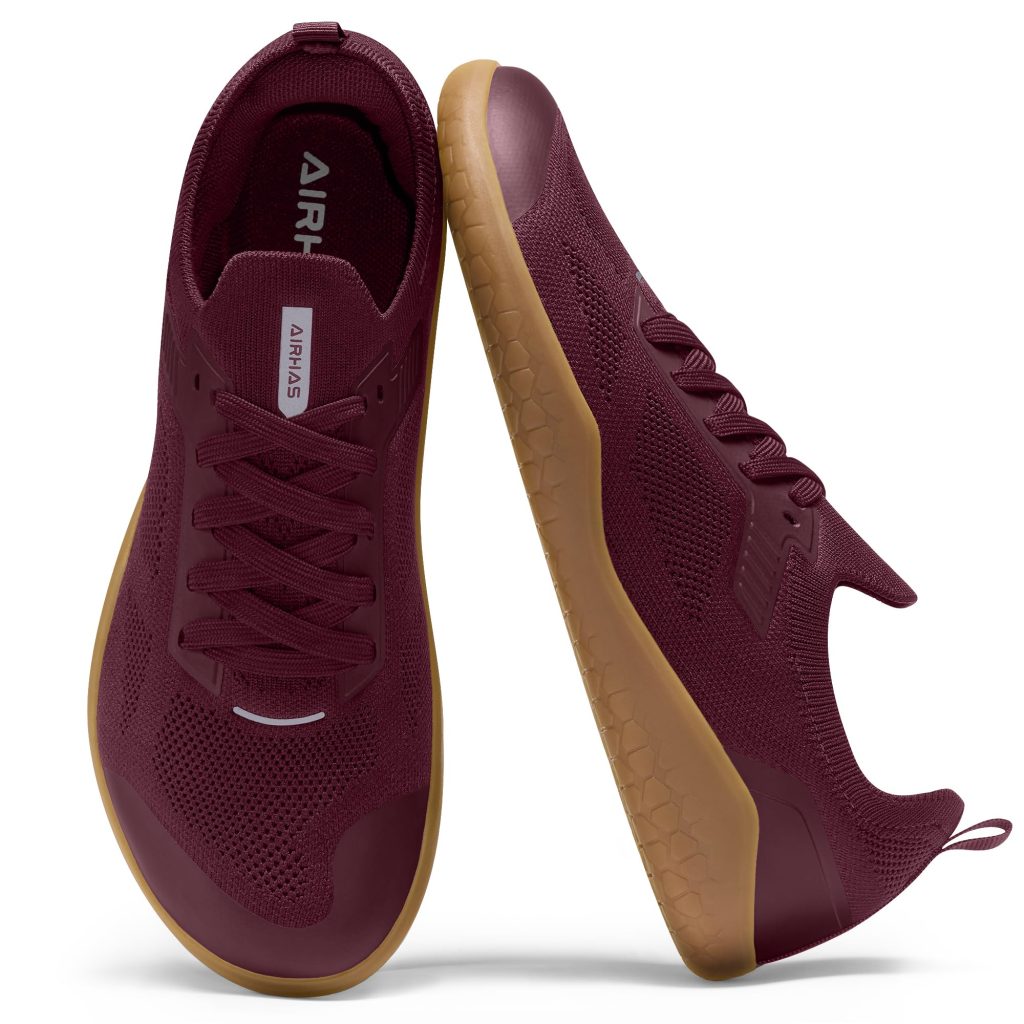
Barefoot-style training shoes have moved from niche curiosity to a recognizable category, and this women’s pair in wine with a gum sole sits squarely in the middle of that trend. The design follows the familiar formula: a flat, zero-drop platform, a wide toe box, and minimal cushioning underfoot. Whether that formula works for a given wearer depends heavily on what they plan to do in them, and this review walks through where the shoe makes sense and where it doesn’t.
The first thing to understand about a shoe like this is that zero drop means the heel and forefoot sit at the same height above the ground. Most conventional sneakers place the heel several millimeters higher, which encourages a heel-strike gait. A zero-drop shoe removes that ramp, which changes how weight distributes through the foot and lower leg. For lifting, that flat platform is genuinely useful. For running, it’s a different story, and buyers should be clear about which activity they have in mind.
What the shoe actually offers
- A zero-drop, minimally cushioned sole that keeps the foot close to the ground
- A wide toe box that lets the toes splay rather than compress
- A flexible outsole that bends with the foot instead of resisting it
- A gum rubber outsole in the wine colorway, which tends to offer reasonable grip on gym floors
- A lightweight build that packs down easily for travel or a gym bag
In practice, these features matter most during strength work. Deadlifts, squats, and kettlebell movements benefit from a stable, flat base, and a shoe with little cushioning transmits force more directly than a thick foam trainer. The wide toe box also helps during long sessions where conventional shoes start to pinch. Reviewers of similar barefoot designs often note that the toes feel noticeably freer after an hour of wear, and that’s the intended effect here.
Where the design asks something of the wearer
The trade-off is cushioning, or rather the lack of it. Anyone accustomed to plush running shoes will find the ride firm, sometimes jarringly so on hard concrete. Jump rope, box jumps, and plyometric work can feel harsh because there’s little to absorb impact beyond the foot’s own mechanics. This isn’t a flaw so much as the point of the category, but it does mean the shoe isn’t a universal gym solution. It’s also worth noting that transitioning to zero-drop footwear abruptly can strain calves and Achilles tendons, so a gradual break-in period is sensible, especially for anyone coming from traditional trainers.
Fit is another consideration. The wide toe box is generous, which suits people with broader feet or bunions, but those with narrow feet may find the volume loose and need to lace more snugly. The wine and gum colorway is understated and reads more like a casual sneaker than a technical training shoe, which some buyers will appreciate and others won’t care about either way.
How it compares
Against a conventional cross-training shoe, the differences are stark. A typical trainer offers a raised heel, more foam, and a snugger fit, which suits mixed cardio and lifting sessions but sacrifices ground feel. Against a dedicated barefoot running shoe, this pair is more oriented toward gym work, with an outsole built for indoor surfaces rather than road mileage. It also sits somewhere near minimalist lifestyle sneakers, though the gym-focused sole gives it more traction for lifting platforms and studio floors. In short, it occupies the space between a lifting shoe and a barefoot walking shoe, and buyers should expect it to excel at neither extreme.
Who should consider it
This shoe is a reasonable pick for women who lift regularly, prefer a flat and stable base, and want their toes to move freely. It also suits anyone already comfortable with minimalist footwear who wants a gym-specific pair. It is less suitable for runners logging regular mileage, for people who need substantial arch support or cushioning for joint issues, and for those doing a lot of high-impact plyometrics. Beginners to barefoot shoes should approach it as a gradual transition rather than a drop-in replacement for their current trainers.
At its core, this is a functional, purpose-built shoe with a clear point of view. It does one thing well, and it makes no attempt to be everything. Buyers who match its intended use will likely find it dependable; those who expect it to replace a cushioned all-rounder may be disappointed. That honesty about limits is worth more than any list of features.