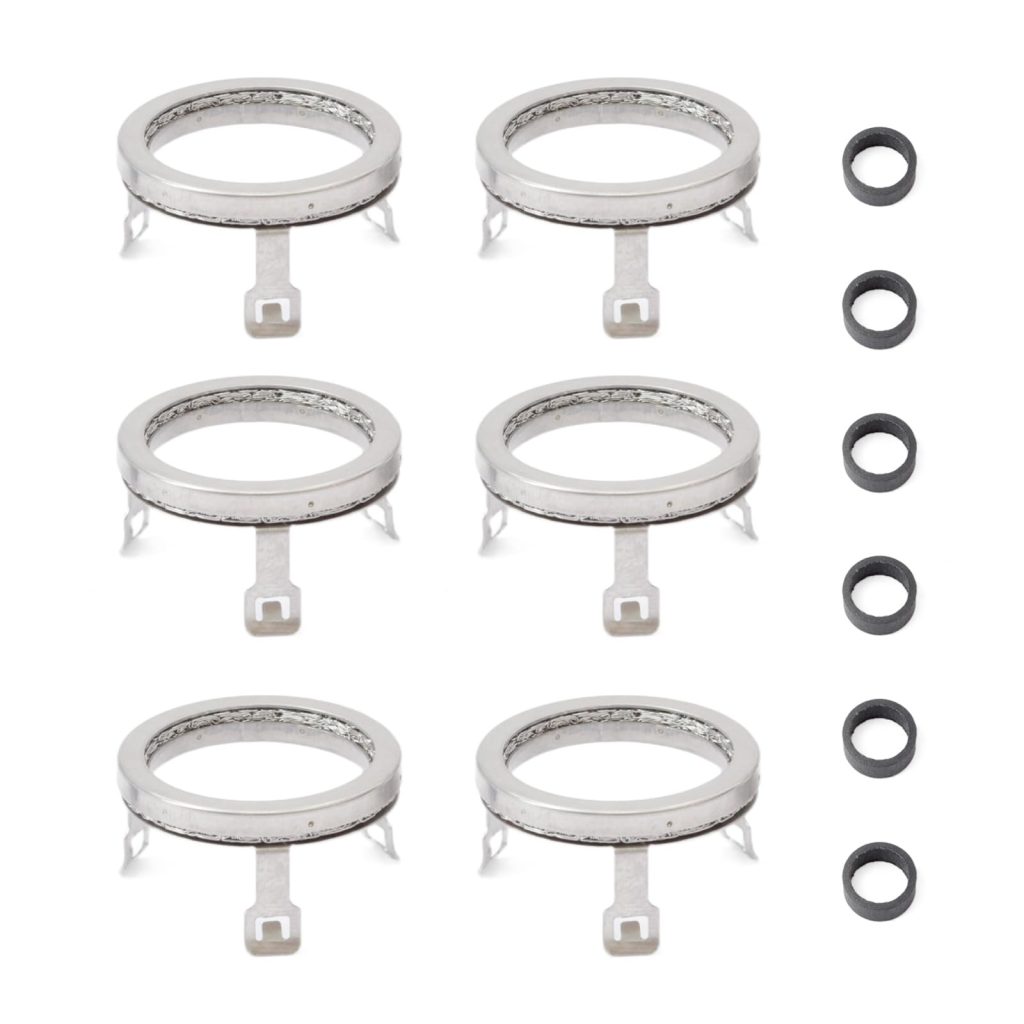
The Erchon 6-pack of decoupler elements with matching seals is the kind of part most drivers never think about until something starts rattling, clunking, or feeling loose underneath the car. These are small rubber-and-metal bushings used in the driveline and suspension assemblies of several BMW models, and the part numbers in the listing (13537564751 and 13537584315) point to applications where vibration isolation matters more than most owners realize. This review looks at what the kit actually is, where it fits into real repair work, and where it falls short.
To understand the product, it helps to know what a decoupler element does. In practice, these parts sit between rigid components and absorb the small movements and vibrations that would otherwise transfer into the cabin or wear out surrounding hardware. On the BMW applications referenced by these part numbers, they are commonly encountered during fuel system or driveline service, where a worn element shows up as a subtle vibration, an intermittent noise, or a loose feel that is hard to trace. The Erchon kit supplies six elements plus six seals, which is useful because these parts are rarely replaced one at a time once access is already open.
Functionally, the kit is straightforward. Each element is a molded piece designed to fit specific mounting points, and the included seals are there to keep contaminants out of the assembly. The six-pack format is the main practical advantage: it covers a full set for one job and leaves spares, which matters for anyone doing the work themselves. The seals being bundled in is a small but sensible detail, since reusing old seals on a new element is a common shortcut that tends to cause problems later.
Real-world use is where expectations need calibrating. These are not performance upgrades; they are maintenance parts. A shop or a careful DIY owner would install them during a service that already requires disassembly, and the result is a return to factory behavior rather than any improvement in feel. Buyers should expect the vibration and noise to return to normal levels, not disappear entirely, because the surrounding components and their condition matter just as much as the element itself.
Material quality is the area where aftermarket kits like this one invite scrutiny. The Erchon elements appear to be a reasonable match for the original dimensions, and the rubber compound feels appropriate for the application, but there is no way to verify long-term durability from a visual inspection. Rubber parts are sensitive to heat, oil exposure, and age, and budget aftermarket bushings have a mixed record on longevity compared with genuine OEM parts. That is the central trade-off here: the kit is inexpensive and convenient, but buyers are accepting some uncertainty about how many years the material will hold up under sustained heat cycling.
Compared with buying individual OEM elements and seals, the Erchon set wins on cost and completeness but loses on provenance. OEM parts carry a known service life and consistent manufacturing tolerances; a multi-pack aftermarket kit trades that certainty for price. For a daily driver where the part is easy to access, that trade can make sense. For a vehicle that sees hard use or where the part is buried deep in the assembly, the labor cost of a premature failure often justifies paying more upfront for OEM hardware.
Fitment is another point to weigh carefully. The listed part numbers cover specific BMW applications, and buyers should confirm their vehicle and engine variant against those numbers rather than assuming the kit fits broadly. Cross-referencing the part number with a VIN-based parts catalog is the reliable approach, and it is worth doing before ordering. The six-pack also means buyers end up with extras if their job only needs a subset, which is fine for future maintenance but adds to the initial outlay.
Who is this for? It suits owners of the relevant BMW models who are comfortable sourcing parts by number, doing or commissioning a maintenance job, and accepting aftermarket tolerances in exchange for lower cost. It also works for someone stocking a small home workshop who wants spares on hand. Who is it not for? Anyone expecting a performance change, anyone who cannot confirm fitment, and owners of high-mileage or heavily used vehicles where OEM durability is the priority. Those buyers are better served by genuine parts, even at a higher price.
Overall, the Erchon 6-pack is a sensible, no-frills maintenance purchase for the right application. It does not pretend to be more than a replacement part, and judged on that basis, the bundled seals and multi-pack quantity are genuinely useful. The honest caveat is durability: budget rubber parts are a gamble, and the smart buyer treats this kit as a cost-effective option for accessible, low-risk jobs rather than a universal substitute for OEM components.