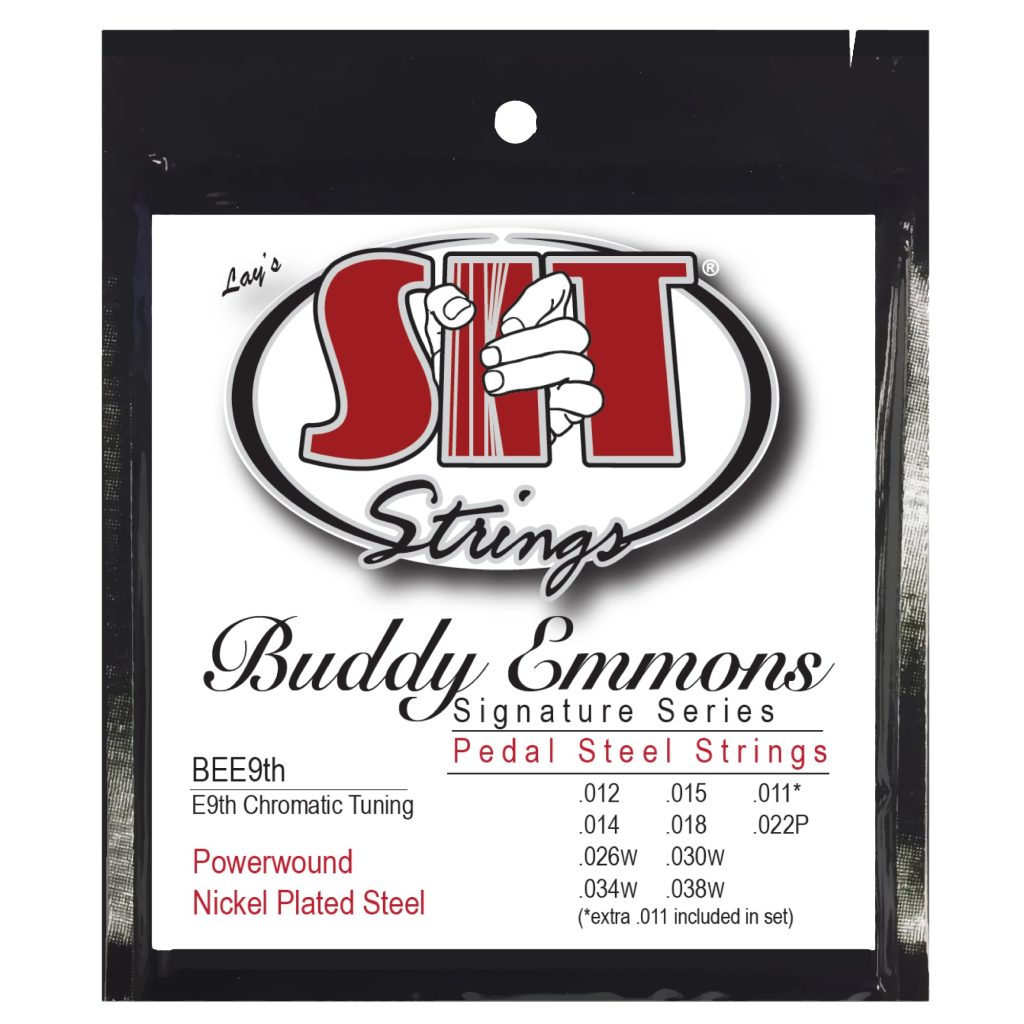
Pedal steel players tend to be particular about strings. The instrument’s mechanics—pedals, knee levers, and the constant bending—put unique demands on a set. S.I.T. Strings, a company with deep roots in Nashville, offers the Buddy Emmons signature set for E9th tuning, and it’s aimed squarely at players who want a traditional, balanced tone with predictable response. This review looks at what the set offers, where it fits, and where it might not.
The set is built around Buddy Emmons’ preferred gauges for E9th, a tuning that covers most of the classic country and swing vocabulary. The nickel-plated steel windings are a standard choice for pedal steel, known for a warm, rounded top end and a smooth feel under the bar. S.I.T. markets these as “Buddy Emmons” strings, which mainly means the gauges and construction follow his specifications. That’s a meaningful detail for players who admire his tone, but it doesn’t guarantee magic—it’s still a set of strings.
In real-world use, these strings are meant to be installed on a standard E9th setup, typically 10 strings, with plain strings on the high end and wound strings on the lower notes. The gauges are chosen to balance tension across the neck, which matters when you’re engaging multiple pedals and levers. Players often note that the set feels consistent from string to string, with no odd jumps in tension. That consistency can help with accurate pedal tuning and stable pitch returns, though no string set can fix a poorly set-up instrument.
One of the key features is the nickel-plated steel winding. Compared to stainless steel, nickel tends to produce a slightly softer, warmer tone with less bite. For traditional country and Western swing, that’s often desirable. The plain strings are also nickel-plated, which can contribute to a smoother feel and reduce finger noise. The set is available in the standard E9th configuration, and S.I.T. also offers a version for the BEE9th tuning (Buddy Emmons’ variation), which uses slightly different gauges. This review focuses on the E9th set, but the BEE9th option is worth noting for players who use that tuning.
Installation is straightforward, as with any pedal steel string set. The strings are individually packaged and labeled, which helps when you’re changing them one at a time. The ball ends are standard, and the winding length is appropriate for most pedal steel guitars. One thing to watch: because pedal steel strings are under higher tension than standard guitar strings, they can be prone to breakage if you over-tighten or if your guitar has burrs on the changer. The S.I.T. strings seem no more or less durable than other quality brands in this regard.
Tonally, the S.I.T. Buddy Emmons set delivers a balanced, mid-forward voice. The low strings have a defined fundamental without being muddy, and the high strings sing without excessive brightness. Players who prefer a more modern, bright tone might find these a bit tame, but for classic sounds, they sit well in a mix. They also seem to hold tuning reasonably well after an initial settling period, which is typical for nickel strings.
As with any string, longevity depends on playing hours, hand chemistry, and environment. Nickel strings generally have a shorter lifespan than coated alternatives, but many pedal steel players prefer the feel and tone of uncoated nickel. If you play several hours a day, expect to change them every few weeks. For casual players, they might last a month or two. There’s no coating here, so they will dull over time—that’s the trade-off for the traditional feel.
Compared to other pedal steel sets, such as those from George L’s or Jagwire, the S.I.T. Buddy Emmons set is in a similar price range and quality tier. George L’s are known for a slightly brighter tone, while Jagwire offers a variety of alloys. The S.I.T. set leans toward the warmer, traditional side. If you’re looking for a reference, it’s like the difference between nickel and stainless steel strings on a standard guitar—both work, but they feel and sound different.
Who is this set for? It’s a good fit for players who want a traditional E9th tone, especially those who admire Buddy Emmons’ sound. It’s also a solid choice for players who prefer nickel’s warmer character over stainless steel’s brightness. Beginners might find them perfectly adequate, though they may not notice the subtle differences yet. Who is it not for? Players who need maximum brightness or who prefer coated strings for extended life might want to look elsewhere. Also, if you use a tuning other than E9th or BEE9th, this set won’t be appropriate.
In summary, the S.I.T. Buddy Emmons pedal steel strings are a reliable, traditional option for E9th players. They deliver a balanced tone with a warm edge, consistent tension, and standard construction. They’re not revolutionary, but they don’t need to be—they’re a working player’s string set with a familiar feel. If you’re after a no-frills, nickel set for classic sounds, these are worth considering. Just keep expectations realistic: strings are a consumable, and no set will transform your instrument or playing.