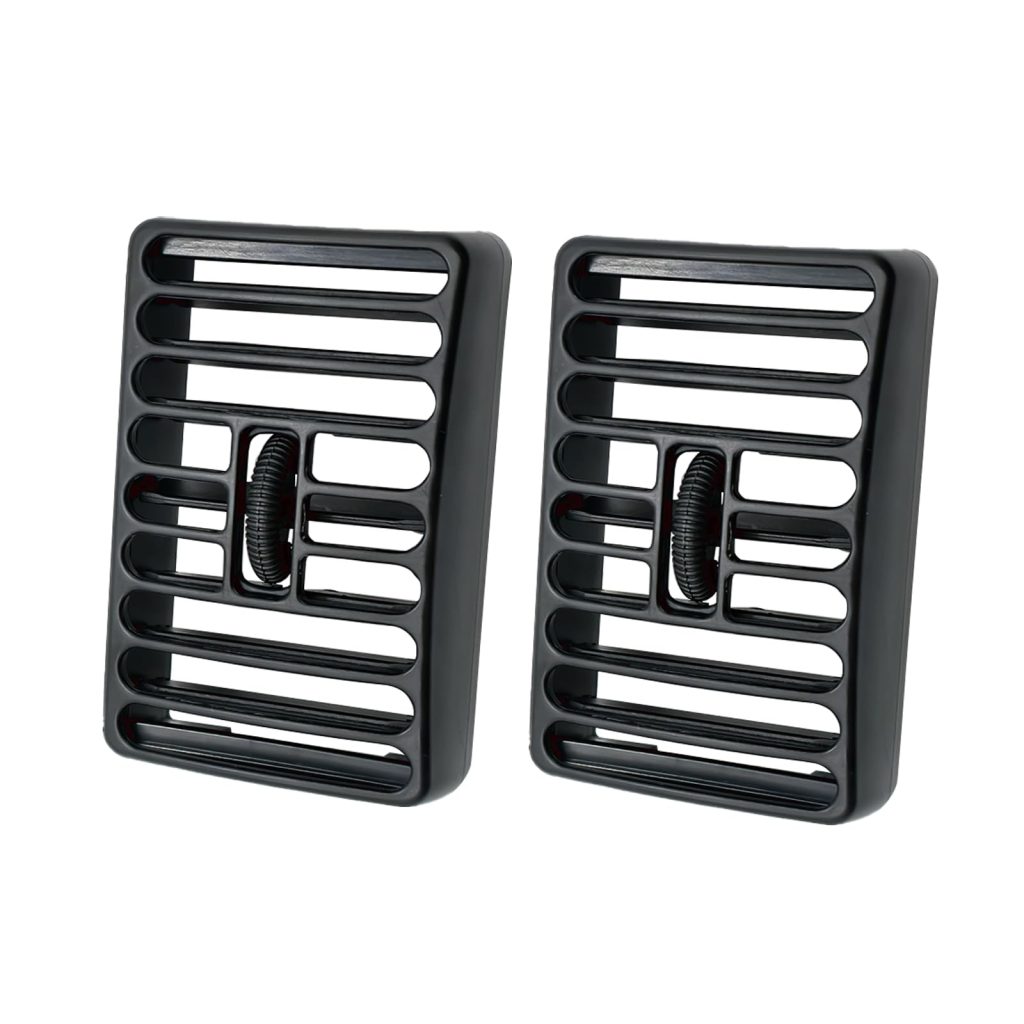
Replacement interior trim parts occupy an odd corner of the auto parts market. They are rarely exciting, frequently overlooked, and yet they matter more than most drivers expect. The 2PCS Front Left Right Air Grille AC Vent, sold as a direct replacement for part number 5FS10DX9, falls squarely into this category. It is a pair of dashboard vent assemblies intended to restore the appearance and function of a cabin whose original grilles have cracked, faded, or lost their adjustment louvers. Whether it is worth the effort depends heavily on the vehicle and the condition of the surrounding dashboard.
The part number 5FS10DX9 is associated with Chrysler and Dodge applications, most notably the LX-platform cars such as the Chrysler 300 and Dodge Charger and Magnum from the mid-2000s through the early 2010s. The vents sit on the outer edges of the dashboard, flanking the driver and passenger, and are used constantly in daily driving. Over time, the plastic housings on these cars are known to become brittle, the directional vanes snap, and the thumbwheel that controls airflow can seize or break. A two-piece set addresses the most common failure pattern, since both sides tend to age at the same rate.
Functionally, these are straightforward components. Each vent includes the outer bezel, the louver assembly for directing airflow, and the shutoff wheel that closes the vent when the cabin is already comfortable. Installation on most compatible vehicles involves prying out the old unit, releasing a retaining clip or two, and pressing the new one into place. There is no wiring or vacuum connection in most versions, which keeps the job within reach of a patient DIY owner with a plastic trim tool. That simplicity is the main appeal: a cracked vent is a cosmetic annoyance that also produces rattles and unwanted drafts, and swapping it out is one of the cheaper interior repairs available.
Build quality is where expectations should be calibrated. These are aftermarket pieces, not OEM Mopar parts, and the difference often shows in small ways. The plastic may feel slightly lighter than the original, the grain texture can differ subtly from the surrounding dash, and the louver detents may not have the same crisp, damped feel when you adjust them. On a well-kept car, a mismatch in texture is noticeable to the owner even if passengers never spot it. Buyers should also verify color and finish carefully, since the same part number is offered in different interior shades and a close-but-not-exact match is a common source of frustration.
- What is included: Left and right front vent assemblies in a single set, which saves the hassle of ordering each side separately.
- Compatibility: Designed as a replacement for 5FS10DX9; confirming the model year and trim level before purchase is essential, as mounting tabs and bezel shapes vary across the platform’s production run.
- Installation: Clip-in design on most applications, typically requiring only trim tools and moderate force.
- Function: Adjustable directional louvers plus a manual shutoff wheel on each side.
The most realistic limitation is fitment consistency. Aftermarket vent housings sometimes require a little persuasion to seat flush, and the retaining clips may grip more loosely than the factory originals, which can lead to a slight rattle over rough pavement. Owners who are particular about factory-original appearance may be better served by hunting down used OEM vents from a donor car, though those carry their own risk of brittleness and hidden cracks. The trade-off is familiar: new aftermarket parts offer fresh, unbroken plastic at a lower price, while used OEM parts offer exact originality with unknown remaining lifespan. Neither is automatically the better choice.
Compared with a broader dashboard restoration, these vents are a modest fix. Someone facing a cracked dash pad, failing blend door actuators, or a full interior refresh is looking at a much larger project, and the vents are a small piece of that puzzle. Buyers should also not expect these to solve airflow problems caused by a failing blower motor or blocked ducting. The vent only controls where air exits; it cannot compensate for a weak HVAC system.
This set suits owners of compatible Chrysler and Dodge models who have a broken or missing vent and want a functional, reasonably priced replacement without visiting a dealer parts counter. It also works for flippers or hobbyists tidying up a car before sale. It is less suitable for concours-level restorations where originality is paramount, for owners unwilling to confirm fitment carefully, or for anyone expecting OEM-level material feel. For the everyday driver dealing with a snapped louver or a vent that will not stay put, the practical value is clear, provided expectations about finish and fit are kept in check.