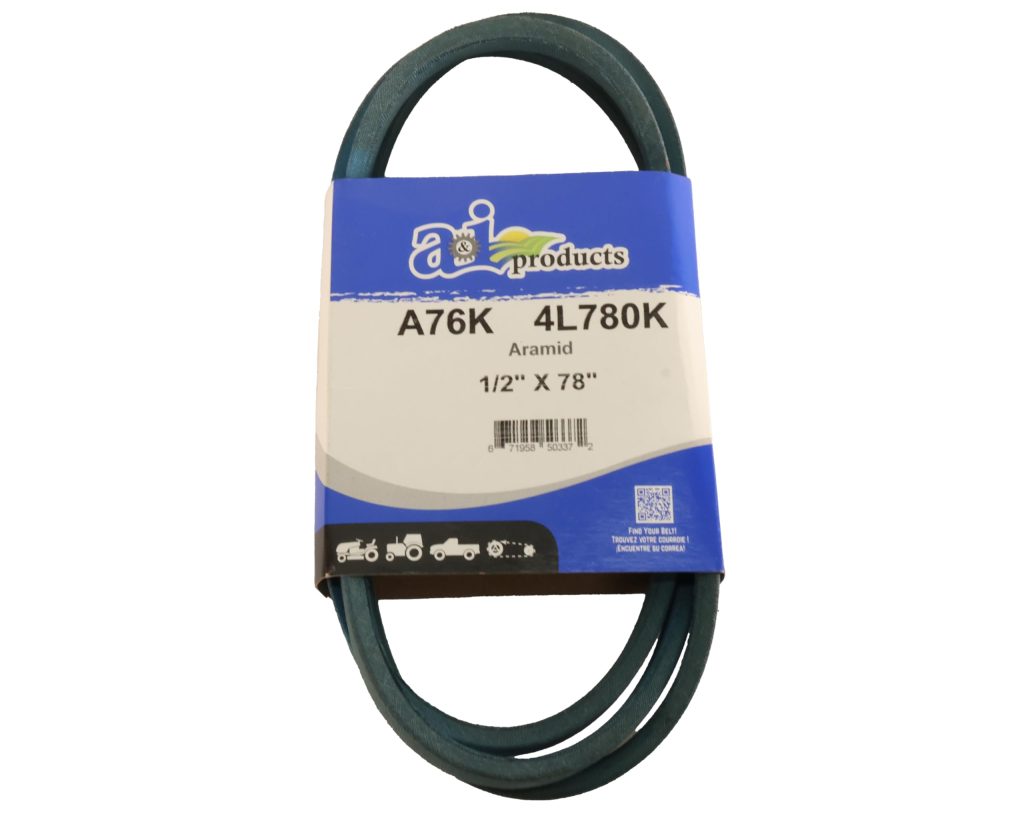
The A&I A76K Premium Kevlar V-Belt is a replacement belt for industrial and agricultural machinery that demands a bit more durability than a standard rubber belt can offer. With a 1/2-inch top width and 78-inch outside circumference, it’s a common size for everything from lawn mower decks to small conveyors and shop equipment. The Kevlar cord construction is the headline here, promising better resistance to heat, oil, and stretching than conventional belts. But does it justify the higher price? We took a closer look at what this belt offers, where it falls short, and who should consider it.
In real-world use, this belt shows up in places where downtime is costly. Think of a commercial mower running eight hours a day, a grain auger that runs seasonally but at full load, or an air compressor in a busy shop. The A76K is designed to handle those conditions without the frequent re-tensioning that cheaper belts often require. The Kevlar tensile cords resist elongation, so once you set the tension, it tends to stay put. That’s a genuine advantage if you’re maintaining a fleet of equipment or just tired of adjusting belts every few weeks.
The belt’s outer fabric is also oil and heat resistant, which matters in engine compartments or near hydraulic systems. Standard belts can glaze or crack when exposed to oil mist or high temperatures, but the A76K holds up better. It’s not indestructible—no belt is—but it’s a step up from the basic rubber options. The 1/2-inch top width fits standard A-section pulleys, and the 78-inch outside circumference is a common size for many riding mowers and small industrial drives. If you’re replacing a worn belt, double-check your old part number or measure the pulley groove to ensure the A76K matches.
One thing to note: Kevlar belts are stiffer than standard belts, especially when new. That means they can be a bit harder to install, particularly on drives with tight clearances or spring-loaded idlers. You might need to use a bit more force to roll the belt onto the pulleys. After a few hours of run-in, it loosens up slightly, but the initial installation can be frustrating if you’re used to more flexible belts. Also, the A76K is not a universal fit—it’s specifically for A-section pulleys with a 1/2-inch top width. If your equipment uses a B-section (5/8-inch) or a different profile, this won’t work.
Compared to a standard rubber V-belt, the A76K costs noticeably more. A generic A-section belt might run $10–$15, while this Kevlar version often sells for $25–$35. Is it worth it? For light-duty applications like a home lawn tractor that sees an hour of use per week, a standard belt is probably fine and you won’t notice the difference. But for commercial or heavy-use scenarios, the extra cost can pay for itself in reduced downtime and fewer replacements. It’s a trade-off between upfront price and long-term reliability.
Another alternative is a link-style belt, which can be handy for emergency repairs because you can install it without dismantling the drive. However, link belts tend to stretch and don’t handle high horsepower as well as a solid Kevlar belt. The A76K is a better choice for permanent, high-load applications. If you need something you can carry as a spare and install quickly, a link belt might be more convenient, but it won’t last as long under continuous heavy load.
So who is this belt for? It’s best suited for equipment owners who run their machines hard and want to minimize maintenance intervals. Farmers, landscapers, and maintenance crews who depend on their equipment daily will appreciate the durability. It’s also a good fit for anyone who has had repeated belt failures and wants to try a more robust option. On the other hand, if you’re a homeowner with a lightweight mower that sees occasional use, the premium price may not be justified. You’d be better off with a standard belt and saving the extra money for something else. Also, if your equipment is older or has worn pulleys, a Kevlar belt might actually accelerate wear on those components because it doesn’t stretch as much—so make sure your pulleys are in good shape before upgrading.
Installation is straightforward for anyone with basic mechanical skills. Just make sure to route the belt correctly and check alignment. Misalignment is a common cause of premature belt failure, regardless of material. The A76K doesn’t come with installation instructions, so you’ll need to rely on your equipment’s manual or online resources. It’s also a good idea to re-check tension after the first few hours of operation, as the belt may seat itself into the pulleys.
In terms of performance, expect the A76K to last significantly longer than a standard belt in high-heat or oily environments. In clean, light-duty applications, the difference is less pronounced. We’ve seen reports of these belts lasting two to three times longer than standard belts in commercial mowing, but that’s not a guarantee—it depends on pulley condition, alignment, and load. There’s no magic here; it’s just a better material for tough conditions.
Overall, the A&I A76K is a solid choice for those who need a durable, long-lasting V-belt for demanding applications. It’s not for everyone, and the higher cost and stiffer construction are real drawbacks. But if you’re tired of replacing belts every season, it’s worth considering. Just be sure to verify the size and pulley type before buying.