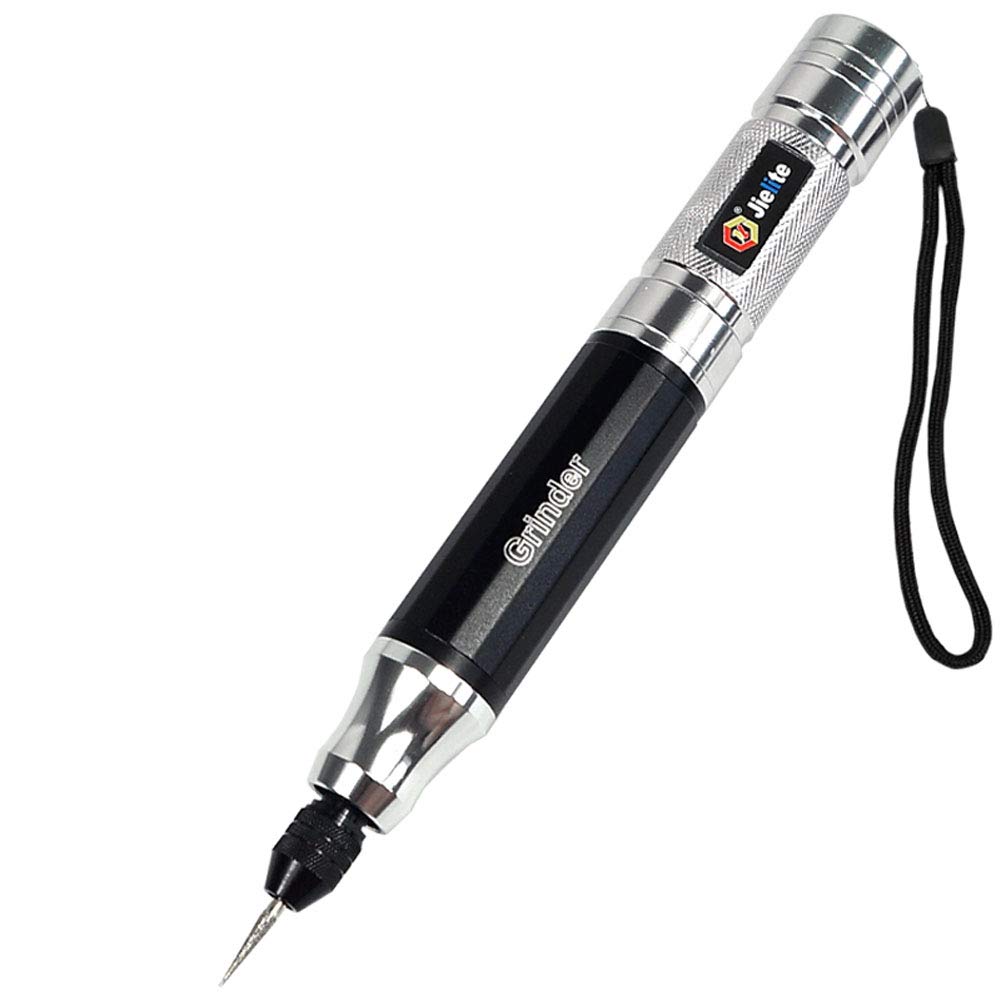
Electric engraving pens occupy a niche between a full-size rotary tool and a hand engraver. This rechargeable, cordless model is aimed at hobbyists and DIYers who need to mark, carve, or polish small items without being tethered to a wall outlet. Based on the specifications and typical use cases for this class of tool, here’s a breakdown of what it offers and where it falls short.
What it is and how it’s used
At its core, this is a compact rotary tool with a pen-like form factor. It’s designed for tasks like engraving initials into jewelry, marking tools, carving patterns into wood, or polishing small metal parts. The cordless design means you can take it to a workbench, a garage, or even outside without needing an extension cord. It’s powered by a built-in rechargeable battery, usually via USB, and accepts a range of small bits for different materials.
In real-world use, you’d hold it like a pen, which gives you more control for detailed work than a bulky rotary tool. The variable speed control, often a dial or button, lets you adjust from slow speeds for polishing to higher speeds for engraving. It’s not meant for heavy-duty cutting or grinding; think of it as a precision tool for light tasks.
Key features and performance
The tool typically includes a set of interchangeable bits—diamond-tipped for engraving, wire brushes for cleaning, and polishing wheels. The motor is usually in the range of 10-25 watts, which is adequate for etching glass, soft metals, and wood, but it will struggle with hardened steel. The battery life varies; expect around 1-2 hours of continuous use on a full charge, depending on the speed and material. Charging via USB is convenient, but it means you’ll need a power source or a portable battery to recharge in the field.
One notable feature is the adjustable speed, which ranges from about 3,000 to 20,000 RPM. This is useful because different materials require different speeds—too fast on plastic can melt it, while too slow on metal won’t leave a mark. The pen-style grip reduces hand fatigue during detailed work, but the lack of a traditional chuck means you’re limited to bits with a standard 2.35mm shank. That’s common for this type of tool, but it does restrict you to specialized bits rather than standard rotary tool accessories.
Where it falls short
The biggest limitation is power. This is not a replacement for a Dremel or a similar rotary tool. It lacks the torque for cutting through thick metal or grinding down welds. The motor can stall if you press too hard, and the bits may not last long on hard materials. Also, the battery is not user-replaceable in most models, so once it degrades, the tool’s lifespan is effectively over. That’s a trade-off for the low price and cordless convenience.
Another issue is the lack of a flexible shaft or a stand. For tasks that require both hands, you’ll need to hold the workpiece with one hand and the tool with the other, which can be awkward. Some users report that the collet doesn’t grip bits as securely as a keyed chuck, leading to occasional slipping. These are minor annoyances but worth noting.
How it compares to alternatives
Compared to a traditional hand engraver, which uses a hammer and chisel, this tool is faster and requires less skill for simple lettering. But it lacks the fine control and depth control of a pneumatic engraver used by professionals. Against a full-size rotary tool like a Dremel, it’s more portable and easier to handle for detail work, but far less powerful and versatile. If you already own a rotary tool with a flex shaft, you might not need this. If you’re looking for a dedicated, grab-and-go engraver for small projects, it fills a gap.
Who it’s for—and who it’s not
This tool suits hobbyists who want to personalize jewelry, mark their tools, or add decorative touches to woodworking projects. It’s also handy for light restoration work, like cleaning rust from small metal parts. It’s not for professionals who need to engrave hard metals daily or for anyone planning to cut or grind large materials. If you need a tool for heavy fabrication, look elsewhere. Also, if you prefer the simplicity of a manual engraver, this might be overkill.
In summary, the Engraving Pen is a convenient, affordable option for light engraving and polishing tasks. It has clear limitations in power and durability, but for occasional use, it can get the job done. Just don’t expect it to replace a full rotary tool or a professional engraving setup.