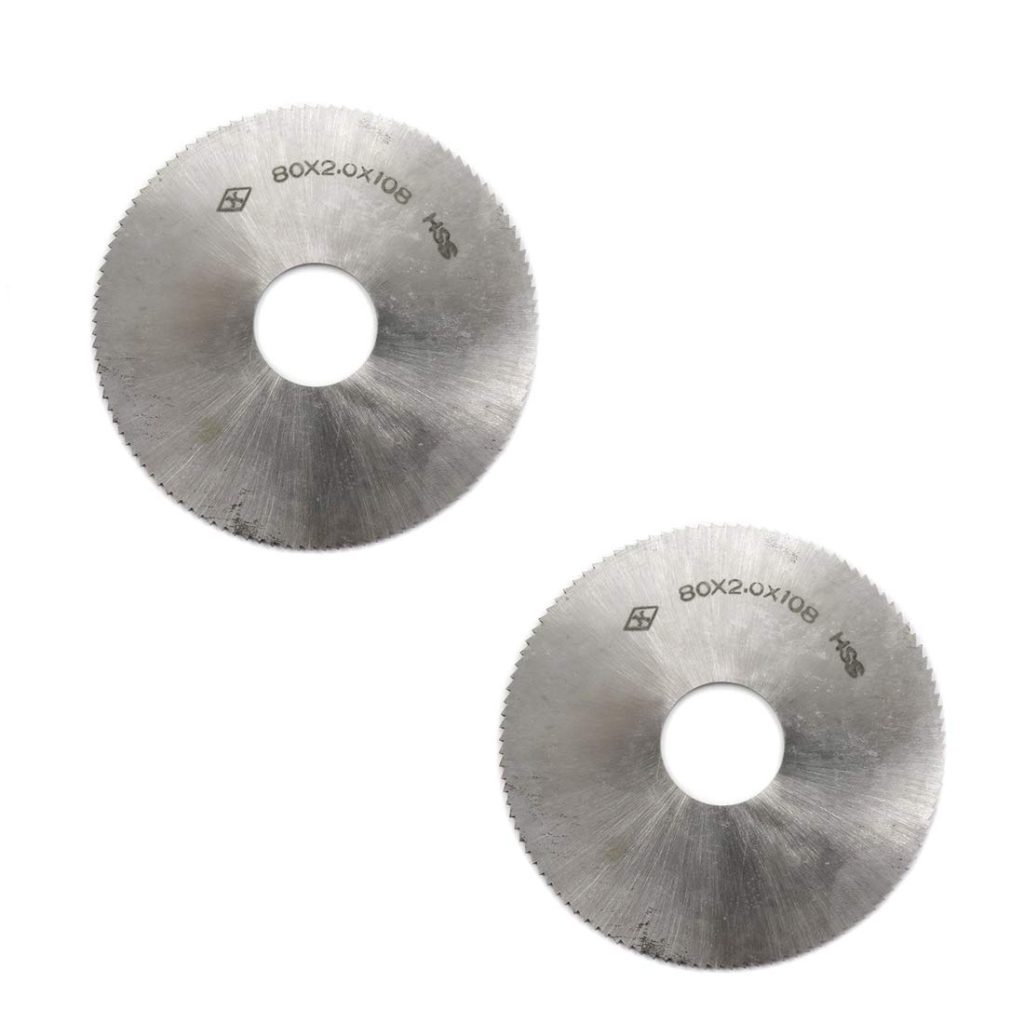
Slitting saws are niche tools, but when you need to cut a narrow slot or part off a workpiece with minimal material loss, they earn their place. The Rannb Slitting Saw Blade is a 108-tooth circular saw made from high-speed steel (HSS), measuring 80mm in diameter and 2mm thick. It’s sold in a pack of two, which is convenient for spares or for keeping one set up in a dedicated arbor. This review looks at what these blades offer, where they fall short, and who might find them useful.
In real-world use, these blades are typically mounted on a milling machine arbor or a dedicated slitting saw arbor. They’re used for cutting slots in screws and bolt heads, trimming small metal parts, or making narrow cuts in aluminum, brass, and mild steel. The 108-tooth configuration indicates a fine pitch, which generally produces smoother cuts and reduces the chance of snagging, especially in thinner materials. The 2mm thickness is on the thinner side, meaning less material is removed, but it also makes the blade more prone to deflection if pushed too hard.
Key functional features include the HSS construction, which offers good wear resistance and can handle moderate cutting speeds. The 80mm diameter is a common size that fits many small milling machines and drill presses with the right arbor. The 108 teeth are evenly spaced and appear to be well-formed, with sharp edges out of the box. The blades come in a simple cardboard sleeve, which is adequate for storage but not for long-term protection against moisture or accidental damage.
One limitation is the lack of a coating. Uncoated HSS will wear faster than coated alternatives like TiN or TiAlN, especially when cutting harder materials. Also, the 2mm thickness means these blades are not ideal for deep cuts in hard steel; they may deflect or break if fed too aggressively. Additionally, the blades are not marked with tooth count or material, which could be an issue if you have several similar blades in a drawer.
Compared to a similar product category, such as carbide-tipped slitting saws, these HSS blades are more affordable but less durable. Carbide blades hold their edge longer and can run at higher speeds, but they cost significantly more and are more brittle. For a hobbyist or small shop, the Rannb blades offer a cost-effective entry point. For production environments, carbide might be a better investment.
Who is this for? It’s suitable for hobbyists, model makers, and small workshop users who need to make occasional precision cuts in soft metals and plastics. It’s also a good choice for those who already have an arbor and want a spare blade or two. It’s not suitable for heavy-duty production cutting, cutting hard steels, or for users who need coated blades for extended tool life. If you’re looking for a blade to cut deep slots in stainless steel, this might not be the right choice.
In terms of performance, expect these blades to cut smoothly in aluminum and brass with proper speeds and feeds. In mild steel, they will work but may require slower feed rates and a cutting fluid to prevent overheating. The fine teeth produce a relatively clean cut, but like any slitting saw, the finish depends on rigidity of the setup. Chatter is a common issue if the arbor isn’t secure or if the blade is not properly aligned.
Overall, the Rannb Slitting Saw Blade is a practical option for light-to-medium duty cutting tasks. It’s not a premium tool, but it doesn’t pretend to be. The pack of two adds value, and the HSS construction is adequate for occasional use. If you need a reliable blade for precision work in soft materials, this could serve you well. Just be aware of its limitations and use it within its intended scope.