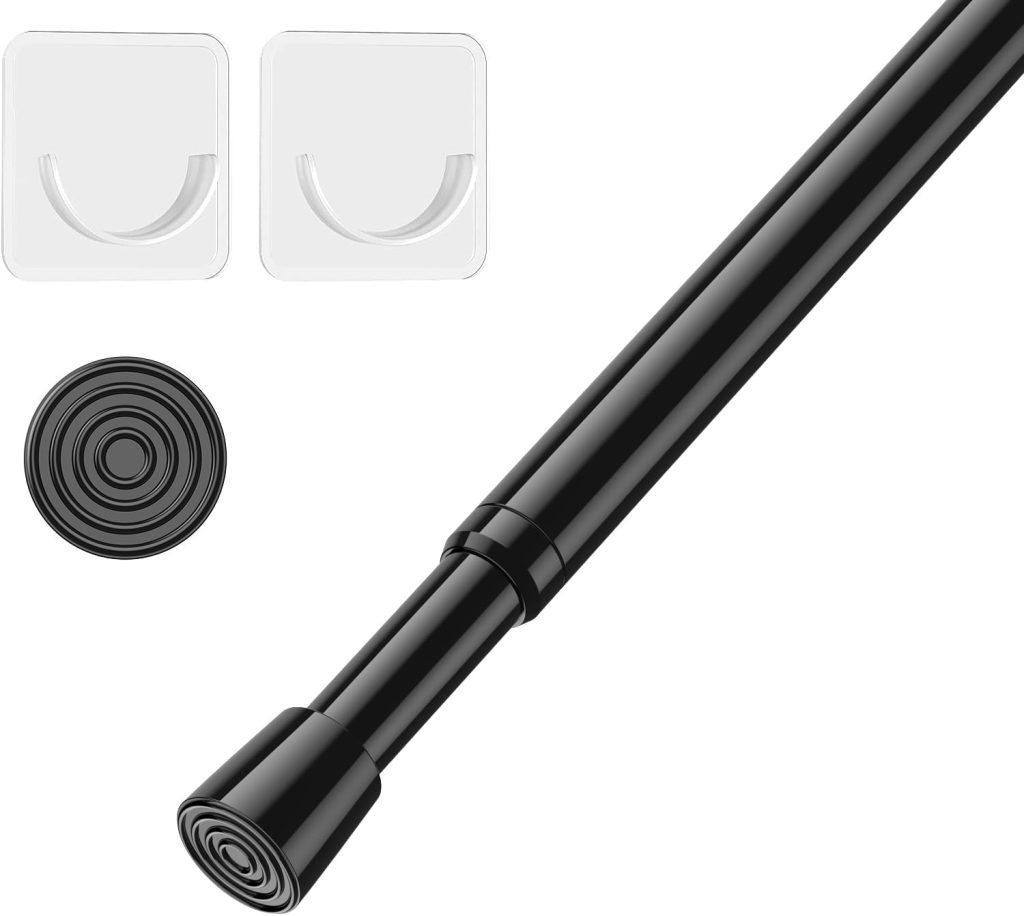
Spring tension curtain rods are a practical solution for renters or anyone who wants to avoid drilling holes. The AIZESI 1-Pack Spring Tension Curtain Rod, available in black and sized for 26 to 39 inches, is one such option. It includes two mounting holders, which are essentially brackets that can be attached to the wall if you prefer a more secure installation. But how does it perform in real-world use? This review takes a closer look at its features, limitations, and who it’s best suited for.
The rod is a telescoping metal tube with a spring mechanism inside. To install it, you extend the rod to slightly longer than the opening, then compress it and wedged it into place. The spring tension holds it against the sides of the window frame or wall. The included holders are optional; they can be screwed into the wall and the rod rests on them, providing additional support. The rod is adjustable from 26 to 39 inches, making it suitable for small to medium-sized windows, such as those in bathrooms, kitchens, or bedrooms. The black finish is neutral and should blend with most decor.
In practice, this rod works well for lightweight curtains, such as sheers, voiles, or light cotton panels. It’s also handy for hanging valances or as a temporary solution. The spring tension is generally strong enough to hold the rod in place without the holders, provided the surface is clean and the rod is properly sized. However, it’s not designed for heavy drapes or blackout curtains; the tension may not be sufficient, and the rod could slip or sag over time. The holders can help, but they require drilling, which defeats the no-drill advantage.
One limitation is the rubber tips on the ends of the rod. They are meant to prevent scratching and improve grip, but they can leave marks on some surfaces, especially painted walls, if the rod is adjusted frequently. Also, the rod’s maximum weight capacity is modest; it’s not meant for heavy fabrics. Another consideration is the length: while it extends to 39 inches, the spring tension is strongest in the middle of its range. At full extension, the rod may feel less secure. It’s best to use it within the recommended range and not push it to the limit.
Compared to a traditional curtain rod that is mounted with brackets and screws, this tension rod is less secure and has a lower weight capacity. However, it offers the advantage of easy installation and removal, which is ideal for renters or temporary setups. A similar alternative is a tension rod with a twist-to-lock mechanism, which can provide more consistent tension and hold more weight. Those are often a better choice for medium-weight curtains. The AIZESI rod is more basic but also more affordable.
Who is this for? It’s suitable for renters who can’t drill into walls, for small windows where a full curtain rod setup is overkill, and for lightweight curtains. It’s also a good option for a temporary fix, like during a move or for a seasonal decoration. It’s not suitable for heavy curtains, large windows (beyond 39 inches), or areas where the rod might be bumped frequently, such as a busy doorway. If you need to hang blackout curtains or heavy drapes, you’ll want a traditional rod with brackets.
In terms of installation, the rod is easy to set up. You simply extend it to the desired length, press the ends against the wall, and adjust until it’s level. The included holders can be used if you want extra security, but they require screws and a drill. The holders are small and unobtrusive, but they do add another step. Without the holders, the rod relies entirely on tension, so it’s important to ensure the wall surface is suitable. On glossy or uneven surfaces, the rod may not grip well.
Overall, the AIZESI tension rod is a functional, budget-friendly option for light curtains. It does its job without frills, but it has clear limitations. If you understand those and use it accordingly, it can be a handy tool. Just don’t expect it to perform like a permanently installed rod. It’s a niche product that serves a specific need, and for that, it’s adequate.